
In-Kind Giving Tuesday Ideas for Nonprofits
13.5 million people gave goods on Giving Tuesday 2025. Here's how to build a goods-based track before December 1

Panos Kokmotos |
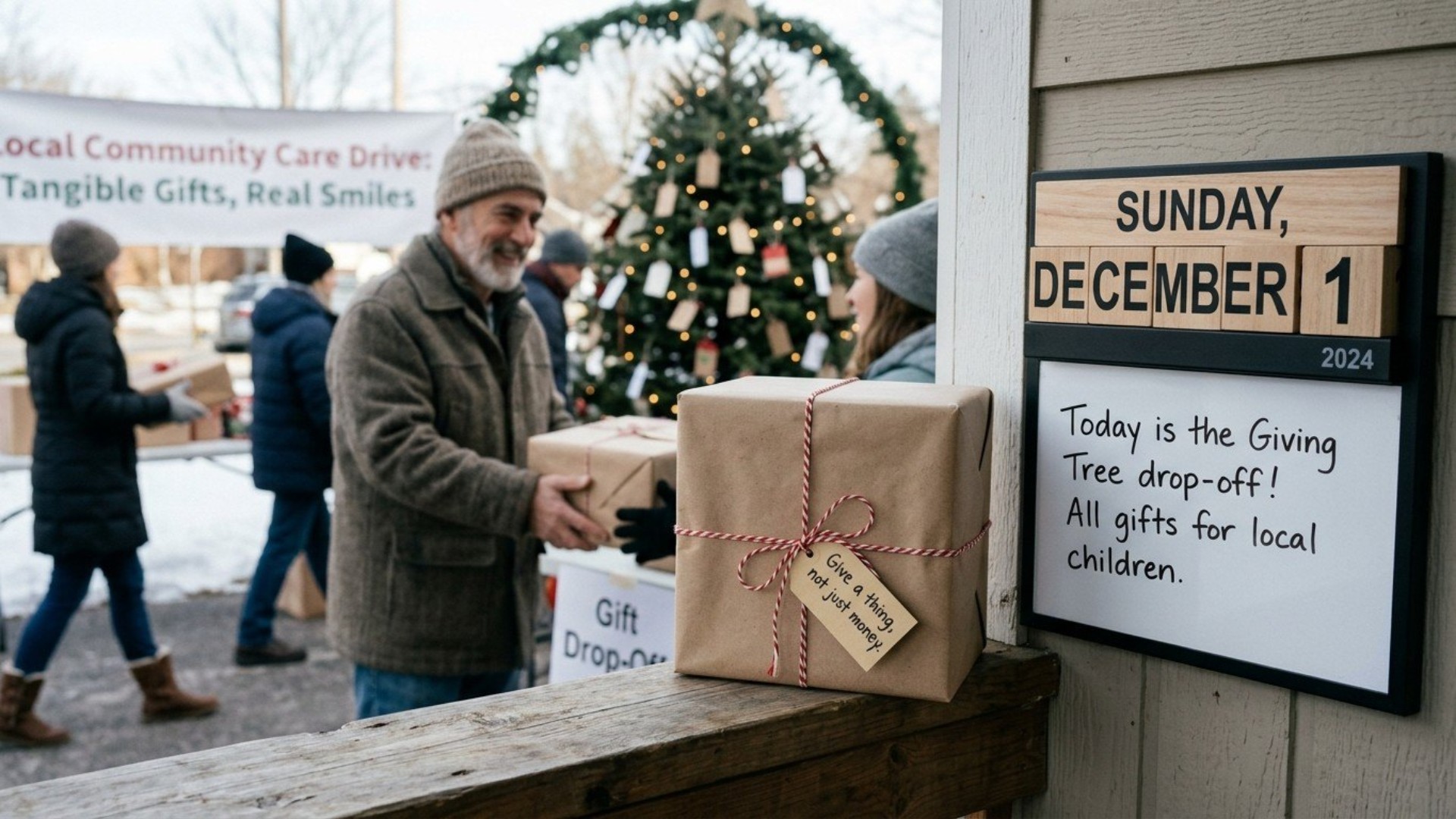
Giving Tuesday isn't only a cash day anymore, and treating it like one leaves a real, growing share of participation on the table. On GivingTuesday 2025 (December 2), 13.5 million people gave goods, up 4% from the year before, alongside 19.1 million who gave cash. Goods-giving is now more than two-thirds the size of cash-giving in participant count, and almost no nonprofit's Giving Tuesday plan has a dedicated track for it.
GivingTuesday 2026 falls on Tuesday, December 1. If your organization is starting to plan now, in September, you're on the schedule most fundraising guides recommend, and you have time to build a goods-based ask alongside your cash campaign instead of bolting one on the week before.
Why September is early enough, and late enough to matter
Giving Tuesday planning guides consistently tell nonprofits to start in September, because a real campaign needs a working donation channel, a promoted list of needs, and a plan for saying thank you fast. None of that comes together overnight. An in-kind track has one more thing on that list: something specific to point people at. A vague "we accept donations" post converts nobody. A public list of 15 to 20 named items, each with a price range, is the version people actually act on.
If you already run an Amazon or Chewy wishlist, this is the moment to check it's current. Stale wishlists (items marked "no longer needed," broken links, nothing added since spring) are the single most common reason a goods ask underperforms. Givelink's guide to building a wishlist that actually gets fulfilled covers the fix in detail: specific items over generic categories, a $5 to $100+ spread so every budget has an entry point, and promotion in the same places you'd promote a cash link.
Building the in-kind track
Four things, in order.
Name the items, not the category. "School supplies" gets skipped. "24-pack of crayons, $4" gets bought. Pull the list from what you actually need this week, not a generic template.
Give it its own moment in the day. If Giving Tuesday runs as one long cash appeal, the goods ask reads as an afterthought. Post it as its own segment, an email send, a social post, a section of the campaign page, with its own headline and its own link.
Set a deadline that matches shipping reality. A donor buying from a public wishlist on December 1 needs the order to arrive and be usable before your program needs it. Say so plainly: "order by December 1 to arrive by December 15" is a real instruction. "Give now" is not.
Plan the thank-you before the day starts. The single biggest difference between a goods donor who gives once and one who gives again is whether they see where it went. A photo of the item on arrival, sent within a day or two, does more for repeat giving than any appeal copy. What actually happens to a donated item after someone gives it is worth reading before you write your own version of that message. Donors ask this question more than nonprofits expect.
Where to promote it
A wishlist nobody sees doesn't convert, no matter how well it's built. Put the link in the same three or four places your cash appeal already runs, rather than treating it as a separate campaign:
- Email. A dedicated send works better than a mention buried in the cash appeal. Subject lines that name a specific item outperform generic "help us this Giving Tuesday" language.
- Social. Pin the link on the day, and post it again mid-morning and mid-afternoon. Giving Tuesday moves fast on social; a single 9am post gets buried by noon.
- Your website. A banner or homepage block that runs from the last week of November through December 1, not just on the day itself, catches people who show up early.
- Anyone who already gave goods before. A short note to last year's in-kind donors, if you know who they were, converts at a much higher rate than a cold ask. This is exactly the record-keeping problem an automated system solves going forward.
Which items to lead with
Lead with items that are genuinely needed this month, not a wish-list of nice-to-haves. A specific, time-bound need ("we go through 40 winter coats a week starting in December") reads as real and urgent in a way a standing "always accepting donations" line never does. If your organization runs across multiple program areas, pick one or two to feature rather than spreading the ask thin across all of them. A donor choosing between "help us broadly" and "buy this exact coat, size large, $22" picks the coat.
The follow-through problem, and why most nonprofits default back to cash
Ask a development director why Giving Tuesday skews toward cash and the honest answer is usually operational, not strategic. A public wishlist is easy to launch and hard to run. Someone has to notice what sold, confirm it shipped, match it to a name, and send a thank-you by hand, across whatever tool the wishlist lives on. That's manageable for one campaign day. It breaks down the moment goods-giving becomes a habit instead of an event.
This is the specific gap Givelink is built to close. Donors buy the named item, it ships to you, and the platform photo-verifies the arrival and ties it back to that donor and that gift automatically, with no manual matching and no guessing who to thank for what. It's free, with no setup fee, no platform fee, and no subscription. As of today, 536 donors have funded 1,696 gifts across 101 nonprofit profiles on the platform. Two currently active US partners worth naming: Passion for Pitties has logged 12 gifts from 9 donors and is still growing. Helping Mamas, live for barely two weeks, already has 17 gifts from 16 donors, the widest donor spread of any US partner this new. Neither is a household name. Both are proof that a specific, well-promoted list converts regardless of an organization's size.
If your current setup is a spreadsheet and a shared inbox, Giving Tuesday is a reasonable stress test of whether that holds up at volume, and a reasonable moment to see what an automated version looks like before December, not during it.
FAQ
Do in-kind gifts count toward my Giving Tuesday fundraising total? Not toward a cash total, and you shouldn't report them as one. A $30 item and a $30 check aren't interchangeable in your books. Track and report them separately, as GivingTuesday's own results do (goods-givers and cash-givers are two different counted groups), and give the goods track its own line in your post-campaign report to your board.
Can I run a cash appeal and a goods wishlist on the same Giving Tuesday? Yes, and most large organizations do. GivingTuesday's 2025 data shows financial giving, goods-giving, volunteering, and advocacy all rising in the same 24 hours, not competing with each other. Give each its own clear ask rather than merging them into one appeal that undersells both.
What if we don't have a wishlist set up yet and Giving Tuesday is close? A basic Amazon or Chewy list can go live same-day. The return is lower without the lead time to promote it, but it's still better than nothing. Use the time you have left to name specific items rather than spending it on tooling.
How many items should our wishlist have for Giving Tuesday? 15 to 20 is the range that shows up across nonprofits that report success, enough to give real choice, not so many that the list reads as unmanaged. Rotate in higher-need items closer to the day.
Is a goods ask worth the effort for a small nonprofit with a tiny list? Yes, and arguably more so. A small list has an easier time being specific, and specificity is what converts. Two of the partner examples above, Passion for Pitties and Helping Mamas, aren't large organizations. Both built a working goods channel from a plain, named list rather than a big platform investment.
Ready to see what a goods ask that tracks itself looks like? Browse live nonprofit profiles at givelink.app/charities, or start building your own before December 1.
See also





What is Givelink?
Learn from the founders:
Run a nonprofit? Get what you need.
Set your nonprofit up yourself in about 15 minutes. It's free, there's no contract, and you don't need to talk to anyone first.