
Donated Refrigerators and Freezers for Food Pantries
Cold storage lets a pantry offer fresh food, not just shelf-stable cans. Here's what to check before accepting a donated fridge or freezer.

Nick Issaris |
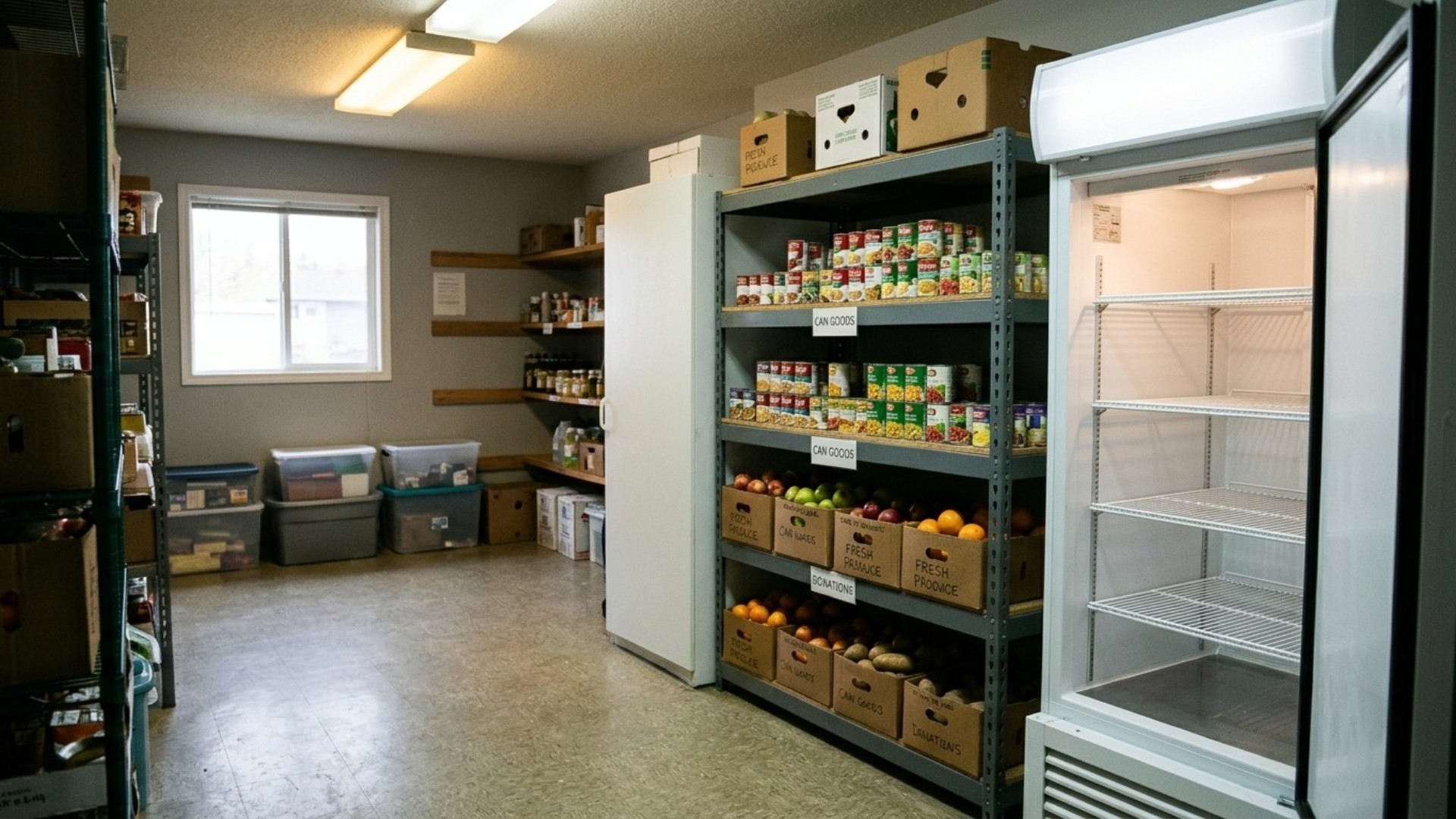
A food pantry can accept a donated refrigerator or freezer, and for many pantries it's the most useful non-food gift there is. Cold storage is what separates a shelf of canned goods from a table with milk, eggs, and produce. The catch: a donated unit only helps if it holds temperature, fits the space, and the building's wiring can run it. Check those three things before you say yes.
Why cold storage is the bottleneck
In 2021, University of Illinois Extension reported on a program that gave refrigerators or freezers to food pantries in southern Illinois, funded by Blue Cross and Blue Shield of Illinois and Southern Illinois Healthcare. The Extension release says "most area food pantries do not have enough cold storage, limiting their selection to shelf-stable products." The new units were meant to let those pantries offer fresh, healthy foods.
The same article notes one pantry was using a tarp strap to keep its freezer door tightly closed to hold temperature. That's the kind of detail that explains why a working donated unit matters.
The temperatures a unit has to hold
The FDA's guidance is simple. The refrigerator should stay at 40 °F or below, and the freezer at 0 °F. Because few appliance dials show the real temperature, the FDA recommends a freestanding appliance thermometer in each, checked often.
That gives you a practical acceptance test for any donated unit. Plug it in, put a thermometer inside, and let it run before any food goes near it. A unit that can't reach and hold 40 °F or 0 °F isn't a gift. It's a disposal bill.
Seven things to check before you accept one
These are practical points rather than a regulatory list, so confirm anything food-safety related with your county health department.
- Does it run and hold temperature? Ask the donor to confirm it's working today, then verify with a thermometer for 24 hours.
- Will your electrical setup carry it? Chest freezers and older upright units can draw a lot. Check the circuit, and avoid daisy-chaining extension cords.
- Does it fit? Measure the doorway, the path to the storage room, and the space itself, including clearance for the compressor to vent.
- Is the door seal intact? A torn gasket leaks cold air and raises the electric bill. This is the most common failure on older units.
- Is it clean and free of odors? Food-contact surfaces should be cleanable. A unit that smells of mildew or chemicals is usually not worth the effort.
- Who moves it? Refrigerators and freezers are heavy. Confirm the donor can deliver, or that you have two or more people and a dolly.
- What does it cost to run? Older units use more power. Your utility bill is a real cost to a small pantry.
What to do when a gift doesn't pass
Say no kindly and say why. A short note that you can only accept units that are working, clean, and delivered is enough. If you can't use it, ask whether the donor will drop it at a partner pantry that can, or point them to the equipment your pantry does need.
How to ask for equipment on purpose
Most equipment donations are accidental: someone replaces a kitchen fridge and wonders where the old one should go. You'll get better gifts if you ask for specifics. Publish the size and type you need (upright freezer, reach-in refrigerator, chest freezer), the power constraints, and your delivery rules on your website and donation page.
That's also where a wishlist helps. On Givelink, a nonprofit lists the exact items it needs, and donors fund them directly, so you get the model you asked for rather than whatever was in someone's garage. It's free to list, with no setup fee, platform fee, or subscription. Large appliances don't suit every shipping situation, so list smaller cold-chain tools too: appliance thermometers, insulated bags, and coolers for transport.
Frequently asked questions
Can a food pantry accept a used refrigerator? Yes, if it runs, holds temperature, fits your space, and your wiring can carry it. Check it with an appliance thermometer before storing food.
What temperature should a pantry refrigerator and freezer hold? Per the FDA, 40 °F or below for the refrigerator and 0 °F for the freezer.
Should we accept a donated chest freezer? Often yes, since they hold temperature well and fit bulk goods. Check the power draw, the floor space, and whether staff can reach items at the bottom.
What if the donor wants a tax receipt? A donated appliance is a noncash gift. Your acknowledgment should describe the item without assigning a value, and larger gifts bring extra donor paperwork. Ask your CPA.
Next step
Measure your cold storage gap this week: how many cubic feet you have, and what you turn away because you can't keep it cold. Then write the spec you'd accept. When you're ready, start a nonprofit profile or browse the live directory.
See also






What is Givelink?
Learn from the founders:
Run a nonprofit? Get what you need.
Set your nonprofit up yourself in about 15 minutes. It's free, there's no contract, and you don't need to talk to anyone first.