
for nonprofits
How a Nonprofit Thanksgiving Food Drive Actually Works
What to collect, when to start, and why the wrong donations cost you staff hours you don't have.

Panos Kokmotos |
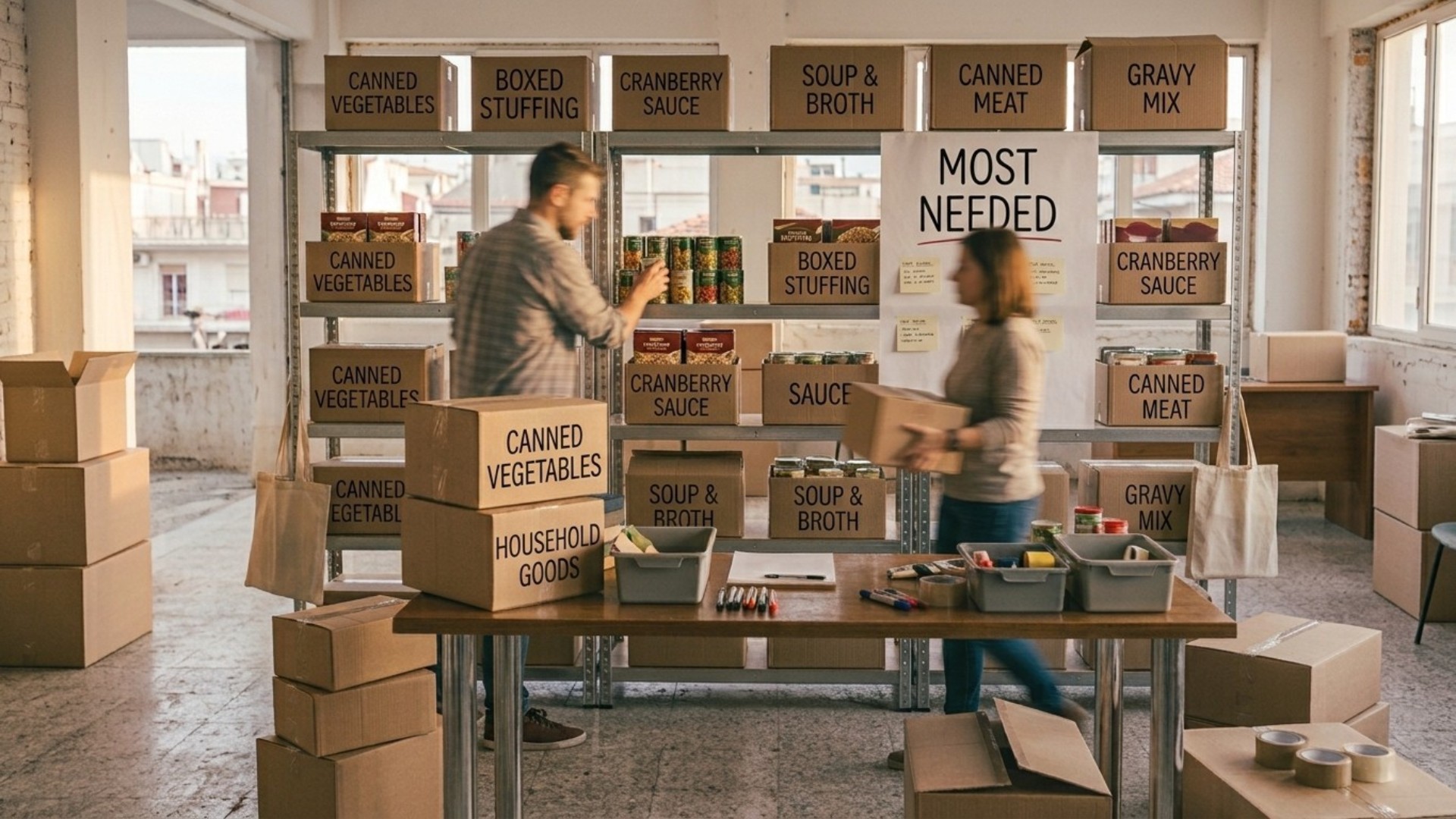
How a Nonprofit Thanksgiving Food Drive Actually Works
A Thanksgiving food drive works in three stages: publish a specific, dated list of what you need, collect it through the channel that matches your reach (a physical bin, an online wishlist, or both), and get it onto shelves before the week of the holiday, not after. Skip the specific list and you get a box of random cans nobody asked for. Skip the deadline and the food arrives after the rush.
Thanksgiving is one of the busiest weeks of the year for food banks and pantries. Nearly 48 million people in the US face food insecurity, and demand climbs every November as households try to stretch a holiday meal on a tight budget. Your drive isn't competing for attention against nothing. It's one of a hundred asks in a donor's inbox that week, so it has to be specific enough to act on in under a minute.
Start the list, not the campaign, first
Before you post anything, know exactly what you're short on. Pull your current pantry inventory and compare it against a standard Thanksgiving meal: protein, a starch, a vegetable, something for dessert. The gaps are your list. Most food banks converge on the same core items every year because they store well and stretch across a family meal:
- Boxed stuffing mix
- Instant mashed potatoes
- Canned vegetables (corn, green beans)
- Dry macaroni or pasta
- Cranberry sauce
- Canned pumpkin What not to ask for matters just as much. Fresh turkeys, other perishable meats, home-cooked leftovers, and anything within a few weeks of its expiration date create a handling problem, not a solution. If a donor asks about giving a fresh turkey, point them to a coordinated turkey drive with cold storage in place, not your general donation bin.
Pick the channel that matches how people already give
A physical collection bin only reaches people who can drive to it during your open hours. That's real, but it's a ceiling. Layering an online wishlist on top removes that ceiling. Instead of guessing at a truck full of assorted cans, a donor picks the exact item off your list and it ships straight to you. What counts as an in-kind gift covers the mechanics of running that kind of list if you haven't set one up.
The two channels aren't in competition. A church or school running a canned-food bin gets the walk-up donor. An online list gets the donor two states away who wants to help but can't drive a bag of groceries to your door. Run both and you're not choosing between reach and specificity.
Time it before the rush, not during it
Publish your list by the last week of October. Food banks that wait until the week of Thanksgiving to ask are asking into a wall of noise, competing with every other org's last-minute post. Giving the list six weeks of runway means a donor who wants to help on a slow Tuesday in early November can actually do it, instead of scrambling on the 25th when your shelves are already thin.
Set a hard cutoff for physical donations two to three days before the holiday. That gives your team time to sort, check dates, and pack distribution bags without doing it at midnight on Thanksgiving Eve. An online wishlist with a real shipping estimate solves this automatically: an order placed by a set date arrives before your cutoff, and one placed after simply lands for next week's need instead of getting turned away.
Track what actually moved, not what you asked for
After the drive, compare what came in against your original list. If canned corn came in five times over and cranberry sauce never showed up, that's real signal for next year's list, not a coincidence. What actually happens to donated items is worth a read if you've never mapped your own intake-to-distribution pipeline; most orgs are surprised by how much staff time goes into sorting undifferentiated donations versus item-specific ones.
This is also the moment to thank the people who gave, specifically. A donor who bought the exact box of stuffing you asked for wants to know it got used, not a generic form letter. If you're running gifts through a platform like Givelink, that photo-on-delivery step happens without extra staff work; if you're not, a short note naming the actual item still beats a form thank-you.
FAQ
When should a food bank start its Thanksgiving drive? By the last week of October. Six weeks of lead time lets donors give before the last-minute rush, and gives your team time to sort and distribute before the holiday itself.
What items should never go in a Thanksgiving food drive? Fresh turkeys and other perishable meats, home-cooked leftovers, and anything close to its expiration date. These create a food-safety and handling burden most small pantries aren't set up for on short notice.
Does an online wishlist replace a physical donation bin? No. They reach different donors. A bin serves people who can drop off in person; a wishlist serves everyone who can't but still wants to give the specific item you need. Most orgs run both.
How do I know what to actually put on the list? Compare your current inventory against a standard Thanksgiving meal (protein, starch, vegetable, dessert item) and list only the real gaps. A generic "help us feed families" ask converts worse than a specific item list.
Ready to turn your food bank's need list into something donors can act on directly? Browse how nonprofits use Givelink or start a free profile for your own wishlist.
See also
What is Givelink?
Learn from the founders:
Run a nonprofit? Get what you need.
Set your nonprofit up yourself in about 15 minutes. It's free, there's no contract, and you don't need to talk to anyone first.