
How Medical Equipment Loan Closets Work
A loan closet lends donated walkers, wheelchairs and shower seats for free. Here's how nonprofits clean, inspect and loan them.

Nick Issaris |
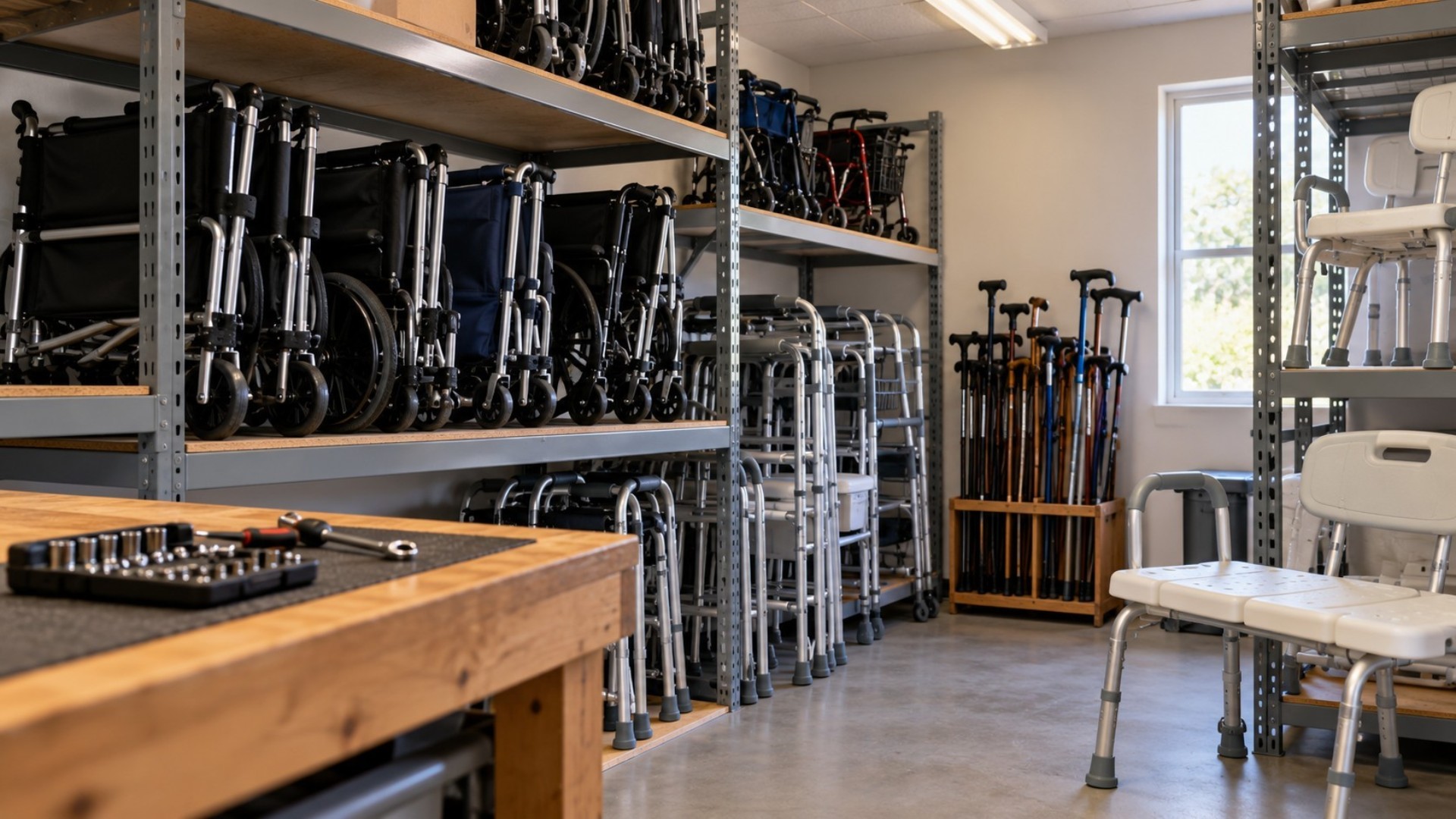
A loan closet is a nonprofit or public program that lends donated medical equipment, like walkers, wheelchairs and shower benches, for free, usually for a limited time. It runs on three things: donated equipment, a cleaning and inspection routine, and a simple sign-out process.
The equipment is durable medical equipment, or DME. It's expensive to buy and often needed for weeks, not years. That mismatch is why loan closets exist.
What a loan closet stocks
Programs vary, but the pattern is similar. Charles County, Maryland's loan closet says its stock generally consists of walkers, canes, bath and shower benches and transport wheelchairs. SOURCES, an Arkansas program, lists crutches, commodes, motorized and non-motorized wheelchairs, transfer boards, canes and other assistive devices, and says most small medical equipment is accepted as long as it's in good condition. A Colorado program described by NBC News lends crutches, knee scooters, shower seats, toilet risers and wheelchairs.
If you're starting one, start with the small, high-turnover items. They're easier to store and clean.
How equipment is cleaned and checked
This is where a loan closet earns trust. Programs describe the routine in similar terms:
- Charles County says returned equipment is sanitized and in good working condition.
- SOURCES says donated pieces are cleaned and refurbished, and returned equipment is checked for safety.
- NBC reported that volunteers at these programs inspect, sanitize and repair wheels, brakes, casters, batteries and other parts. Brakes, casters and batteries are the repair points that matter. A walker with a bad leg lock is a liability, not a donation. Write a short inspection checklist and require every item to pass it before it goes on a shelf.
How loans work
Charles County lends equipment free of charge for 90 days. It can extend by up to 90 more days case by case, if inventory allows, and the client signs a contact form. SOURCES describes short loan periods decided case by case and no eligibility requirement for residents of its four-county service area. The Colorado program serves anyone recovering from surgery, illness or injury.
Eligibility can depend on funding. Charles County notes some equipment was bought with grant funds, which can restrict who can borrow it. If any of your stock comes from restricted funding, track which items those are.
Why donations are needed
NBC reported that reuse programs rely on cash and equipment donations, and that aluminum prices had more than doubled in two years, raising the cost of buying new. One program leader said these programs often loan equipment to patients who would otherwise wait two months to get it through insurance. NBC also reported that Virginia's FREE program provided nearly 5,000 devices to low-income adults and seniors in a year, after receiving 10,000 pieces of donated equipment and refurbishing 6,500. That article is undated but appears to be from about 2022, so treat the figures as a snapshot, not current data.
Programs also need cash. SOURCES notes cash donations replace wheelchair batteries and fund refurbishing.
What to ask donors for
Be specific. A good request names the items you can clean and loan, and the condition you'll accept. "Walkers, canes and shower benches in good working condition" beats "medical equipment." Say what you don't take too, so donors don't drop off something you'd have to throw away. Your insurance and local rules may limit what you can accept, so check with your carrier.
FAQ
What's the difference between a loan closet and a thrift store? A loan closet lends equipment for free and takes it back. A thrift store sells items. Many loan closets are run by senior services, health departments or volunteer groups.
Can anyone donate used wheelchairs and walkers? Usually yes, if the equipment is in good working condition. Programs typically clean, inspect and repair it before lending.
How long can someone keep borrowed equipment? It depends on the program. Charles County, Maryland lends for 90 days with a possible 90-day extension. Others decide case by case.
Do loan closets need financial donations too? Yes. Cash pays for replacement parts like batteries and for refurbishing.
Where Givelink fits
A loan closet's needs are specific, like a size of shower bench or a replacement wheelchair battery. That's the kind of request Givelink is built for: you list the exact item, a donor funds it, and you see it arrive. To see how that works, read how it works or start a nonprofit profile.
See also


What is Givelink?
Learn from the founders:
Run a nonprofit? Get what you need.
Set your nonprofit up yourself in about 15 minutes. It's free, there's no contract, and you don't need to talk to anyone first.