
What Is a Disaster Relief Wishlist? A Nonprofit's Guide
How item-level giving works during a disaster, and why it beats a cash-only appeal when donors want to help right now.

Panos Kokmotos |
What Is a Disaster Relief Wishlist? A Nonprofit's Guide
A disaster relief wishlist is a public, item-level list of the exact physical goods a nonprofit needs after an emergency, published so a donor can buy and ship one of those specific items instead of giving cash and trusting staff to spend it well. It works the same way a registry does: the organization names the item, the donor claims it, and the item arrives tied to that donor's gift.
Most nonprofits skip this step during a disaster. They put out a general appeal ("please donate to our relief fund") because it's fast to set up and it's what everyone already knows how to do. That speed comes at a cost: a cash appeal tells a donor nothing about what's actually missing from the shelf, so the nonprofit ends up buying items itself, or hoping a physical donation drive brings in the right things in the right quantities.
Why cash appeals are the default, and where they fall short
Cash is easy to collect and easy to move. During an active emergency, when a nonprofit's staff is stretched thin, a single donation link is often the only thing anyone has time to set up. That's a reasonable trade-off in the first hours.
The problem shows up a few days in, once the organization actually knows what it needs. At that point, a cash-only appeal still asks the donor to trust a black box: give money, and the nonprofit will figure out the rest. Some donors are fine with that. Others want to see exactly where their gift went, and a cash appeal can't show them that. It also puts the buying, the shopping, and the restocking entirely on staff who are already responding to the disaster itself.
A real example: Hawaii Island's food pantries, September 2026
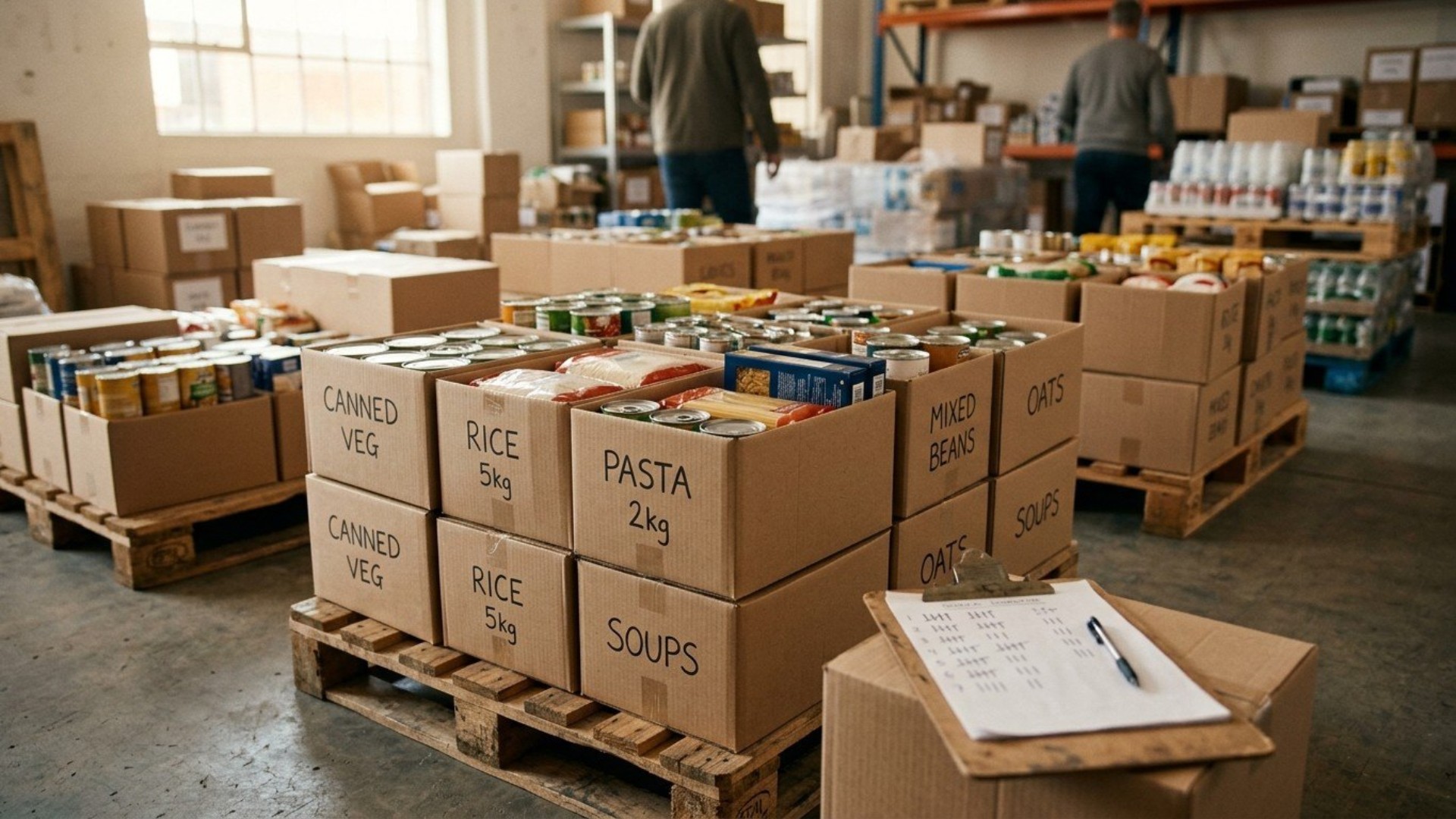
Hurricane Lala hit Hawaii Island in mid-August 2026, bringing heavy rain, flooding, and wind to all nine districts, and causing prolonged power outages that pushed more families toward local food pantries (Hawaii News Now, September 3, 2026). By early September, the Salvation Army's Hawaiian and Pacific Islands Division put out a fresh appeal on behalf of its Hilo, Kona, and Honoka'a corps: they needed canned soup, canned meat, canned vegetables, dry pasta, and rice, with each corps distributing 75 to 150 food bags a week (Maui Now, September 5, 2026, quoting Major Troy Trimmer, the division's commander).
That appeal named the exact items needed, which is the hard part. But the actual ask to the public was still a donation link, not an item-level wishlist. A donor reading the article knows the pantries need rice and canned soup specifically, and still has no way to buy rice and canned soup specifically. That gap, between naming the need and letting someone fulfill it directly, is what a disaster relief wishlist closes.
How a disaster relief wishlist actually works
The mechanics are simple, which is part of why they work under time pressure:
- The nonprofit lists the exact items it needs, the way the Salvation Army named canned soup, canned meat, canned vegetables, pasta, and rice above. Specificity is what makes this work: "food" isn't a wishlist item, "24-can case of chicken noodle soup" is.
- A donor picks an item and buys it. On a platform like Givelink, the donor pays for the exact item, not a general fund. Nothing ships until someone has actually bought it.
- The item ships directly to the nonprofit, arriving photo-verified and tied back to the donor who gave it. The organization never has to shop for what it was given, and the donor gets to see their specific gift arrive rather than trusting that a dollar figure turned into something real.
- The list updates as items get claimed, so a donor arriving on day three sees only what's still needed, not what's already covered. This is the same model as an Amazon wishlist, which is why many nonprofits already run one for ordinary in-kind giving (see our guide on building a nonprofit Amazon wishlist that actually gets fulfilled). A disaster relief wishlist is the same idea, spun up fast, for a need that's urgent instead of routine.
Setting one up during an active emergency
Speed matters more than polish here. A usable disaster relief wishlist needs three things, and none of them require a new system to be built from scratch:
- A short, specific item list. Five to ten line items, each with a quantity if you know it. Don't wait until the list is exhaustive; publish it and add to it.
- A place to publish it that a donor can act on immediately. A dedicated giving platform, a pinned social post with a direct link, or an email to your list all work, as long as the link goes straight to buying an item rather than to a general homepage.
- A shipping address that's staffed to receive deliveries, since items will start arriving within days. If a corps or chapter can't receive shipments directly, route the wishlist to a location that can. Platforms built for in-kind giving, Givelink among them, exist specifically so a nonprofit doesn't have to build this infrastructure itself in the middle of a crisis. The organization posts the list; the platform handles the checkout, the shipping link to the donor's chosen item, and the photo verification on arrival.
Does a wishlist replace a cash appeal?
No, and it shouldn't try to. A nonprofit responding to a disaster still needs unrestricted cash for the things a donor can't ship: fuel, temporary housing, staff overtime, medical costs. The wishlist covers the physical goods layer specifically: the cans, the bags, the diapers, the blankets. Running both side by side, a cash fund for flexible needs and an item-level wishlist for the concrete ones, gives a donor the choice of how they want to help, and gives the nonprofit both kinds of support at once.
Frequently asked questions
What's the difference between a disaster relief wishlist and a general cash appeal? A cash appeal collects money that staff then spends on whatever the organization decides it needs. A wishlist names the exact item up front, and the donor's payment goes directly to that item, which ships to the nonprofit without staff having to shop for it.
How fast can a nonprofit set up a disaster relief wishlist? As fast as the item list itself takes to write. The technical part, publishing items a donor can buy and ship, can go live the same day on a platform built for it, since there's no approval process or setup fee involved on a service like Givelink.
Do donors actually prefer buying a specific item over giving cash? Some do and some don't, which is exactly why running both options matters. A wishlist gives the donor who wants to see their gift arrive as a physical object that option, without asking every donor to choose it.
How does a nonprofit prove a donated item actually arrived, once it ships? On a platform like Givelink, each item is photo-verified on arrival and tied back to the donor who bought it, so the confirmation is built into the process rather than something staff has to track down and send separately.
Can a small, all-volunteer nonprofit run a disaster relief wishlist without extra staff? Yes. The platform handles the checkout and shipping coordination; the nonprofit's only ongoing job is keeping the item list current and making sure someone is available to receive deliveries.
Next step
If your organization is weighing how to ask for disaster-relief goods right now, start with a short, specific item list rather than a general appeal. Browse the live directory of nonprofits already doing this at givelink.app/charities, or see how a free profile works at givelink.app/en/for-nonprofits.
See also





What is Givelink?
Learn from the founders:
Run a nonprofit? Get what you need.
Set your nonprofit up yourself in about 15 minutes. It's free, there's no contract, and you don't need to talk to anyone first.