
Chewy Wishlists for Animal Shelters: What Actually Converts
Nearly every shelter has a Chewy wishlist. Most are built wrong. Here's what the ones that convert have in common.

Panos Kokmotos |
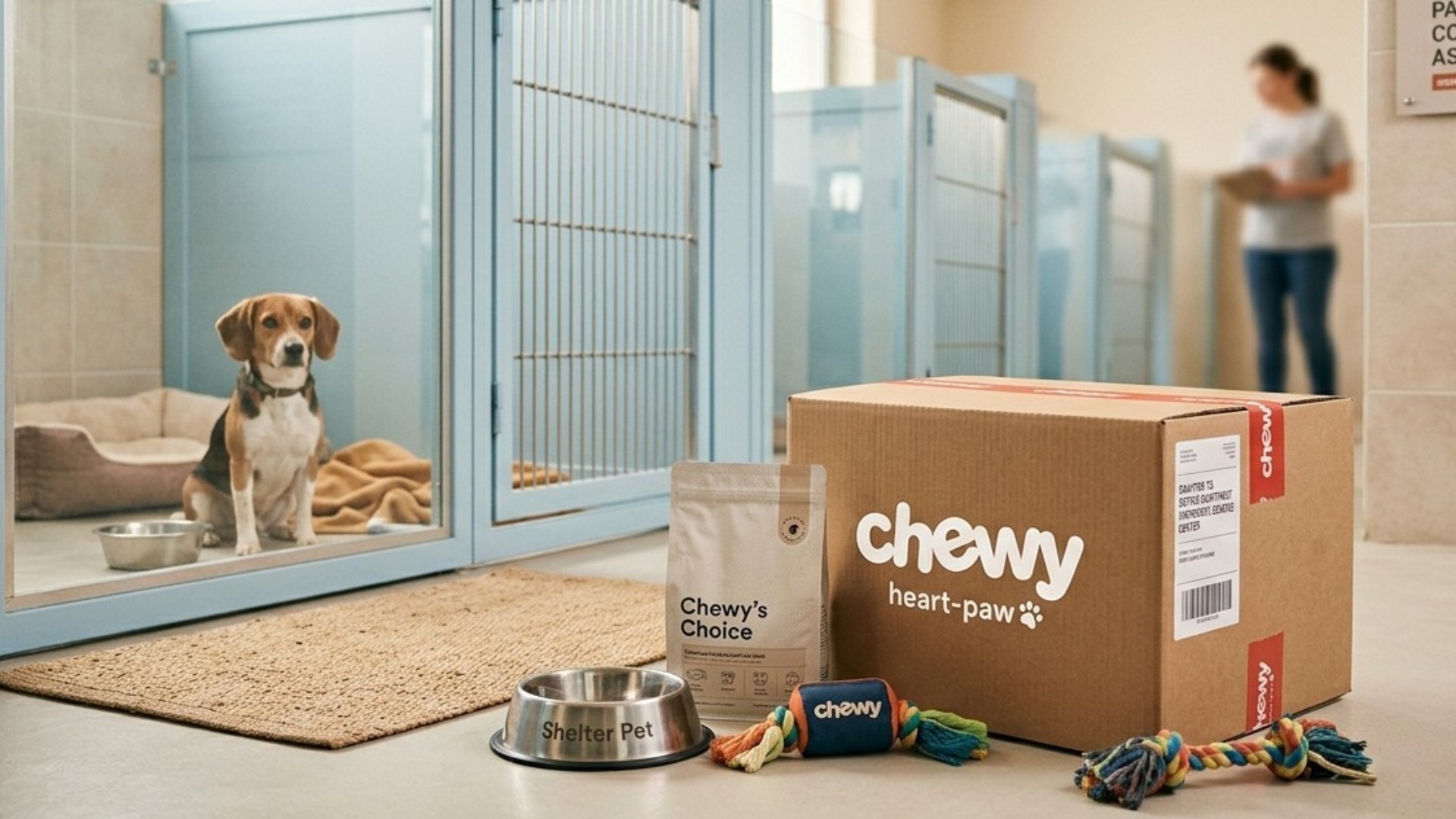
If you run an animal shelter or rescue, you almost certainly already have a Chewy wishlist. Chewy built a dedicated wish list tool specifically for this, and animal welfare is the one nonprofit category where a public goods wishlist isn't a nice-to-have, it's close to standard practice. That's exactly why most shelter wishlists blend into a sea of near-identical lists and underperform. Standing out here isn't about whether you have a wishlist. Almost everyone does. It's about whether yours is built to convert.
Why animal welfare is different from every other category
In Givelink's own outbound research, animal organizations make up the second-largest category in its full prospect list, 108 organizations out of several hundred, behind only the broadest "other" bucket. A live Amazon or Chewy wishlist is close to universal in this category in a way it simply isn't for, say, food banks or back-to-school drives. That's good news (donors already expect to see one) and bad news (yours has to work harder to stand out from every other shelter's list).
Chewy itself has invested real money in this space. The company's own reporting shows more than $27 million in shelter aid through its customer give-back initiatives as of 2020, and a separate release citing more than $30 million in total Giving Tuesday donations for 2021. Both figures are several years old and shouldn't be quoted as current, but they establish something durable: shelter and rescue donors on Chewy's platform give real volume when a shelter's ask is easy to find and act on.
What separates a wishlist that converts from one that doesn't
It's current, specifically for what the shelter needs this week, not this season. A wishlist last updated in the spring, still listing kitten formula in September when the shelter is full of adult dogs, tells a donor the organization isn't paying attention. Update it as intake changes, not on a quarterly schedule.
It names quantities, not just items. "Dog food" invites a single bag. "40 lbs of large-breed dog food, we go through this every 10 days" invites someone to actually check the math and give what's needed.
It's linked from everywhere the shelter already has an audience, not buried in a single "Ways to Give" page. Social bios, adoption listing pages, the email signature of every staff member who emails the public.
It shows what already got funded. A wishlist with everything still needed and nothing marked as received reads as either brand new or neglected. Shelters that show recent fulfillment (a photo, a short caption) signal the list is actively managed and gifts are actually arriving.
Two shelters doing this well right now
Inland Valley Humane Society & SPCA has logged 12 gifts from 12 donors on Givelink, every donor a distinct match, no duplicate givers yet, which is a strong early signal for a wishlist that's reaching new people rather than the same handful repeatedly. Passion for Pitties has 12 gifts from 9 donors and is still actively growing. Neither is a large organization. Both built working goods channels from specific, current, well-promoted lists rather than a large platform investment.
Timing the ask to the shelter's actual calendar
Animal welfare has real seasonal swings that most other in-kind categories don't, and a wishlist that ignores them underperforms one that doesn't.
Kitten season, roughly spring through early fall in most US climates, spikes intake of very young animals needing formula, heat sources, and specific medical supplies. A wishlist that doesn't shift toward those items during that window is asking for the wrong things at the wrong time.
Winter brings a real need for warmth, bedding, heated water bowls for outdoor and barn cats, and blankets, items that are easy to forget when a wishlist was last updated in summer.
The holiday adoption season, November through December, brings a surge of public attention to shelters generally. That's a real opportunity to promote a wishlist to an audience that's already thinking about animals, provided the list is current when that attention arrives, not stale from an update three months earlier.
The tracking problem that's specific to this category
Because animal welfare wishlists run at higher volume than most other categories, per Givelink's own outbound data, the manual side (matching a gift to a donor, sending a personalized thank-you, updating what's still needed) breaks down faster here than almost anywhere else. A shelter running a spreadsheet next to a shared inbox can keep up with five gifts a week. It falls behind fast past that. This is the specific problem an automated platform solves: the gift ships, arrival gets photo-verified, and it's tied back to the donor automatically, without someone manually reconciling a Chewy order against a donor list by hand.
FAQ
Should a shelter use Amazon, Chewy, or both for its wishlist? Both, if staff time allows. Chewy donors skew toward people already shopping for their own pets and browsing shelter lists intentionally; Amazon reaches a broader audience that may not have a pet-specific platform habit. Running both means more items to keep current, so weigh that against actual staff capacity before adding a second list.
How often should a shelter update its wishlist? Whenever intake changes meaningfully, not on a fixed calendar. A sudden intake of puppies or a seasonal illness outbreak should be reflected within days, not at the next scheduled review.
Do donors actually notice when a wishlist looks stale? Yes. Items marked unavailable, broken links, and no recent activity are the most commonly cited reasons a donor abandons a wishlist without giving, according to the mechanics covered in Givelink's general wishlist guide.
Is it worth naming specific pet breeds or ages on the wishlist? Only if it's true and current. "Puppy formula, we have six newborns right now" converts better than a generic ask, but only while it's accurate. Remove it the moment it isn't.
Should a shelter promote its wishlist during adoption events, or only online? Both. A wishlist link on a printed card or a sign at an in-person adoption event reaches people already emotionally engaged with the shelter that day, often a higher-converting moment than a cold social post. Pair the physical prompt with the same link used everywhere else so the two channels reinforce each other.
See how automated matching and photo-verified arrival works for animal welfare partners at givelink.app/charities.
See also





What is Givelink?
Learn from the founders:
Run a nonprofit? Get what you need.
Set your nonprofit up yourself in about 15 minutes. It's free, there's no contract, and you don't need to talk to anyone first.