
for nonprofits
How Medical and Pharmaceutical Donations Work for Nonprofits
Prescription drugs need a state repository program. Supplies and equipment usually don't. Here's the real split.

Panos Kokmotos |
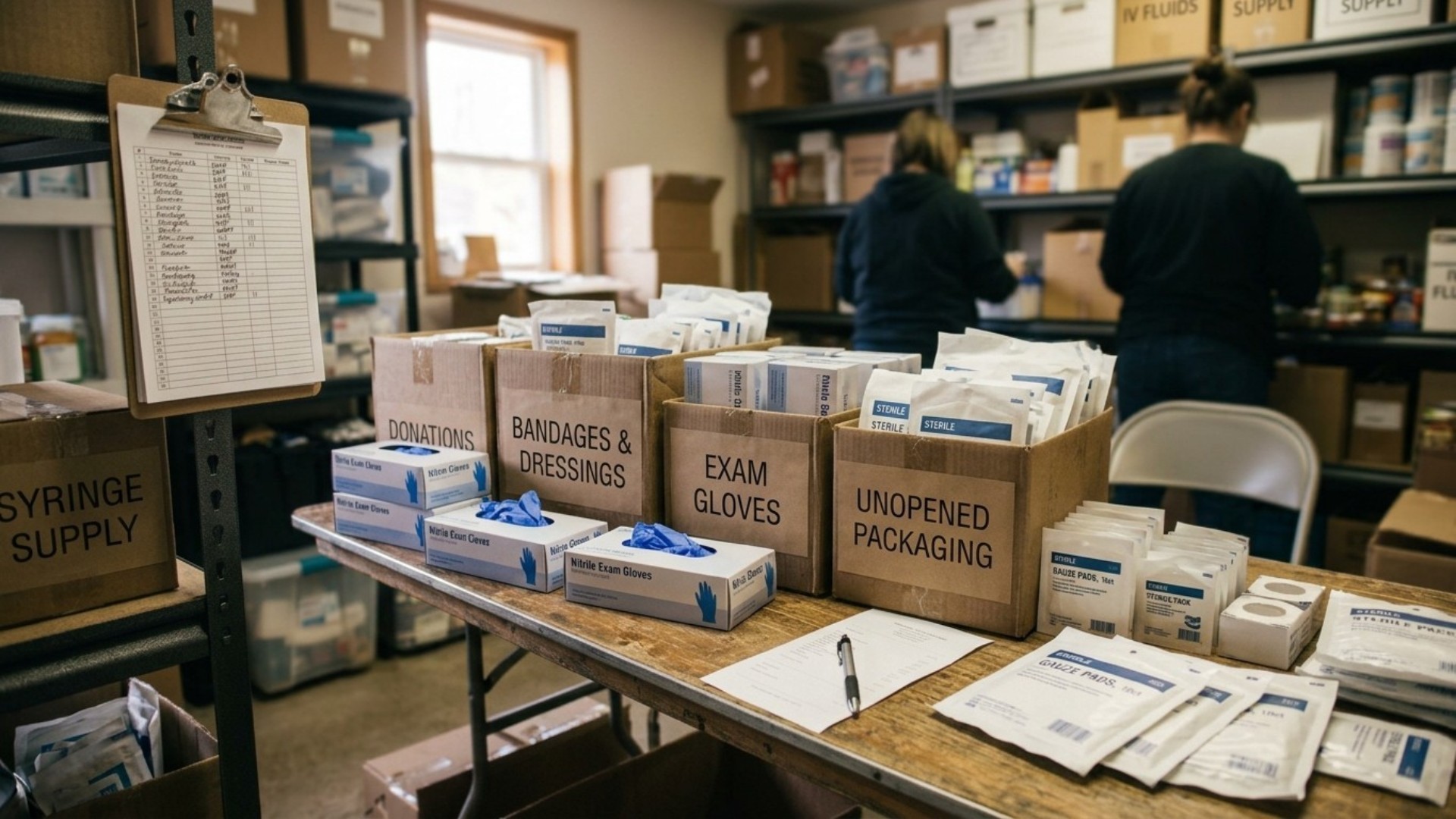
Medical supply donations and prescription drug donations run on two completely different sets of rules, and conflating them is the fastest way to accidentally break a law. Unopened, unexpired medical supplies (bandages, gloves, basic equipment) can generally move from a donor to a free clinic or health nonprofit the same way any other in-kind gift does. Prescription medications cannot. They require a state-licensed drug repository program, and most individual donors and even most nonprofits aren't legally allowed to just hand over leftover pills, no matter how well-intentioned the gift.
If your organization works with a free clinic, community health center, or disaster-relief health program, knowing which track a donation falls into before you accept it saves you from a compliance problem later.
Medical supplies: the easier half
Unopened, sealed, unexpired medical supplies (gauze, gloves, syringes, basic diagnostic equipment, PPE) don't carry the same federal and state restrictions as medications. Organizations like MedShare, Direct Relief, and Americares accept large-scale surplus donations from manufacturers, hospitals, and distributors and redistribute them to clinics, disaster response efforts, and health programs both domestically and abroad. On a smaller scale, a local nonprofit accepting a box of unopened supplies from a hospital's surplus or a closing medical practice is operating in the same general territory as any other in-kind donation: document what was received, follow your organization's standard acceptance policy, and, if the donor wants a tax receipt, issue a written acknowledgment the same way you would for any noncash gift over $250.
The practical limits are more about usability than legality. Expired supplies, anything already opened, and equipment that needs calibration or a service record before reuse are all things a receiving clinic should evaluate case by case, often with input from clinical staff, not just the development office.
Prescription drugs: the regulated half
This is where things change. There's no blanket federal program that lets individuals or facilities donate unused prescription medications to a nonprofit the way they'd donate canned food or clothing. Instead, most states have passed their own drug donation and repository laws, administered through the state board of pharmacy, that create a specific, narrow legal pathway.
A typical state repository program works like this: a licensed pharmacy, hospital, or long-term care facility registers as a repository or distributor. Donated medications, usually from facilities rather than individual patients, must be unexpired, in original sealed and tamper-evident packaging, and properly stored. A licensed pharmacist inspects the medication before it can be redispensed. The medication then goes to a qualifying recipient, typically a free clinic, charitable pharmacy, or low-income patient, often through a program specifically set up for this purpose.
States like Ohio, Florida, and Wisconsin have had active repository programs for years, each with its own registration, inspection, and eligible-donor rules. National nonprofits like Remedichain (operating as Donate My Meds) work specifically within this framework, connecting facilities and patients with state-compliant repository pathways rather than operating as a general drug collection service. If your organization wants to start accepting medication donations, the first call should be to your state board of pharmacy, not a general donation platform, because the rules genuinely vary by state and some states don't have a repository program at all.
What the FDA's role actually is
The FDA doesn't run a donation program and doesn't pre-approve individual drug donations. Its role is mostly about what it prohibits: a medication that's expired, improperly stored, or missing its original packaging is considered misbranded or adulterated if redistributed, regardless of good intentions. This is the federal backdrop that makes state repository programs necessary in the first place: they create a legally compliant path for something that would otherwise run into misbranding issues. During public health emergencies, the FDA has occasionally issued specific guidance or temporary allowances for certain donated products, but there's no standing general exception for everyday medication donations.
International medical donations run on a third set of rules
If your organization sends medical supplies or medications abroad, whether for ongoing programs or disaster response, neither the state repository framework nor a simple domestic in-kind process applies. International medical donations are generally guided by the WHO's Interagency Guidelines for Drug Donations, which exist specifically because poorly managed donations (expired stock, medications labeled in a language the receiving country can't use, items the recipient health system never requested) have been a recurring problem in disaster response for decades. The core principles are straightforward even though the logistics aren't: donate based on actual expressed need rather than what's convenient to clear out of a warehouse, make sure items have at least a year of shelf life remaining at the time they arrive, and never send anything the receiving country hasn't agreed to accept.
Organizations like Direct Relief and Americares build their entire international donation process around these principles, plus the customs, import licensing, and destination-country regulatory requirements that vary by country. If your nonprofit is new to international medical donation and doesn't have that infrastructure, partnering with an established organization that already has the compliance relationships in place is usually far more effective than trying to ship supplies independently.
What this means for a nonprofit building a donation program
If you're setting up or expanding an in-kind donation effort that includes health-related items, split your intake policy into two tracks from the start. Supplies and equipment can usually follow your normal in-kind acceptance process, with the usual checks on condition and usability. Medications need a separate, state-specific pathway, ideally run through or in partnership with a licensed pharmacy that already understands the repository rules in your state. Trying to accept medication donations the same way you'd accept a box of toiletries is the mistake that creates real legal exposure, both for your organization and for the patients who'd eventually receive them.
For everything on the supply and equipment side, a public wishlist works the same way it does for any other category: list exactly what the clinic needs by name and quantity, and let a donor fund the actual item rather than guessing what's useful. That's a much lower-friction way to keep a steady supply of sealed, unexpired basics coming in than waiting for an occasional large surplus donation.
FAQ
Can an individual donate their own leftover prescription medication to a clinic? In most states, not directly. Medication donations generally have to go through a licensed state repository program, and individual-to-clinic donations outside that framework can run into legal issues around misbranding and chain-of-custody requirements.
Does my state have a drug repository program? Many states do, but not all, and the rules differ significantly. Check with your state board of pharmacy before accepting or facilitating any medication donations.
Are donated medical supplies tax-deductible the same way as other in-kind gifts? Yes, assuming they're unopened and unexpired and your organization follows the standard written acknowledgment rules for any noncash gift. The item still needs to be something your organization can actually use.
What happens to expired medical supplies or medications that get donated anyway? They generally can't be redistributed for patient use. Most health nonprofits have a disposal protocol for anything that doesn't meet condition or expiration requirements, separate from their acceptance policy for usable donations.
If your clinic or health nonprofit is building out a public needs list for supplies, Givelink lets donors fund specific items by name and get a photo when they arrive, which keeps the sealed-and-unexpired basics flowing without the guesswork of a general wishlist.
See also
What is Givelink?
Learn from the founders:
Run a nonprofit? Get what you need.
Set your nonprofit up yourself in about 15 minutes. It's free, there's no contract, and you don't need to talk to anyone first.