
for nonprofits
How a Nonprofit Halloween Drive Actually Works
Costumes, candy and makeup collected item by item, so a kid gets what actually fits instead of a bag of leftovers.

Panos Kokmotos |
How a Nonprofit Halloween Drive Actually Works
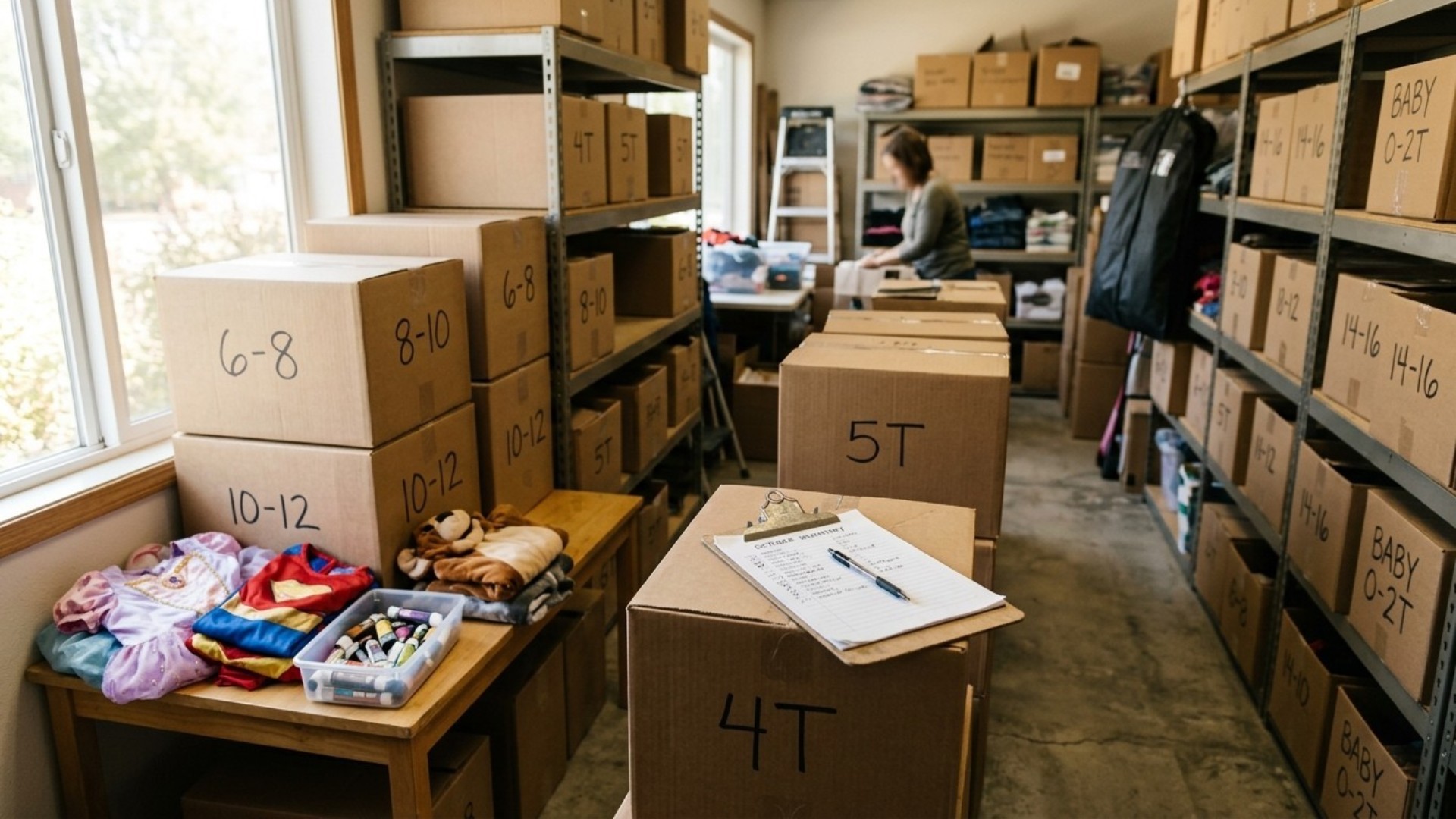
A Halloween drive collects specific items, sized and sorted, for kids who won't otherwise have a costume or candy this year. It works the same way any in-kind drive works: a nonprofit lists exactly what it needs, by size and quantity, and donors give against that list instead of guessing. The part most drives get wrong is treating "costumes" as one category instead of dozens of sizes, and relying only on people who can physically drop something off.
What a Halloween drive actually collects
Look at how the groups already running these drives structure their asks. Jersey Cares collects new or gently used costumes for kids ages 0 to 14, plus masks, wigs, capes and other costume accessories, and unused Halloween face makeup. Candy pails and treat bags count too. What they won't take is just as specific: no costumes tied to drugs, alcohol or mature themes, no lingerie, no decorations, and no candy itself in most cases, since food donations carry their own handling rules.
That's the model worth copying. A drive that says "donate a costume" gets a pile of adult-size superhero outfits and nothing for a 4-year-old. A drive that says "we need costumes in sizes 2T through 14, boys and girls, plus unopened face paint" gets things that actually go out the door in October.
Why the timing matters this year
Halloween spending is expected to hit $13.5 billion in 2026, an average of $115.14 per person, according to the National Retail Federation. Costumes alone account for $4.4 billion of that, split between $1.5 billion on kids' costumes, $2 billion on adult costumes and $920 million on pet costumes. Seventy-one percent of consumers plan to buy a costume this year.
Nearly half of shoppers, 49%, start buying in September or earlier. That's the real reason a nonprofit needs its drive live now, not the third week of October: by the time a typical drive announcement goes out, most of that spending has already happened somewhere else. A wishlist posted in late September catches shoppers before their budget for the season is spent.
Drop-off collection has one structural problem
A table at the front desk or a bin in the lobby only reaches people who can physically get to that lobby. Everyone who wanted to help but lives across town, works during your open hours, or just saw your post online and wanted to act right then, doesn't get counted. That's true of any physical donation drive, not just Halloween ones.
An online wishlist fixes the reach problem without changing what gets collected. A nonprofit posts the same size-and-quantity list it would tape to a donation bin, a donor buys the specific item, and it ships straight to the org. Givelink runs on exactly this model for in-kind giving, so a costume drive can run as a public wishlist alongside any physical drop-off point, not instead of one.
Running the drive without adding a week of staff time
The orgs that pull this off well do three things:
They post sizes, not categories. "Costume, size 6-8, any character" beats "costume" the same way "size 10 sneakers" beats "shoes." Vague asks produce vague donations that someone then has to sort by hand.
They set a hard cutoff, at least a week before distribution. Trick-or-treating doesn't move. A drive that accepts donations through October 30 leaves no time to sort, size-check and hand things out. Miami Springs and other city-run drives close collection with enough runway to actually distribute before the 31st.
They track what's already covered. If a drive already has 20 size 8 costumes and zero size 14s, the ask should update to reflect that, the same way any wishlist should stop showing an item once it's been funded. Posting a static list for six weeks means either overcollecting one size or running short on another.
What about the candy itself
Candy is the one category worth handling on its own track. Ninety-six percent of Halloween shoppers buy candy, accounting for $4.1 billion of this year's spending, per the same NRF survey, so it's tempting to fold candy into the same wishlist as costumes. Most established drives keep it separate for a practical reason: food donations carry health and safety rules that costumes don't. Unopened, factory-sealed candy is generally fine to redistribute. Anything opened, homemade, or without a clear expiration date usually isn't, and accepting it anyway creates a liability problem a donated costume never would. State that distinction on your collection page in plain language, so a donor knows before they show up with a bag of loose candy that it can't go out the door.
Decorations and pet costumes, at $4.3 billion and $920 million respectively this year, are worth noting only because they're a signal of how broad Halloween spending has gotten. Neither is a natural fit for most nonprofit drives, since the actual need, a child who wants to trick-or-treat in something that fits, sits specifically in the costume and candy categories.
FAQ
Does a Halloween drive need its own 501(c)(3) registration? No. It's a seasonal activity under your existing nonprofit status, the same as any other donation drive you run. No separate filing is required.
Should candy be collected the same way as costumes? Handle it separately if you can. Unopened, factory-sealed candy is generally fine to redistribute, but check your state and local health guidance before accepting anything opened or homemade, and say so clearly on your collection page.
How far in advance should a Halloween drive start? Early September is realistic, given that close to half of Halloween shoppers start buying that early. A drive announced in mid-October is competing for what's left of people's budgets, not the whole thing.
What if we only get donations in a few sizes? Post what's still needed and stop advertising sizes you've already covered. A running, updated list gets better results over six weeks than one static flyer.
Ready to see how nonprofits are running item-specific drives online? See how Givelink works or browse the current directory to see what other orgs are asking for right now.
See also
What is Givelink?
Learn from the founders:
Run a nonprofit? Get what you need.
Set your nonprofit up yourself in about 15 minutes. It's free, there's no contract, and you don't need to talk to anyone first.