
for nonprofits
What Food Pantries Actually Need in In-Kind Donations
What food pantries run short on, what they can't use, and the hygiene items donors almost never think to send.

Panos Kokmotos |
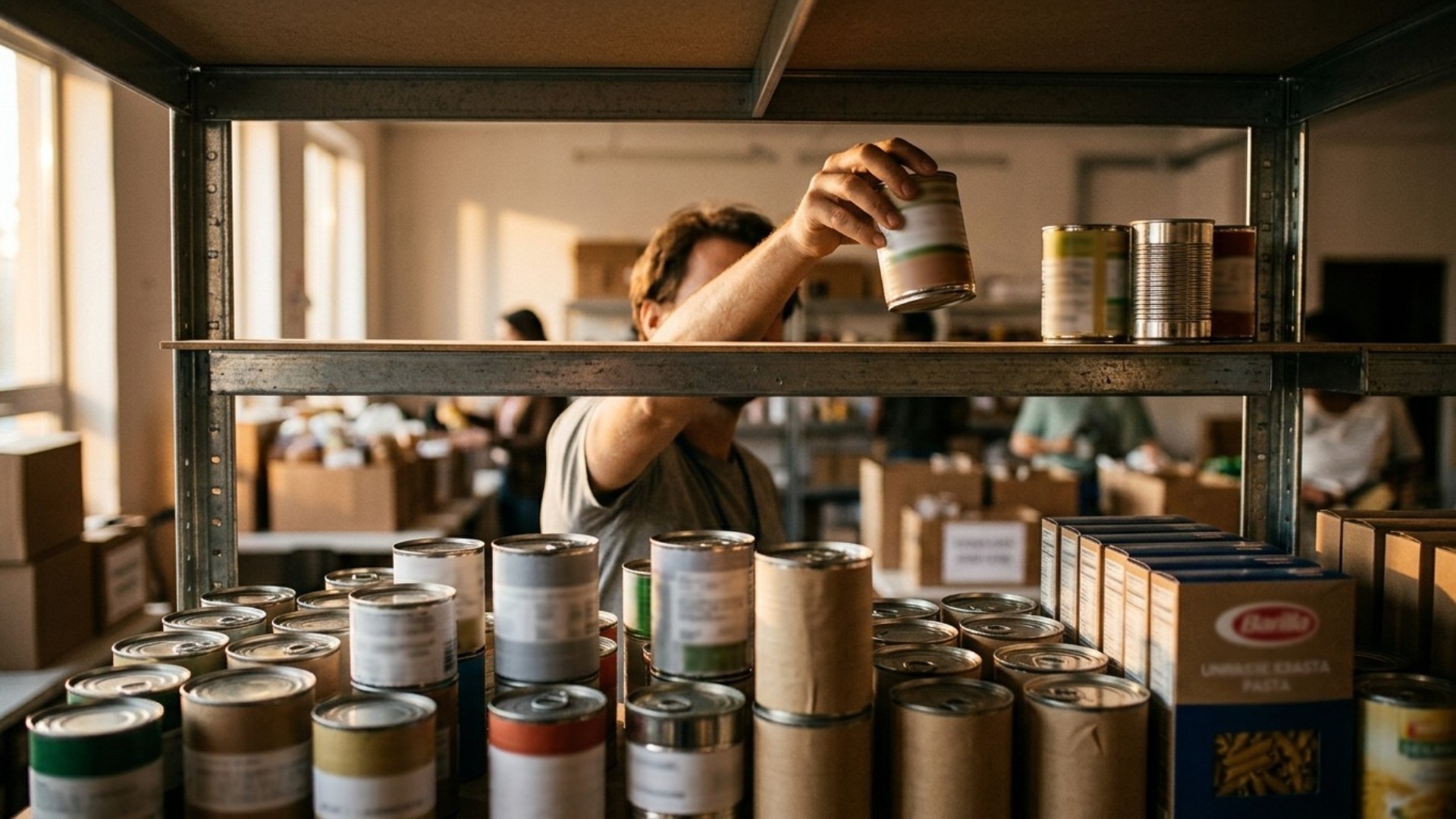
Most food pantries run short on protein, not canned goods in general. Tuna, peanut butter, beans, and shelf-stable milk move fast and get restocked slowly, while canned vegetables pile up in a back room because every drive collects the same ten items. The second thing pantries run short on isn't food at all: toothpaste, diapers, period products, and laundry detergent. None of it qualifies for SNAP, so a family that gets groceries through a pantry often still has to choose between toilet paper and bus fare.
The scale behind the chronic shortage
Feeding America's Map the Meal Gap study, released in July 2026 using 2024 USDA data, put the number of food-insecure people in the US at close to 48 million, including 14 million children. That's the backdrop every individual pantry is operating against: demand this large doesn't move in step with how much a single food drive happens to collect that month, which is exactly why the gap between what's donated and what's actually needed stays chronic instead of closing.
The protein gap, and why it's chronic
A pantry's intake mirrors what's easiest for a donor to grab off a grocery shelf during a food drive: canned vegetables, boxed pasta, canned fruit. Those are genuinely useful, but they're also what every other drive collects, so pantries end up with a surplus of starch and produce and a chronic shortfall of protein. Canned tuna and chicken, dried or canned beans and lentils, and peanut butter or other nut butters are the items pantry staff ask for most often and get least, according to guidance aggregated by food bank intake teams. Whole grains (brown rice, whole-wheat pasta, oatmeal) and low-sodium canned vegetables round out what actually gets used quickly rather than sitting on a shelf.
Shelf-stable milk and infant formula are worth calling out separately. Pantries serving families with young kids go through both fast, and both are expensive enough that a donor rarely thinks to add them to a grocery cart during a food drive.
What pantries can't use, even when it's donated with good intentions
Three categories cause real problems for intake staff, not just mild annoyance:
Anything opened, torn, or past its date. Pantries operate under the same food-safety expectations as a grocery store. A dented can with an intact seal is usually fine; a can with a bulging lid, a torn label, or a date that's already passed gets thrown out, which means the donation cost staff time to sort and still produced zero food for anyone.
Homemade food. No pantry can accept it, for the same allergen and liability reasons a school bake sale can't serve it to strangers.
Oversized commercial cans. A #10 can that feeds 50 people in a cafeteria line is useless to a family cooking for four. It looks generous on a donation receipt and sits in storage until it's eventually discarded.
The practical rule for donors: if you wouldn't eat it yourself in its current state, don't send it. A pantry would rather receive four cans of tuna than forty cans of something nobody can use.
The hygiene gap nobody plans a drive around
SNAP benefits cover food. They don't cover toothpaste, deodorant, toilet paper, laundry detergent, diapers, or period products, which means a family relying on a pantry for groceries is often also short on every one of those items, with no program designed to cover the gap. Pantry staff describe hygiene product shortages as a near-constant problem, not a seasonal one, specifically because almost no food drive is built to collect them. A back-to-school drive collects pencils; a holiday drive collects canned ham. Almost nothing collects toothpaste.
This is also where in-kind donation platforms matter more than a generic drive. A physical collection bin at a grocery store entrance will mostly get food, because that's what people expect to drop in a food bin. A published list of specific needs, shared the way a wedding registry gets shared, reaches people who are willing to buy exactly what's missing, including the hygiene items a bin never collects.
How a published needs list closes the mismatch
The core problem with in-kind giving at a food pantry is information, not generosity. Donors want to help and will buy almost anything a pantry asks for directly. What they can't do is guess correctly, which is why the same ten items show up every drive while protein and hygiene products stay short.
Givelink lets a pantry post the specific items it's actually low on right now, update that list as intake changes week to week, and let a donor buy and ship the exact item instead of guessing. The pantry sees what's coming before the truck arrives, and the donor gets a photo confirmation when it's delivered instead of dropping a can in a bin and never knowing if it helped. Browse how it works for nonprofits or see what other charities have published as real, current needs.
A pantry already running an Amazon wishlist for exactly this reason keeps the convenience of that format but loses the donor relationship when Amazon fulfills the order; a published Givelink list keeps the donor's name attached to the delivered gift. For more on how that mismatch between online giving and transparency plays out broadly, see our guide to what actually happens to a donated item after it's given.
Three things to prioritize if you run intake for a pantry
- Publish a running list, not a one-time wish. Needs change week to week based on what came in and what got distributed. A static flyer from three months ago sends the wrong signal.
- Ask for protein and hygiene by name. "Canned goods" gets you more canned vegetables. "Canned tuna, peanut butter, and toothpaste" gets you those three things.
- Say what you can't use, plainly. A short note that you can't accept expired items, open packages, or #10 cans saves volunteer sorting time and keeps a well-meaning donor from wasting their own.
FAQ
What food items do food pantries need most? Protein tops the list: canned tuna or chicken, dried or canned beans, lentils, and peanut butter. Whole grains like brown rice and whole-wheat pasta, plus low-sodium canned vegetables, round out what moves fastest. Shelf-stable milk and infant formula are in chronic short supply at pantries serving families with young children.
Can food pantries accept homemade or home-canned food? No. Homemade food can't be accepted at any food pantry because of allergen disclosure and food-safety liability, the same reason a school can't sell home-baked goods to the public at most fundraisers.
Why do food pantries always seem to run out of hygiene items? Because SNAP and most food-assistance programs cover groceries, not toothpaste, diapers, period products, or laundry detergent. Almost no donation drive is designed around these items, so pantries chronically run short on them even when food donations are steady.
Is a #10 can a useful donation? Usually not for a pantry serving individual households. Those cans are sized for institutional kitchens and typically sit in storage until they're discarded, even though they look like a generous gift on paper.
How do I know what a specific pantry needs right now instead of guessing? Ask them directly, or look for a published needs list that updates as intake changes. A platform like Givelink lets a pantry post exactly what it's short on this week so a donor can buy the real thing instead of the ten most commonly donated items.
See also
What is Givelink?
Learn from the founders:
Run a nonprofit? Get what you need.
Set your nonprofit up yourself in about 15 minutes. It's free, there's no contract, and you don't need to talk to anyone first.