
What Community Health Centers Actually Need in Donations
FQHCs and free clinics serve 32.7 million patients a year on tight budgets. Here's what they ask donors for most, beyond cash.

Panos Kokmotos |
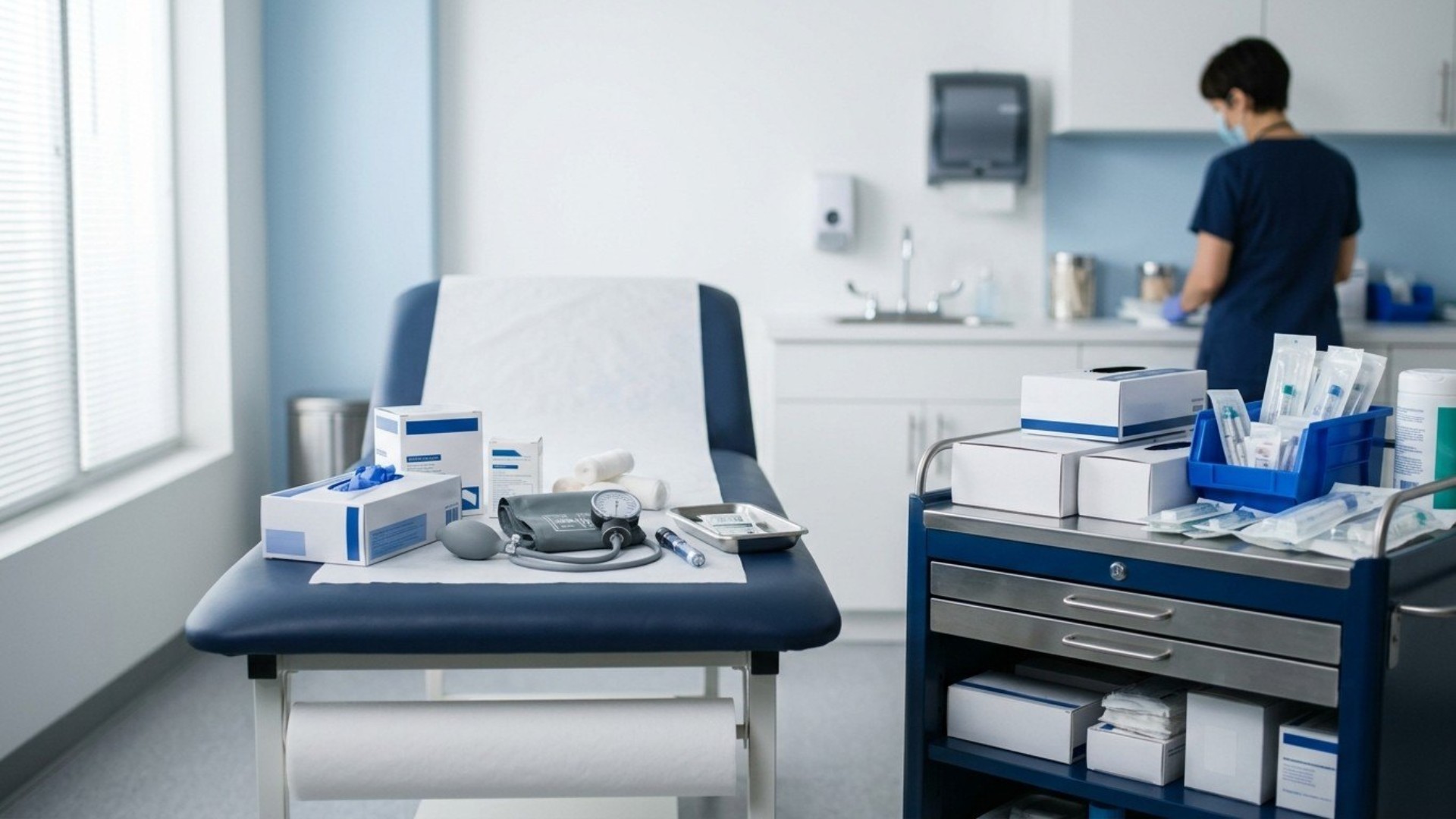
Community health centers need exam-room basics first: gloves, gauze, syringes, diagnostic supplies, and donated medications, plus the furniture and cleaning supplies that keep a clinic running. Federally Qualified Health Centers (FQHCs) and free clinics operate on thin margins because they serve patients regardless of ability to pay, so every supply that doesn't come out of the budget is a dollar that goes back into care.
Why this matters right now
Health centers delivered care to a record 32.7 million patients in 2025, according to the Health Resources and Services Administration (HRSA). That's up more than 350,000 from the year before, across more than 16,000 service sites nationwide. One in 8 children, 1 in 5 rural residents, and 1 in 15 adults over 65 see a health center for some part of their care. That growth is good news for patients and a real squeeze on supply budgets, since most of these centers are reimbursed below cost for a large share of their visits.
A health center isn't a hospital and isn't a typical nonprofit thrift operation either. It runs exam rooms, a pharmacy counter in some cases, a front desk, and often a dental chair, all needing restocking on a schedule that doesn't pause for a slow fundraising quarter.
Medical supplies and diagnostic basics
This is the largest and most constant need. Gloves, syringes, bandages, and basic diagnostic tools (blood pressure cuffs, pulse oximeters, otoscopes) get used up daily and have to be replaced on a predictable cycle. A clinic that runs out of exam gloves doesn't close for the day, it pulls money from somewhere else in the budget.
Donated medications and vaccines matter even more, because access to them directly changes patient outcomes for conditions that would otherwise go untreated between visits. Centers that accept pharmaceutical donations generally need them unexpired with a reasonable shelf life remaining, and most require they come through a licensed distributor or a recognized donation program rather than a loose box of leftover prescriptions, for the same safety reasons that apply to any medication handling.
Facility and furniture needs
Cleaning and sanitation products are a recurring, unglamorous need: disinfectant wipes, hand sanitizer, paper towels. They're the kind of thing a donor rarely thinks to offer but a clinic manager is always tracking.
Furniture is the other steady ask: exam tables, waiting-room chairs, filing cabinets for records that still live on paper in smaller centers. These are big-ticket items for a clinic budget and a natural fit for a business upgrading its own office or medical equipment and looking for a tax-deductible way to move the old set out.
Dental and vision care have their own list
A lot of health centers run a dental chair, an eye exam room, or both alongside primary care, and those services have a donation list all their own. Dental programs regularly need toothbrushes, floss, and fluoride varnish for patient take-home kits, along with consumables like dental burs and impression material that get used up fast. Vision programs need frames and lenses at a range of prescriptions, since a patient who can't afford glasses often can't afford the exam either, and an unfilled prescription doesn't help anyone. A center that offers either service usually keeps a running list of exactly these items, separate from its general medical-supply list, because the sizing and specifications are different enough that a generic donation often doesn't fit.
Operational and technology support
Office supplies, printers, and basic technology (laptops, tablets for patient intake) reduce overhead in a way that frees cash for the clinical side. Transportation assistance, whether that's gas cards or a relationship with a local rideshare program, also shows up on wish lists regularly, since a missed appointment for a patient without reliable transportation often means a missed diagnosis or a lapsed treatment plan.
How a center can actually ask for this instead of hoping it shows up
Most centers that get a steady stream of in-kind support do one thing well: they say exactly what they need, in specific terms, where a donor can see it. "We need exam gloves" gets ignored. "We need 10 boxes of size-medium nitrile exam gloves, non-latex" gets donated.
That's the gap Givelink is built for. A health center (or the nonprofit arm that supports one) lists the specific items it needs on a public wishlist, a donor funds that exact item, and the item gets delivered and photo-verified so the center isn't managing a loose inbox of "can I drop off some old office chairs" emails. It costs nothing to set up and takes about ten minutes a month to keep current.
In practice, that means a clinic manager updates the list once a supply run tells them what's running low, rather than waiting for a quarterly fundraising push to remember to ask. A local business that wants to help on an ongoing basis, not just once, can check back on that same list every month and fund whatever's actually needed that week, which tends to produce a steadier relationship than a single large one-time gift.
FAQ
Can a community health center accept donated prescription medications directly from individuals? Usually not. Most centers only accept pharmaceutical donations through a licensed distributor, a state-recognized drug donation program, or a formal partnership, because dispensing unverified medication carries real liability and safety risk. If a center lists medication needs publicly, check their specific intake process before donating.
Are donations to a Federally Qualified Health Center tax-deductible? FQHCs are nonprofit 501(c)(3) organizations or operate under one, so in-kind donations of goods are generally deductible at fair market value, the same as a donation to any other registered nonprofit. Get a receipt and, for anything over $500 in claimed value, keep records showing how you arrived at that value.
What's the easiest first donation for a business to make to a local health center? Exam room consumables (gloves, gauze, basic diagnostic supplies) and cleaning products are the items centers run through fastest and the easiest to size correctly, since a clinic manager usually knows exactly how many units they go through in a month.
Do health centers need donated furniture even if it's used? Yes, as long as it's in good working condition. Exam tables, waiting-room seating, and office furniture in solid shape are welcome at most centers. Check with the specific clinic first, since space and delivery logistics vary.
See how a nonprofit sets up its own wish list at givelink.app/en/#howItWorks, or browse the live directory of nonprofits already doing this at givelink.app/charities.
See also
What is Givelink?
Learn from the founders:
Run a nonprofit? Get what you need.
Set your nonprofit up yourself in about 15 minutes. It's free, there's no contract, and you don't need to talk to anyone first.