
How to Get Product Donations for Your Nonprofit
The channels nonprofits use to source in-kind gifts, how to pick the right one, and why asking alone often isn't enough.

Panos Kokmotos |
How to Get Product Donations for Your Nonprofit
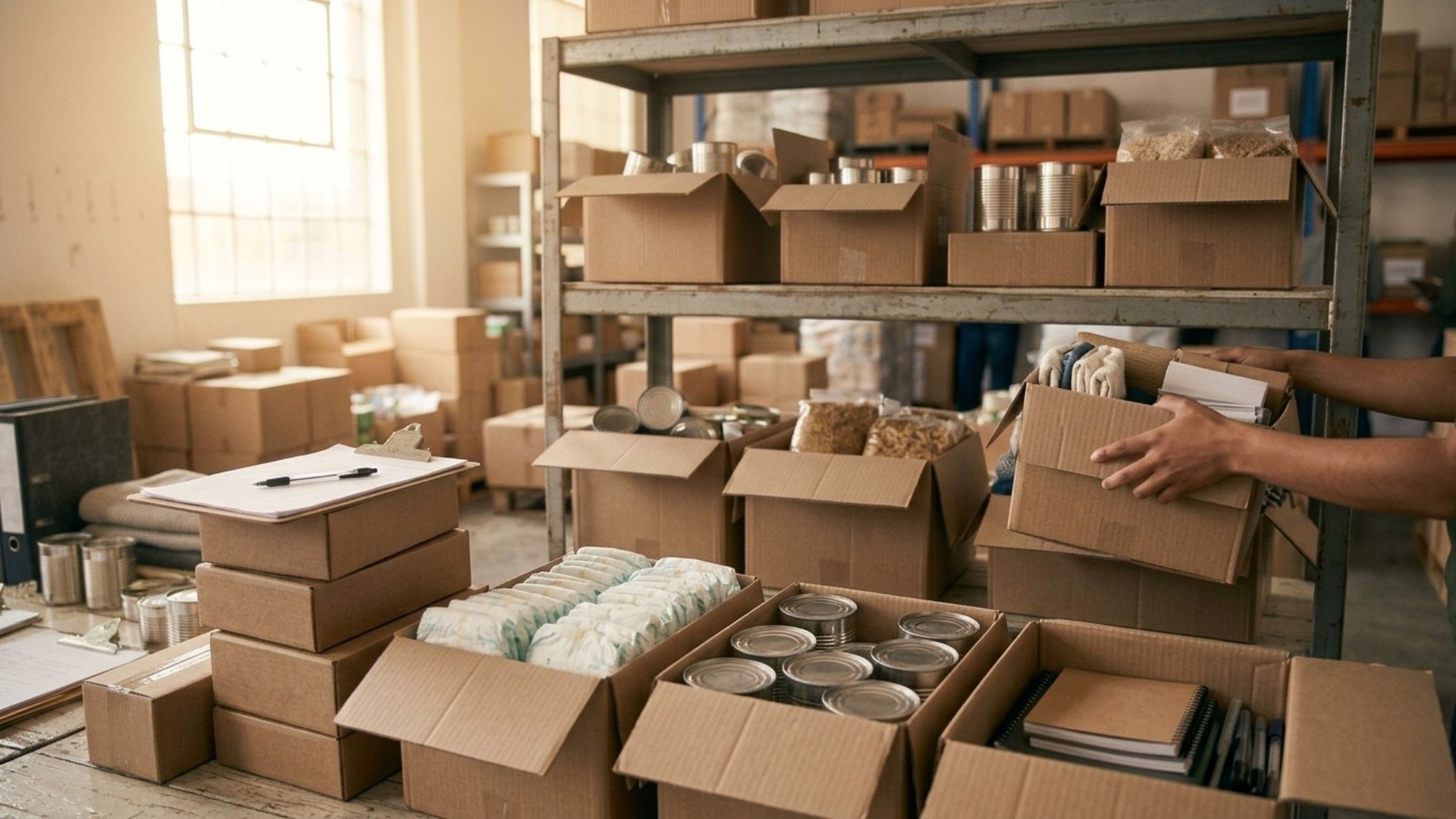
Nonprofits get product donations through 5 main channels: corporate giving and CSR programs, retail overstock and damaged-goods donation programs, individual donor wishlist-style giving, manufacturer donation programs, and community drives. Most organizations end up running 2 or 3 of these at once, because each one is good at a different kind of need. The channel that gets you a truckload of donated furniture once a year isn't the same one that keeps your food pantry stocked with cereal every week. Picking the right mix, and knowing where the gaps are, matters more than any single tactic.
The main channels nonprofits use for product donations
Corporate giving and CSR programs. Most mid-size and large companies run a corporate social responsibility program with a budget set aside for in-kind giving, not just cash grants. Retailers, manufacturers, and distributors are the most common sources because they already move physical goods at scale. The catch is that these programs usually want a formal request, a 501(c)(3) letter, and sometimes a multi-week review cycle, so they suit planned, larger asks rather than urgent, one-off needs.
Retail overstock and damaged-goods donation programs. A large share of what retailers can't sell, whether it's overstock, returned merchandise, or goods with cosmetic damage, doesn't go to landfill. It gets routed through redistribution networks built specifically to move that inventory to nonprofits. Good360's nonprofit membership program is the best-known version of this: nonprofits join as members and then request donated goods, from corporate partners' overstock and returns, through an online catalog rather than approaching each retailer separately. NAEIR runs a similar model for surplus corporate inventory, letting member nonprofits order donated products from a shared catalog for a small annual fee instead of shipping costs. If your nonprofit needs bulk goods (clothing, household items, building supplies) rather than one specific product, this channel is worth investigating before you cold-email individual retailers.
Individual donor wishlist-style giving. This is the channel most people think of first: a nonprofit lists specific items it needs, and individual supporters buy them directly. It scales down to a single box of diapers and doesn't require a formal application, which makes it the right fit for ongoing, smaller, recurring needs rather than a one-time capital ask. We've written a full breakdown of how the Amazon wishlist approach works and where it falls short, so we won't repeat that here.
Manufacturer product donation programs. Some manufacturers, particularly in food, hygiene, apparel, and consumer electronics, run their own direct donation programs rather than routing through a redistributor. These tend to be product-specific (a hygiene brand donating soap, a shoe company donating footwear) and are worth pursuing when your nonprofit's need lines up closely with what a specific manufacturer makes. Candid's guide to finding in-kind gifts is a solid starting point for identifying which manufacturers in your sector actually run these programs.
Community drives. Food drives, coat drives, school-supply drives, run by a local business, a school, a congregation, or your own volunteer network. These are low-cost to organize and build local visibility, but they're inconsistent by nature. You get a surge of donations around the drive date and then nothing for months, so they work best as a supplement to a steadier channel, not a replacement for one.
How to match the channel to what you actually need
The channel that works depends on 2 questions: how often do you need this item, and how big is the ask.
If you need a recurring supply of small items, hygiene products, food staples, school supplies, office consumables, individual donor giving is usually the better fit. Corporate and retail channels move in bulk on their own schedule, which is great for a one-time stock-up but bad for a pantry that needs restocking every 2 weeks. A steady base of individual donors funding specific items on a rolling basis matches that rhythm much better than waiting on a quarterly corporate shipment.
If you need a one-time large asset, a fleet of laptops, furniture for a new facility, building materials, corporate giving and retail redistribution programs are the better fit. These channels are built to move volume, and a single corporate partner or a Good360/NAEIR order can cover a need that would take hundreds of individual donors to fund piece by piece.
If your need sits in between, a specific piece of equipment, a vehicle, a batch of computers for a training program, manufacturer programs or a targeted ask to a handful of individual donors who care about your exact mission tend to outperform a generic corporate application, because you can be precise about what you need and why.
The real bottleneck most small nonprofits hit
Here's what actually trips up most small and mid-size nonprofits: they know how to ask. The problem is what happens after the ask.
A generic cash appeal ("help us buy supplies") doesn't guarantee the money goes toward the item you actually need most this month. Donors give, but the nonprofit still has to do the purchasing, the sourcing, and the tracking, and there's no guarantee the funds cover the right thing at the right time.
A wishlist solves the specificity problem, a donor can see exactly what's needed, but it introduces a different friction. Classic wishlist tools ship the item to the donor's own address first, and then the donor has to repackage it and ship it to the nonprofit themselves, or the nonprofit has to publish its shipping address publicly and hope the item arrives, unverified, with no easy way to say thank you to the right person for the right gift.
So nonprofits end up choosing between 2 imperfect options: a flexible ask that doesn't guarantee the right item, or a specific ask that puts real shipping friction on the donor. Neither one closes the loop between "here's exactly what we need" and "here's proof it arrived."
Where item-level, donor-funded giving fits in
This is the gap that item-level donation platforms are built to close, and it's worth understanding as its own channel rather than a replacement for the others. The model: a nonprofit posts the exact physical items it needs, a donor funds one specific item, and it ships directly to the nonprofit, photo-verified on arrival and tied back to that donor and that gift. No wishlist redirect through the donor's own address, and no generic cash pool that might not cover what's actually needed.
Givelink works this way, and it's free for nonprofits to use, no setup fee, no platform fee, no subscription, which matters because it means you can run it alongside whatever else you're already doing rather than instead of it. A nonprofit like Swords to Plowshares has used it to let individual donors fund specific items directly, the same way a food pantry might use a community drive for a holiday surge and a corporate partner for a annual bulk order. It's one more channel in the mix, aimed specifically at the recurring, item-specific need that corporate programs move too slowly for and generic cash asks don't solve precisely enough. You can see how the flow works on the how it works page, or browse live nonprofit profiles to see it in practice.
FAQ
What's the easiest way for a small nonprofit to start getting product donations? Start with individual donor giving for your recurring, smaller needs, since it doesn't require an application or approval cycle. Layer in a corporate or retail redistribution program like Good360 or NAEIR once you have a larger, planned need, since those take more lead time to set up.
Do I need a 501(c)(3) to get product donations? For corporate CSR programs, manufacturer donation programs, and networks like Good360 or NAEIR, yes, you'll typically need proof of 501(c)(3) status to apply. For individual donor giving and community drives, formal nonprofit status helps with trust but isn't always a hard requirement to start.
How is item-level donor giving different from an Amazon wishlist? Both let a donor fund a specific item your nonprofit named. The difference is what happens after the donor clicks buy: an item-level platform ships the item directly to the nonprofit and verifies its arrival, while a classic wishlist often ships to the donor's own address first, leaving repackaging and reshipping to them.
Can I use more than one of these channels at the same time? Yes, and most established nonprofits do. A common setup is individual donor giving for ongoing supply needs, a seasonal community drive for visibility and a donation surge, and an application to a corporate or retail redistribution program for larger, less frequent asks.
Next step
If your nonprofit doesn't yet have a way for individual donors to fund specific items directly, start by looking at how Givelink works for nonprofits. Setting up a profile takes a few minutes, there's no cost, and it slots in alongside whatever corporate, retail, or community-drive channels you're already running.
See also





What is Givelink?
Learn from the founders:
Run a nonprofit? Get what you need.
Set your nonprofit up yourself in about 15 minutes. It's free, there's no contract, and you don't need to talk to anyone first.