
Disaster Donations: How Nonprofits Ask for the Right Items
Unrequested goods become a second disaster. Here's how local nonprofits publish a needs list, say no to the rest, and keep intake under control.

Panos Kokmotos |
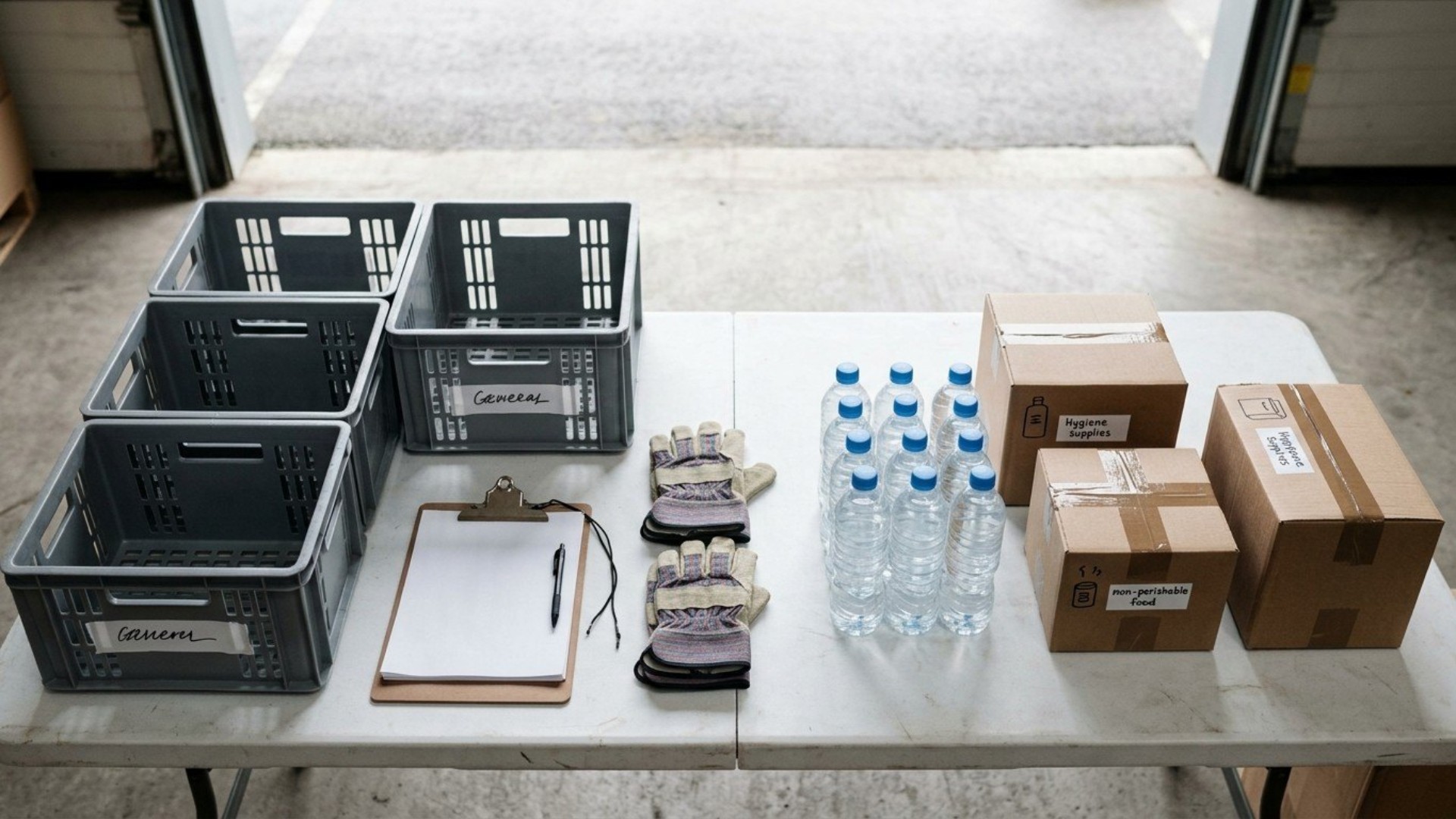
After a disaster, a local nonprofit controls the donation flow by doing three things quickly: publish a short list of exactly what's needed, say plainly what you don't want, and tell people where and when items can be dropped off. Without that, well-meaning donors send whatever they have, and sorting it becomes a second crisis on top of the first.
Why unrequested goods hurt
The National Voluntary Organizations Active in Disaster (National VOAD) is blunt about it. Its guidance tells donors "Do not send or bring unsolicited donations," and says cash is best because agencies can buy what's needed from familiar supply chains, buy locally, and avoid shipping costs. It adds that clothing, household items, and mixed or perishable food require volunteers to sort, package, transport, and store them, which pulls labor away from helping survivors.
Team Rubicon calls the result the "second disaster" and gives examples:
- Hurricane Helene, Western North Carolina (September 2024). Unrequested supplies flooded into Asheville with no one to receive or store them, and business leaders searched for a warehouse of about 1 million square feet.
- Hurricane Harvey, Houston (2017). Winter coats kept arriving during a month when average highs topped 94°F, eventually filling a warehouse.
- Gatlinburg wildfires (2016). Two pallets of unusable clothing, including fur coats and bathing suits, sat uncovered and unclaimed for weeks. The International Federation of Red Cross and Red Crescent Societies' disaster law program describes the same pattern abroad: unsolicited goods add "confusion, waste and extra work" when local responders are already overstretched. Its recommendation is to send only goods that have been expressly requested.
What that means for a local nonprofit
The advice to donors is "give cash." But you're also the one fielding the phone calls from people who want to bring physical items, and some of those items are needed. Your job is to channel them.
1. Publish a short, specific needs list. Not "supplies." Write "case of 24 bottled water," "adult work gloves, size L," "new socks, all sizes." Specific requests are easier to meet and easier to turn away from everything else.
2. Publish a not-needed list. Team Rubicon's examples are mostly items nobody asked for. If used clothing, toys, or mixed canned goods will overwhelm you, say so in the same post as the needs list.
3. Name one drop point and set hours. Random drop-offs at staff homes and church doors are how items get lost. One address, one schedule, one person accountable.
4. Decide your capacity in advance. The Asheville warehouse search shows what happens when volume outpaces storage. If your space holds 20 pallets, your needs list should stop at 20 pallets, and you should update it when you're full.
5. Update the list daily. Needs change. What was urgent on day 2 may be oversupplied by day 5. A stale list brings in the wrong things for weeks.
6. Point money to the right place. If your cash donations go through your own site, say so. If you're a small group that can't process funds, point donors to a vetted organization. National VOAD directs donors to its member organizations.
A practical timeline
This is general operating logic, not a sourced standard, so adjust to your situation. In the first days, most needs are things you can buy locally, which is why cash is favored. Weeks later, as recovery shifts to households restarting daily life, needs get more specific: tools, bedding, cleaning supplies, school items for kids who lost theirs. That later phase is where an item-specific request works best, because you know what is missing.
FAQ
Should a local nonprofit accept all donated goods after a disaster? No. National VOAD tells donors not to send unsolicited donations, and sorting unrequested items pulls volunteers away from direct help. Accept what's on your published needs list.
Why is cash recommended over goods? Per National VOAD, cash lets agencies buy needed items through familiar supply chains, support the local economy, and skip shipping. Donated goods have to be sorted, packaged, transported, and stored.
What do we do with items we didn't ask for? Decide before you open the doors. Have a plan for passing them to another local organization or declining at intake, so they don't pile up.
How do we tell the public what we need? Post a specific list where people already look: your site, your social accounts, and local news contacts. Update it as needs change.
Where Givelink fits
A needs list only works if the items that show up match it. On Givelink, a nonprofit posts specific items on a public wishlist and donors fund those exact items, so what arrives is what you asked for. That's a tool for the recovery phase, when needs are specific, not a replacement for emergency cash. If you want to set one up before the next event, see how it works for nonprofits or browse the live directory.
See also




What is Givelink?
Learn from the founders:
Run a nonprofit? Get what you need.
Set your nonprofit up yourself in about 15 minutes. It's free, there's no contract, and you don't need to talk to anyone first.