
blog
LiquiDonate + Givelink: The Full Supply Chain of In-Kind Giving
LiquidDonate connects 4,600+ nonprofits with donated goods from retailers. Givelink connects donors to specific nonprofit needs with photo proof. Together, they're closing every gap.

Panos Kokmotos |
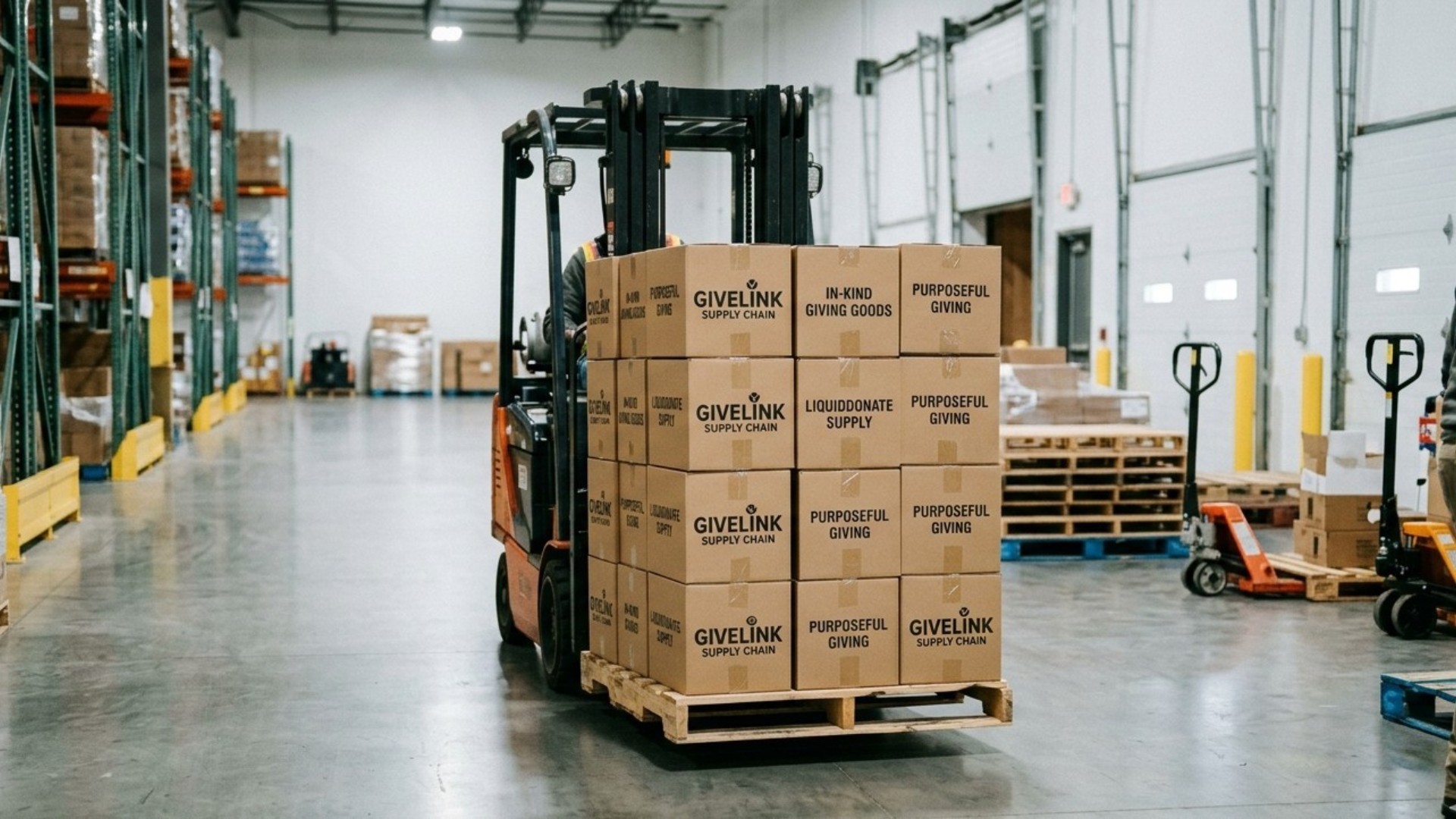
LiquidDonate + Givelink: The Full Supply Chain of In-Kind Giving
LiquidDonate connects 4,600+ nonprofits with donated goods from retailers. Givelink connects donors to specific nonprofit needs with photo proof. Together, they're closing every gap.
In-kind giving — the donation of specific goods rather than cash — has two separate supply chains, and most nonprofits are only connected to one of them. The first supply chain is corporate: companies with surplus inventory, customer returns, and excess stock that they want to route to nonprofits rather than landfill. LiquidDonate has built the infrastructure for this chain, connecting 4,600+ partner nonprofits with a marketplace of donated goods from retail partners. The second supply chain is individual: donors who want to give specific items to specific organizations and see confirmation that their gift arrived. Givelink has built the infrastructure for this chain. Together, they represent the full picture of what sustainable, verifiable in-kind giving looks like in 2026. Here is how they fit together — and what it means for nonprofits that are part of both networks.
Key Takeaways
- LiquidDonate serves 4,600+ nonprofits across 53 organization types in the U.S. and Canada (LiquidDonate, 2026).
- LiquidDonate's model is corporate-to-nonprofit: retail surplus, customer returns, and donated inventory routed to organizations that need them.
- Givelink's model is individual-to-nonprofit: verified donors giving specific items from a nonprofit's live wishlist with photo-confirmed delivery.
- Both platforms are free for nonprofits — no fees, no contracts, no minimums.
- Together they cover the full in-kind supply chain: corporate surplus from LiquidDonate, donor intent from Givelink.
The two in-kind supply chains nonprofits need
Most nonprofits think about in-kind giving as a single category. In practice, it has two very different sources — with different mechanics, different timing, and different organizational demands.
Corporate in-kind — what LiquidDonate specializes in — comes from companies that have surplus goods they want to donate rather than liquidate or discard. These goods arrive in volume, often unpredictably, and typically cover categories that map to large-scale inventory patterns: consumer electronics, clothing, household goods, personal care. The nonprofit receives them through a marketplace model — they opt in to categories they can absorb, and goods arrive as they become available.
Individual in-kind — what Givelink specializes in — comes from donors who want to give something specific to an organization they've chosen. These gifts are individually motivated, predictably sized (a single item or a small bundle), and timed to a donor's giving decision. The nonprofit receives them in consistent biweekly batches of exactly the items on their wishlist.
A nonprofit that is connected to both LiquidDonate and Givelink has access to both supply chains: volume goods from corporate partners when they're available, and specific, donor-motivated goods on a predictable biweekly schedule from individuals who chose them.
"Real needs. Real proof. Real connection."
What LiquidDonate and Givelink have in common — and where they differ
| Dimension | LiquidDonate | Givelink |
|---|---|---|
| Source of goods | Corporate partners (retailers, vendors) | Individual donors |
| Selection model | Nonprofit opts into categories | Nonprofit lists specific items on wishlist |
| Delivery timing | As goods become available | Biweekly batch delivery |
| Goods type | Surplus / return inventory | New, specified goods |
| Donor relationship built | No (corporate source) | Yes — named donor, CRM-compatible |
| Photo delivery confirmation | No | Yes — uploaded by nonprofit staff |
| Cost to nonprofit | Free | Free forever |
| Best for | Volume goods, household/consumer categories | Specific operational needs, donor retention |
The two models are not competitors. They fill different gaps in a nonprofit's supply picture. A food pantry with a LiquidDonate account receives surplus retail goods when available. The same food pantry with a Givelink profile receives specific hygiene kits, canned goods, and seasonal items that donors chose — with a photo going back to each donor.
Meeting notes: what came out of the LiquidDonate × Givelink conversation
When LiquidDonate and Givelink met to explore the partnership, several important themes emerged:
Nonprofits want more data. Both platforms heard the same feedback: nonprofits want better visibility into what's coming, when it's coming, and what impact it had. Givelink's photo delivery confirmation addresses this for the individual giving side.
Category data is high-value for both. LiquidDonate needs to know what categories nonprofits want to receive. Givelink generates live wishlist data across its 199+ partner nonprofits that maps directly to this. There is a data sharing opportunity here that benefits nonprofits on both platforms.
Gen Z donors are a shared focus. LiquidDonate flagged Gen Z as an emerging priority segment — donors who expect giving to feel like a verified, trackable experience. Givelink's photo-confirmation model is specifically designed for this expectation.
Emergency relief is an underserved segment. Both platforms identified emergency-response nonprofits as a category where in-kind supply coordination is especially critical and especially underserved by existing infrastructure.
The next steps for nonprofits who want both
If you're a nonprofit currently using LiquidDonate and not yet on Givelink, here is what adding Givelink looks like:
- Set up a free nonprofit profile (5 minutes)
- Build your first wishlist — 5–10 specific items, with quantities and human context
- Embed the Givelink In-Kind Donation Button on your website
- Receive your first biweekly delivery batch
- Photograph delivery, upload, and watch the donor retention data build
The two platforms run in parallel. There is no conflict, no duplication, and no additional staff time beyond photographing received deliveries — which takes 90 seconds.
For LiquidDonate partner nonprofits
Set up your free Givelink nonprofit profile and add the individual in-kind supply chain to what you're already receiving from corporate partners.
Frequently Asked Questions
What is LiquidDonate and how does it work?
LiquidDonate is a free platform connecting 4,600+ nonprofits with corporate-donated goods — surplus inventory, customer returns, and excess stock from retail partners. Nonprofits opt into categories they can absorb and receive goods through a marketplace model.
How is Givelink different from LiquidDonate?
LiquidDonate routes corporate surplus goods to nonprofits. Givelink connects individual donors to specific nonprofit wishlists, with biweekly batch delivery and photo-confirmed receipt. They serve different supply chains and complement each other.
Can a nonprofit use both platforms simultaneously?
Yes, and we recommend it. LiquidDonate covers corporate-sourced in-kind goods when available. Givelink covers individual donor-motivated giving on a predictable biweekly schedule. Together they give nonprofits access to the full in-kind supply chain.
Are both platforms free for nonprofits?
Yes. Both LiquidDonate and Givelink are free for nonprofits with no fees, contracts, or minimums.
Add the individual in-kind supply chain to what you're already receiving
Set up your free Givelink profile in 5 minutes.
Stay Human.
Panos Kokmotos is Co-Founder and COO of Givelink. He led the LiquidDonate partnership conversation in May 2026.
Διάβασε επίσης
Τι είναι η Givelink;
Άκου από τους ίδιους τους ιδρυτές:
Στήριξε μια οργάνωση
Κάνε τα ψώνια που χρειάζεται, online!