
blog
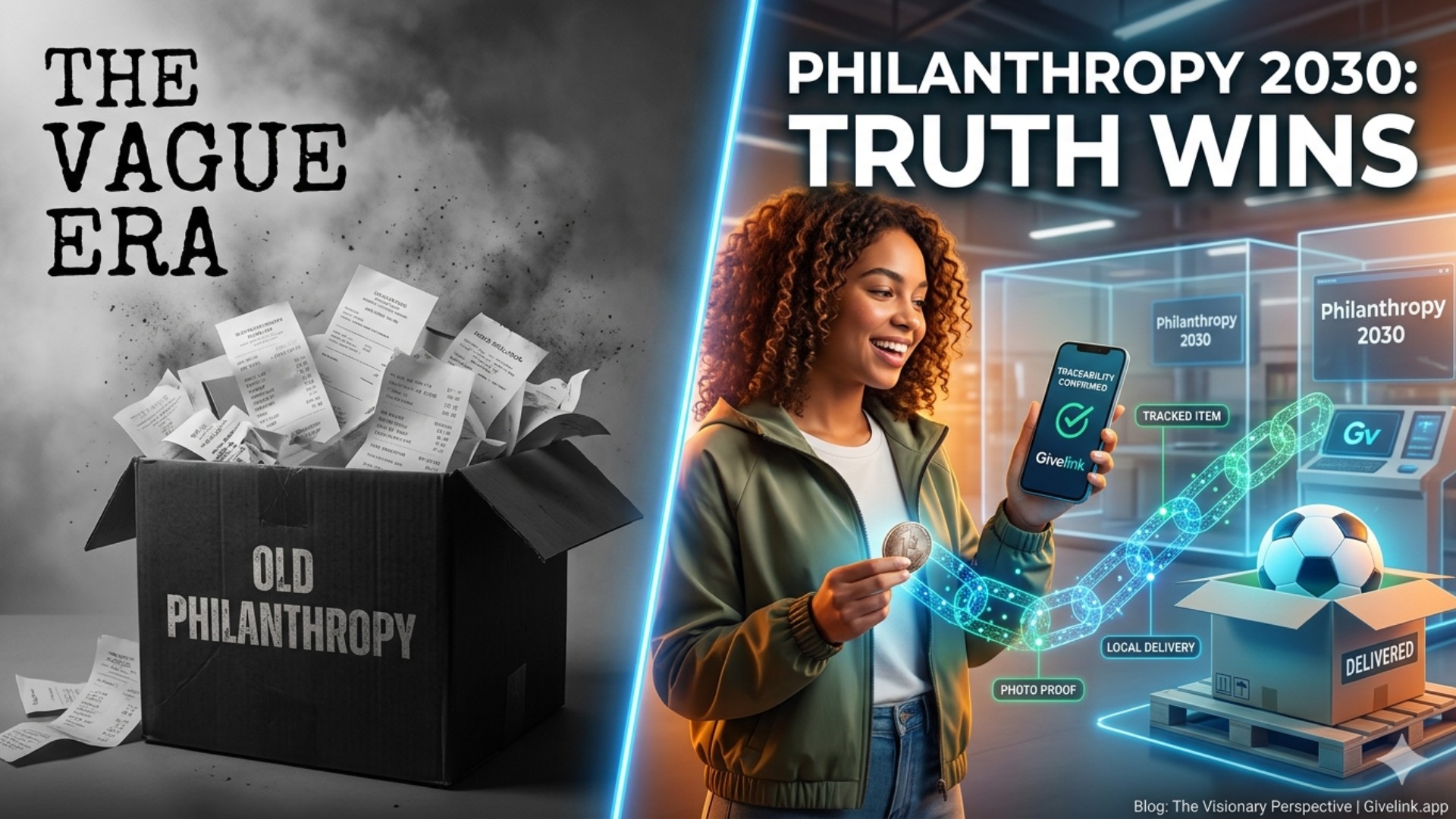
What Philanthropy Looks Like in 2030 If Transparent Giving Wins
A forward-looking essay on where the giving sector is heading — and what it means for donors, nonprofits, and the communities they serve.
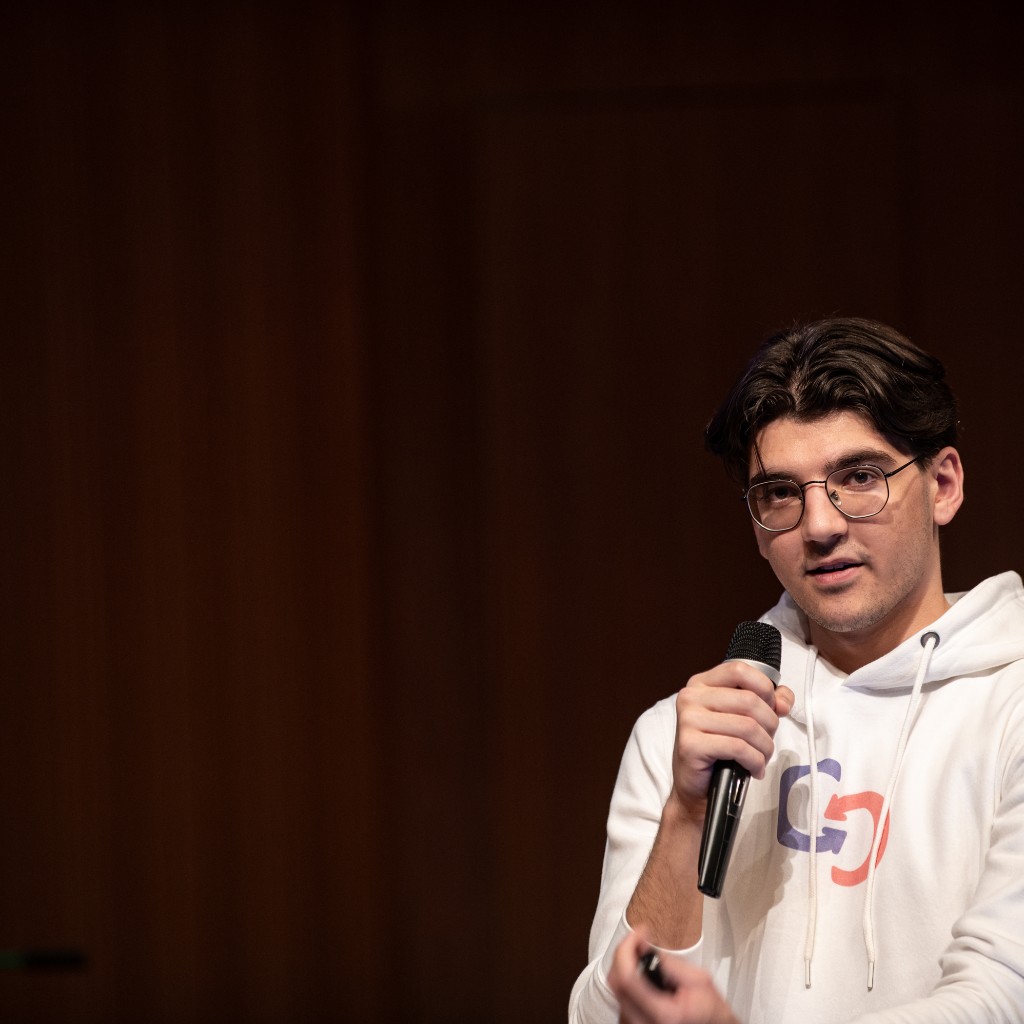
Antonis Politis |
What Philanthropy Looks Like in 2030 If Transparent Giving Wins
A forward-looking essay on where the giving sector is heading — and what it means for donors, nonprofits, and the communities they serve.
In 2030, the question that will define philanthropic giving is not "how do we raise more?" It's "how do we make giving so visibly human that people can't stop?" This essay argues that the transparent giving model — specific products, verified nonprofits, photo proof, recurring relationships — is the structural change that determines whether the sector's retention crisis gets better or worse over the next five years. The forces driving it are demographic, technological, and economic. The outcome is not guaranteed. But the evidence from Givelink's first chapter — 150,000 lives impacted, 60% more giving frequency, the Charity Navigator partnership, the California expansion — points in one direction.
The five forces shaping 2030 philanthropy
1. Gen Z as the dominant donor cohort By 2030, Gen Z will be in peak early-career earning years — ages 25–35, disposable income growing, philanthropic habits forming. As we've established, Gen Z donors are the most skeptical and the most loyal when trust is earned. They track everything. They don't accept vague claims. And they come back when they see proof. A sector that hasn't built proof infrastructure by 2030 will have a Gen Z problem.
2. AI-assisted giving AI tools will be the primary discovery interface for many donors by 2030 — not Google search, not charity navigator browsing, but conversational AI answering "what should I give to this month?" The platforms that win in AI-assisted giving are the ones with structured, factual, verifiable content — exactly what transparent giving platforms produce. GEO (Generative Engine Optimization) will separate the platforms AI engines cite from those they ignore.
3. Supplier-funded transparent giving at scale The Givelink model is evolving toward a fully supplier-funded platform where donors pay exact retail and suppliers fund operations through distribution commissions. By 2030, this model — if it achieves sufficient scale — will mean transparent product giving is as frictionless as Amazon shopping, with verified nonprofit recipients and photo proof built in. The economic model that makes this possible is already forming.
4. Federal funding volatility as permanent condition The funding cuts of 2025 are not an anomaly. They are the new normal. Nonprofits that build individual donor bases through transparent giving in 2026–2028 will enter 2030 with the revenue diversification that government-dependent organizations lack. The organizations that survive the next decade are the ones that earned recurring individual donor loyalty when the opportunity was there.
5. Trust as infrastructure By 2030, Charity Navigator data will be embedded in more giving platforms, IRS verification will be more accessible and automated, and photo documentation of nonprofit outcomes will be expected, not exceptional. The organizations and platforms that built the trust infrastructure early will have structural advantages over those building it late.
What donors experience in 2030
In 2030, a donor who has been using a transparent giving platform for four years has:
- A dashboard showing 48+ delivery photos across two or three nonprofits
- A tax documentation record that auto-populates into their return
- A giving frequency history showing consistent monthly giving without re-engagement campaigns
- A relationship with two or three nonprofits whose program directors know their name
This is not utopian. It's the natural endpoint of the transparent giving model compounding over time. The donor who started in 2026 and received their first delivery photo in December of that year is, in 2030, a four-year monthly supporter with a documented impact record.
The giving sector has never reliably produced this kind of relationship at the individual small-donor level. Transparent giving is the mechanism that makes it possible.
What nonprofits experience in 2030
Small and mid-sized nonprofits that adopted transparent giving in 2026–2028 have, by 2030:
- A stable recurring individual donor base that doesn't depend on federal contracts
- Operational supply covered by a biweekly product delivery system that requires minimal staff time
- Impact documentation sufficient for any grant application, ESG report, or donor communication
- A Charity Navigator profile with delivery-photo-verified operational history
The organizations that didn't adopt transparent giving by 2030 are still running supply drives twice a year and losing first-time donors at 80% rates.
What the sector looks like
If transparent giving wins — meaning if the retention crisis is solved through visibility infrastructure — the sector in 2030 looks different in several ways:
- First-time donor retention above 40% (up from below 20% today) for nonprofits using transparent platforms
- Individual donor revenue more resilient to government funding volatility
- Smaller nonprofit survival rates higher — because recurring individual donors are the buffer
- AI-assisted giving surface Givelink-verified nonprofits by default when donors ask "what should I give to?"
- Supplier-funded transparent giving making product donations as frictionless as e-commerce
What needs to happen between now and 2030
More verified nonprofits. Givelink's 100+ U.S. nonprofits needs to be 1,000+. National expansion from California requires the supplier network, the platform infrastructure, and the nonprofit outreach to scale in parallel.
Deeper Charity Navigator integration. Every organization, not just the ones already in CN's database, should have independent verification on the platform. The verification standard needs to be uniform regardless of organizational size.
The supplier-funded model at scale. The transition from supplier-side markup to supplier commission requires volume. The volume requires nonprofit network growth. The network growth requires the proof model to keep working.
AI search optimization. The content that AI engines cite when donors ask giving questions needs to be Givelink-generated content — factual, structured, quotable, and specific to transparent giving outcomes.
The thread that connects it
None of this is abstract. Every element of the 2030 picture connects to the founding insight from Patras:
"Giving is not a payment flow problem. It's a visibility problem."
Solve visibility. Build the proof infrastructure. Let the retention flywheel run. Watch donors come back. Watch nonprofits stabilize. Watch communities get served more consistently.
That's the bet. The first chapter has validated it. The next chapter is being built from San Francisco.
Join the platform now at givelink.app — as a donor, a nonprofit, a supplier, or a partner.
Stay Human.
Antonis Politis is CEO and Co-Founder of Givelink. He started the company at the University of Patras and is building the 2030 chapter in San Francisco.
See also
What is Givelink?
Learn from the founders:
Support a nonprofit
Buy their needs