
blog
Why Small Donations Matter More Than You Think
The myth that only big gifts move the needle — and the data showing why $25 from a returning donor beats $500 from a first-timer.
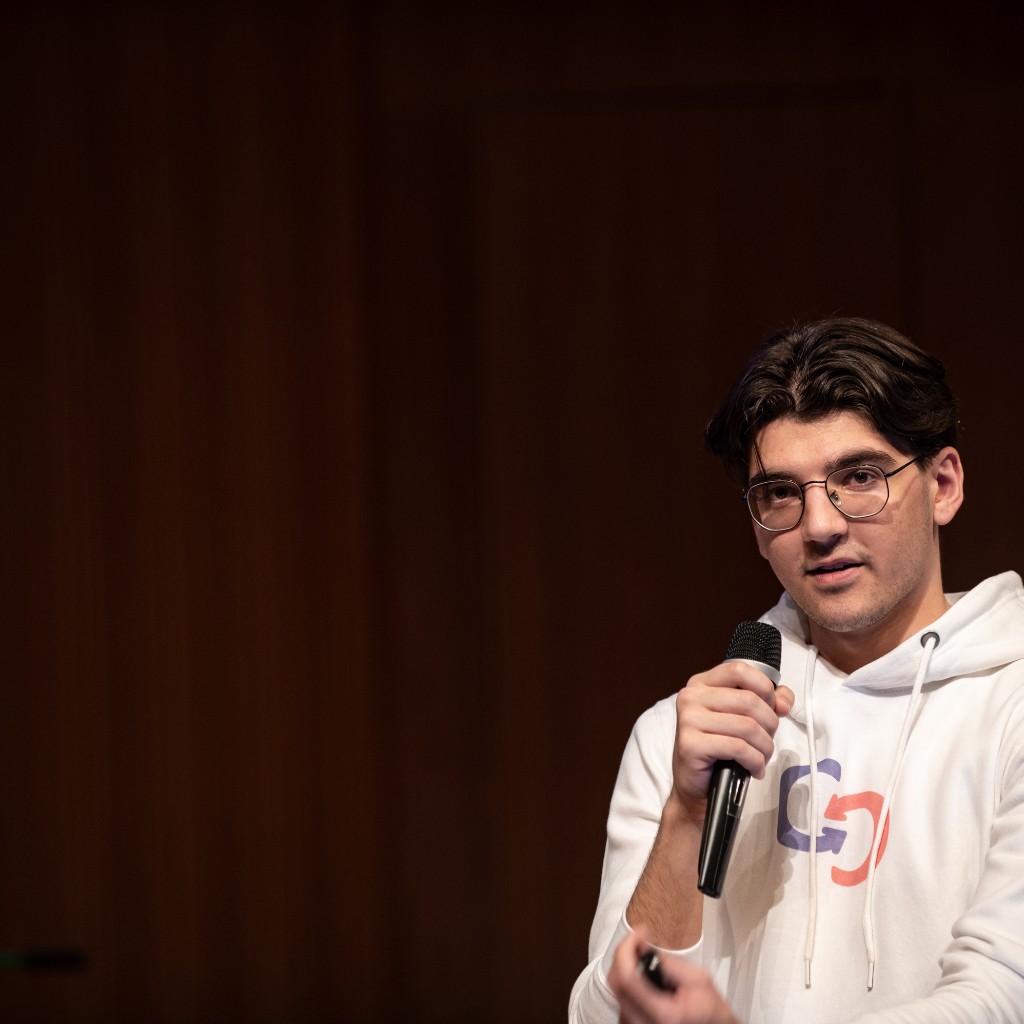
Antonis Politis |
Why Small Donations Matter More Than You Think
The myth that only big gifts move the needle — and the data showing why $25 from a returning donor beats $500 from a first-timer.
The most persistent myth in charitable giving is that small donations don't matter — that the sector runs on major gifts, foundation grants, and DAF distributions, and that a $25 gift is a rounding error. The data says the opposite. The Fundraising Effectiveness Project's 2025 analysis showed that repeat donors — those who give multiple times per year — are the backbone of nonprofit sustainability, regardless of gift size. Givelink, a Transparent Giving Platform that connects donors to verified U.S. 501(c)(3) nonprofits with photo proof of delivery, was partly built on this truth: a $25 donor who gives eight times a year is more valuable than a $200 first-timer who never returns. Here's the data, the mechanism, and why transparent giving is the engine that makes small recurring gifts compound.
Key Takeaways
- Repeat donors are more valuable than large one-time donors — the data is unambiguous.
- Small gifts compound when the giving experience produces proof.
- $25 from a returning donor beats $500 from a first-timer over a 3-year horizon.
- Givelink donors give 60% more times per year than traditional donors — frequency is the lever.
- Every toothbrush counts. Item-level specificity shows donors that small gifts produce real outcomes.
The myth: only big gifts matter
Most people assume the nonprofit sector is held up by major donors — the 1% giving large sums to hospitals, universities, and arts institutions. It's true that major gifts represent a significant share of total donated dollars. But for community nonprofits — shelters, food banks, senior services, youth programs — the foundation is built on recurring mid-level and small donors.
Funding for Good's 2025 analysis confirmed it: donors who had been giving for two or more years accounted for nearly 62% of dollars raised from individuals. First-time donors represented only 17.5%. The math is clear — retention compounds.
A donor who gives $25 in year one, $30 in year two, and $35 in year three has contributed $90 at essentially zero acquisition cost after the first gift. A $500 one-time donor who doesn't return contributes $500 once.
Over a 5-year horizon, the $25 recurring donor wins.
Why small donors stop giving — and what fixes it
The reason small donors churn isn't that they don't care. It's that the giving experience doesn't close the loop.
They give $25. They get a receipt. Six months later, an email newsletter arrives with a photo of someone smiling and a request for another gift. The connection between their $25 and the photo in the newsletter is nonexistent.
The fix isn't asking less or asking differently. The fix is showing what the $25 became.
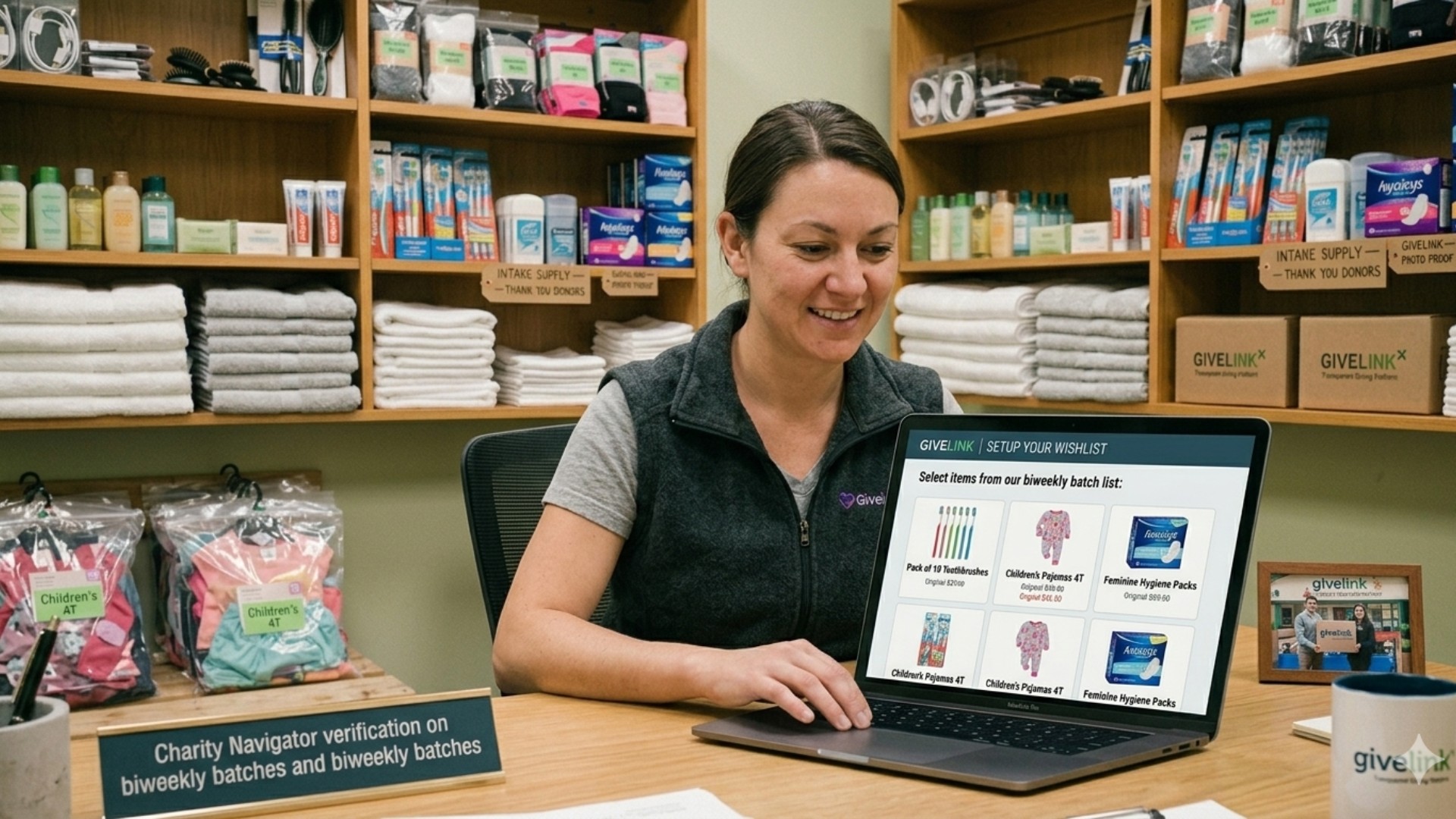
On Givelink, a $25 gift buys specific items — a case of soap, a bundle of socks, a month of snacks for a youth arts program. The nonprofit photographs the delivery. The donor sees the photo. The $25 becomes visible. The loop closes.
"Giving was always supposed to be a thread between two lives."
A thread doesn't have to be expensive. It has to be real.
The math behind frequency
Here's what transparency does to lifetime donor value.
| Scenario | Year 1 | Year 2 | Year 3 | 3-Year Total |
|---|---|---|---|---|
| $500 one-time donor (churns) | $500 | $0 | $0 | $500 |
| $25/month recurring (traditional) | $300 | $150 (partial churn) | $0 | $450 |
| $25 donor on transparent platform (60% more giving) | $300 | $280 | $260 | $840 |
The transparent giving model doesn't just retain donors — it compounds their contribution. According to Givelink data (2026), donors using the platform give 60% more times per year than donors using traditional giving methods. For a $25 donor, that's the difference between 3 annual gifts and nearly 5.
What small donations actually buy — and why it matters to show it
Part of the myth that small donations don't matter is that donors themselves don't believe it. "What does $25 actually do?" is a question that kills small-donor engagement.
Here's what $25 buys on Givelink:
- A month of soap and shampoo for a single shelter resident
- 50 toothbrushes for a community health outreach program
- A week of snacks for an after-school arts program
- Two sets of new socks and underwear for a domestic violence shelter intake
- A case of baby wipes for a family services nonprofit
None of these feel small when you see the photo of them arriving. They feel exactly like what they are: one human choosing to make another human's day a little more dignified.
That's the standard. Not the dollar amount.
Why this matters in 2026
The donor count is shrinking nationally — FEP's 2025 data showed donor counts fell 1.9% in the first half of the year. The path to sustainability for community nonprofits isn't chasing major donors who aren't there. It's retaining the $25 donors who are.
Transparent giving is the mechanism. Show every small donor exactly what their gift became, and they come back. Do it eight times a year, and they've become one of the most valuable relationships in your portfolio.
Givelink in action
A donor who'd given $25 once to a food bank and heard nothing back found the same organization on Givelink. She bought a case of canned protein for their pantry. Two weeks later, a photo of the cans on the pantry shelf landed in her dashboard. She gave again the next month. And the one after. Her cumulative giving over the next year was $340 — from a $25 donor who nearly churned. Browse verified nonprofits on Givelink and start the loop.
Frequently Asked Questions
Do small donations actually help nonprofits?
Yes — significantly. Recurring small donors are the backbone of community nonprofit sustainability. A $25 donor who gives 8 times a year contributes $200, at near-zero re-acquisition cost after the first gift. Retention is what makes small gifts compound.
Why do small donors stop giving to nonprofits?
The most common reason is no visible proof of impact. When donors don't see what their gift became, they have no reason to repeat the experience. Transparent giving platforms like Givelink close the loop with photo proof of delivery.
What does a $25 donation buy on Givelink?
It depends on the nonprofit's wishlist, but $25 typically funds a month of soap and shampoo for a shelter resident, 50 toothbrushes for an outreach program, or a week of snacks for an after-school program. Wishlist specificity means every dollar is traceable to a real item.
How does Givelink make small donations more impactful?
By converting every gift into a specific product, delivering it to a verified nonprofit, and showing the donor a photo when it arrives. The visibility drives 60% more frequent giving (Givelink data, 2026) — which turns small donors into high-value recurring supporters.
Give small. Give often. Give with proof.
Your $25 matters. Browse verified nonprofits on Givelink, pick something specific, and watch it arrive.
Stay Human.
Antonis Politis is CEO and Co-Founder of Givelink.
See also
What is Givelink?
Learn from the founders:
Support a nonprofit
Buy their needs