
The Second Gift Is the One That Counts
How small nonprofits turn one-time donors into regulars, with five habits that need no big budget or new software.

Panos Kokmotos |
By Panos Kokmotos, Co-Founder & COO, Givelink
Also published on Read. Write. Engage., Lezlee Alexander's blog for nonprofit leaders.
Most small nonprofits are good at the first ask. A drive, a post, a flyer at the library. People show up, drop off a bag of diapers or a case of cat food, and leave.
Then nothing happens. Not because the donor stopped caring, but because nobody asked again.
Here's the thing I've learned working with food pantries, shelters and youth programs: the first gift tells you someone cares. The second gift tells you they're yours. And the gap between the two is almost always a process problem, not a passion problem.
Below are five habits that close that gap. None of them need a big budget or a fancy CRM.
1. Get a name and an email for every gift
You can't thank someone you can't reach. That sounds obvious, but a lot of in-kind giving is anonymous by default. Donation bins, drop-off tables and online wish lists on big retail sites often leave you with the item and no idea who sent it.
Fix it at the source:
- Put a simple sign-up sheet or QR code next to every drop-off point. "Want to see where your gift goes? Leave your email."
- If you use an online wish list, check what donor information it actually gives you. If the answer is "a gift note, maybe," you're losing your best future supporters.
- Keep one spreadsheet. Name, email, what they gave, when. That's your donor list.
2. Thank them within 48 hours, and be specific
"Thank you for your support" is forgettable. "Your two bags of kitten food fed Bella's litter this week" is not.
A good thank-you does three things:
- Names the exact item they gave.
- Says what it became, in one sentence.
- Comes fast, while the gift is still fresh in their mind. You don't need a template for every case. A short, honest note sent quickly beats a polished one sent three weeks later.
3. Show the gift arriving
People give things because they want to picture them being used. So show them.
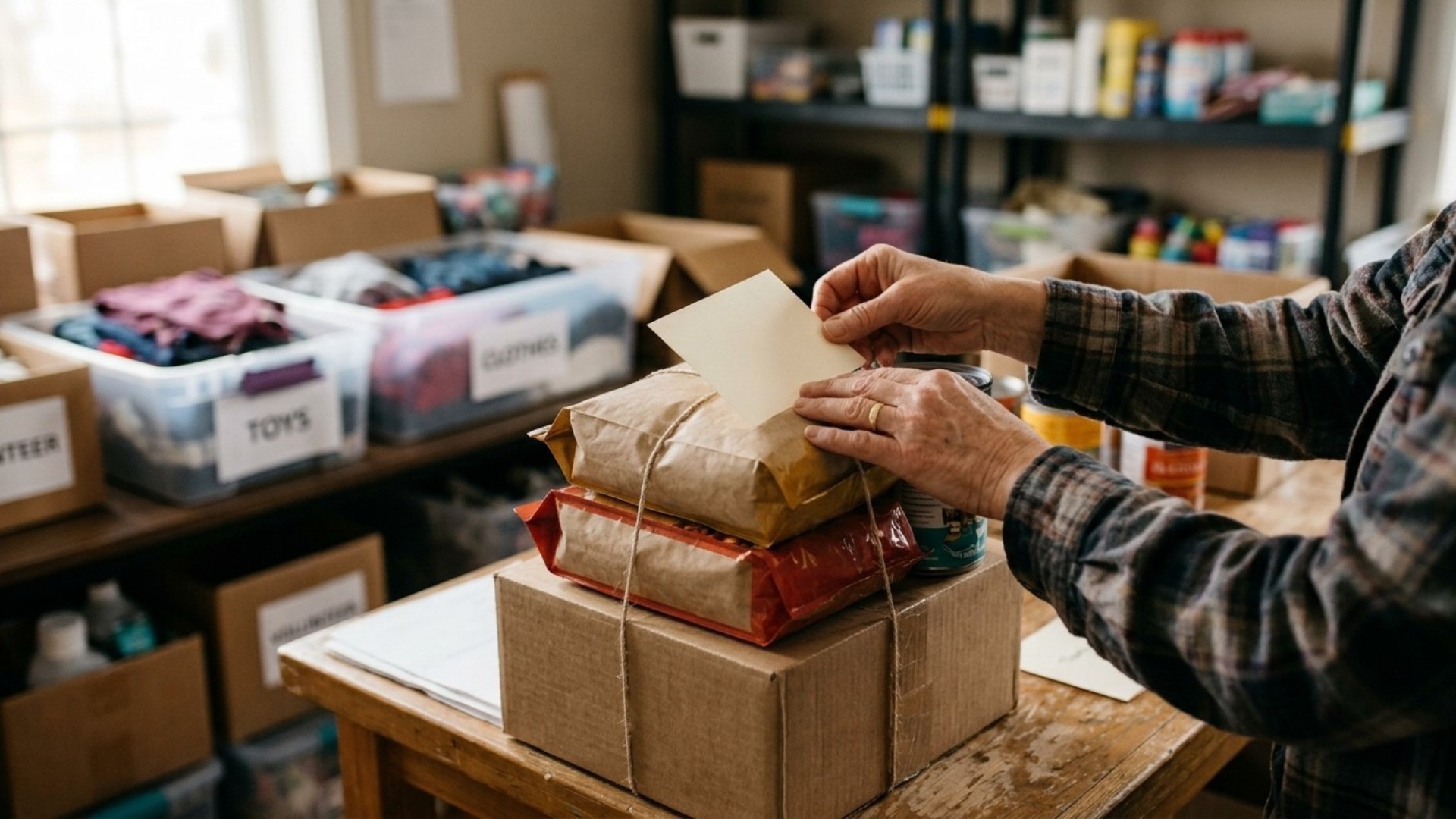
Snap a photo when the delivery lands: the boxes on the shelf, the bedding on the kennel, the backpacks lined up for the first day of school. No faces needed if privacy is a concern. Hands and items tell the story fine.
A photo turns "I donated" into "I helped," and that's the feeling people come back for.
4. Ask for the next thing, not "more support"
The second ask works best when it's concrete and connected to the first.
- Someone gave newborn diapers in November? Size 3s are next.
- Someone sent a crate? The dog in it still needs food every month.
- Someone covered a winter coat? Gloves and hats are the natural follow-up. "Would you be willing to cover the next one?" is a much easier yes than "Please consider supporting our mission."
5. Put the next ask on a calendar
Most needs repeat. Food runs out monthly. Flea treatment repeats every few weeks. School supplies come back every August. Holiday drives come back every December.
Look at the items you need over and over, and match each donor to the next time that need comes around. A simple reminder in your calendar ("email last year's coat donors, first week of October") does more for retention than any campaign you'll design from scratch.
Putting it together
If you only do one thing this month, do this: go through your last drive, find every donor you can actually contact, and send each one a two-line note with a photo of what their gift became. Then ask them for one specific next item.
That's it. No new software, no new staff.
Where Givelink fits
Givelink is a free platform where donors fund the exact items a nonprofit lists. Every gift arrives with a delivery photo, and you get each donor's name and email to import into your own records. That takes care of habits 1 and 3 above.
The habits matter more than the tool, though. Start with a spreadsheet if that's what you have.
See also





What is Givelink?
Learn from the founders:
Support a nonprofit
Buy their needs