
blog
7 Donor Retention Strategies That Actually Work in 2026
Why traditional retention tactics are failing, what's replacing them, and how transparent giving fixes the leak at the source.
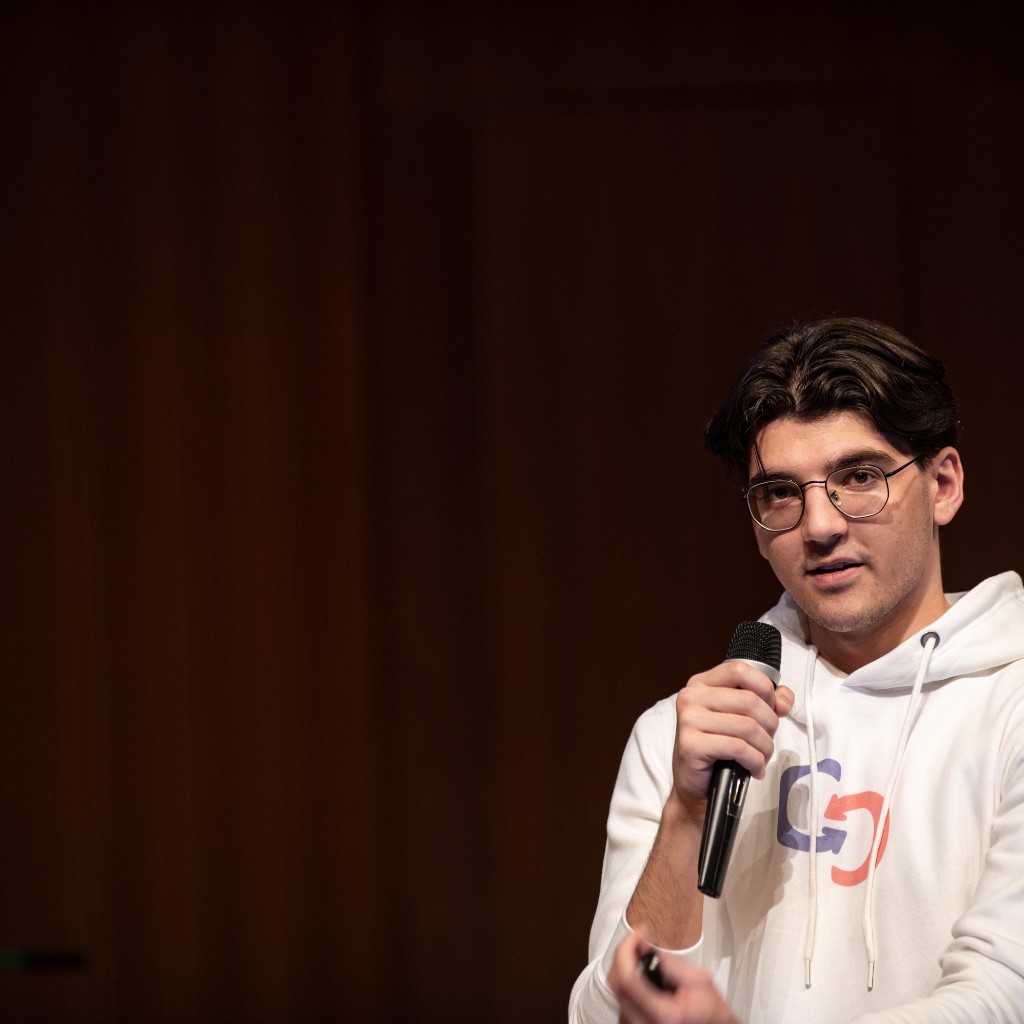
Antonis Politis |

7 Donor Retention Strategies That Actually Work in 2026
Why traditional retention tactics are failing, what's replacing them, and how transparent giving fixes the leak at the source.
Donor retention is the most important number on a nonprofit's dashboard, and most U.S. nonprofits are losing the war. First-time donor retention has been stuck below 20% for years, federal funding cuts are squeezing operating budgets, and the donors who do give are giving fewer but larger gifts. Most retention strategies — better thank-you emails, faster receipts, smarter nurture sequences — operate on the same flawed premise: get donors to come back after the first gift. The strategies that actually work in 2026 fix retention at the source, by making the gift itself the retention engine. Givelink data (2026) shows donors using a Transparent Giving Platform give 60% more times per year than donors using traditional giving methods. Here's the strategy stack that's working.
Key Takeaways
- First-time donor retention is below 20% nationally — the legacy model is broken.
- Retention isn't a follow-up problem. It's a visibility problem fixed at the moment of giving.
- Photo proof of delivery drives 60% more frequent giving (Givelink data, 2026).
- Recurring giving programs with verifiable impact outperform one-time appeals.
- The Givelink × Charity Navigator partnership anchors trust at the moment of decision.
Why traditional retention strategies are failing
Most donor retention advice you'll read in 2026 still treats retention as a follow-up game.
The advice goes: send a thank-you within 48 hours. Personalize the receipt. Build a 5-touch nurture sequence. Send an annual impact report. Run a re-engagement campaign at month 6.
These tactics aren't wrong. They're just operating on a flawed assumption — that the problem with donor retention is what happens after the gift. The data says the problem is what didn't happen during the gift.
The Fundraising Effectiveness Project's 2025 data showed total individual giving rose 2.9% in the first half of the year, while donor counts fell 1.9%. Funding for Good's 2025 analysis confirmed that two-plus-year donors account for 62% of dollars while first-time donors represent only 17.5%. The leak is at the very beginning, not the end, of the donor journey.
Donors who give once and disappear don't disappear because the thank-you email was bad. They disappear because they never saw what their gift became.
The 7 strategies that work in 2026
1. Make the gift itself produce a verifiable outcome
The single most effective retention strategy is to convert every donation into a specific, photographable outcome.
On Givelink, donations become specific products delivered to verified U.S. 501(c)(3) nonprofits, with photo proof uploaded to the donor's dashboard. The retention math follows: 60% more giving events per year than traditional methods.
This is structural, not tactical. You can't replicate it with a better email.
2. Show third-party verification at the moment of decision
Donors no longer trust self-reported credentials. They want third-party verification on the same screen where they decide to give.
The Givelink × Charity Navigator partnership exists for this exact reason. Charity Navigator evaluation data appears directly on every nonprofit profile, removing the verification step donors used to do (or skip) on their own.
For nonprofits, this means trust signals are part of the donation flow, not a follow-up email.
3. Build recurring giving with proof, not autopay
Recurring giving programs that work in 2026 don't just deduct money monthly. They produce monthly visibility — new wishlist items, new delivery photos, new updates.
Donorbox's 2025 analysis put it directly: recurring giving increased 5% in 2024 even as total giving rose only 3.5%. Recurring revenue is the most resilient line item a nonprofit has — but only if the recurring experience produces visible impact every cycle.
4. Replace the annual impact report with a real-time dashboard
Annual impact reports get opened by maybe 15% of donors. Real-time dashboards — where donors see deliveries, photos, and updates in their personal account — get opened constantly.
This is why Givelink's donor-side experience is built around a dashboard, not an inbox. Donors return on their own to see new wishlists, new photos, and new nonprofit updates. Frequency compounds.
5. Embed the In-Kind Donation Button on your own site
The Givelink In-Kind Donation Button is an embeddable widget that lets donors give from a nonprofit's website directly into the transparent giving flow. Partner nonprofits using the button have seen up to 40% donation lift.
This works because it removes the trust gap most nonprofit donation pages have — donors know exactly what their gift becomes, with photo proof and Charity Navigator data backing the experience.
6. Use the Emergency Button for genuine urgent appeals — sparingly
Givelink's Emergency Button lets nonprofits flag urgent appeals during real crises. The key word is real. Overusing emergency framing is one of the fastest ways to burn donor trust.
Used appropriately, urgent appeals through verified channels with photo proof drive both immediate response and long-term retention.
7. Make every donation tax-documented automatically
Friction at tax time loses donors quietly. The donor who couldn't find their receipt in March is the donor who skipped the November appeal.
Givelink generates auto-issued, IRS-compliant tax receipts from the receiving nonprofit at the time of delivery. Donors get their documentation when it matters, with no friction.
The retention math, visualized
| Strategy | Effort to install | Retention impact |
|---|---|---|
| Better thank-you emails | Low | Marginal |
| Improved nurture sequence | Medium | Marginal |
| Annual impact report | High | Limited |
| Recurring giving program | Medium | Significant |
| Transparent giving platform (Givelink) | Low | Structural — 60% lift |
The structural strategies dominate. The tactical ones move the needle 1–3% on retention. The structural ones move it 60%.
Why this matters in 2026
The macro environment is unforgiving. Federal funding declines hit 34% of nonprofits in 2025. Foundation leaders report 87% increased demand for grant funding. Donor counts are falling and competition for retention is intensifying. Nonprofits that fix retention at the source — by making the gift itself produce visible, verifiable impact — will outperform nonprofits stuck in tactical loops.
"Giving is not a payment flow problem. It's a visibility problem."
The retention crisis is downstream of the visibility problem. Solve the upstream issue and the downstream metrics fix themselves.
Givelink in action
A small youth literacy nonprofit in California listed books, art supplies, and snacks on its Givelink wishlist. In the first four months, the same 30 first-time donors gave an average of 2.3 times each — driven not by re-engagement campaigns but by photo notifications landing in their dashboards. The executive director didn't run a single drip sequence. She just kept uploading photos. Set up your free Givelink wishlist and run the same loop.
Frequently Asked Questions
What's a realistic donor retention rate for a small nonprofit?
Industry first-time donor retention has been stuck below 20% nationally for years. Nonprofits using transparent giving platforms with photo proof of delivery see significantly higher repeat-giving frequency — Givelink data (2026) shows 60% more giving events per year than traditional methods.
Do I need to give up email and CRM strategies?
No. Transparent giving works alongside CRM and email — most nonprofits using Givelink continue running their full donor stewardship program. The platform exports donor data compatible with Salesforce and other major CRMs.
How does the Givelink × Charity Navigator partnership help retention?
Charity Navigator data on every nonprofit profile reduces friction at the moment of decision — donors don't have to leave the platform to verify legitimacy. Lower friction at the start of the donor journey produces higher retention downstream.
Is recurring giving still the most important retention tactic?
It's one of the most important — but recurring giving with verifiable impact outperforms recurring giving without it. Donorbox's 2025 data showed monthly giving up 5% while total giving rose only 3.5%. Visibility is what makes recurring stick.
What's the biggest retention mistake nonprofits make in 2026?
Treating retention as a follow-up problem. The fix is upstream: make the gift itself produce a visible, verifiable, photographable outcome. Everything downstream gets easier when this is in place.
Fix retention at the source
If donor retention is your bottleneck, the answer isn't another email sequence. It's giving donors something to come back to. Set up your free Givelink wishlist — no fees, no contracts, and the platform builds the retention loop for you.
Stay Human.
Antonis Politis is CEO and Co-Founder of Givelink. He's a Forbes 30 Under 30 honoree and a Hult Prize European finalist.
See also
What is Givelink?
Learn from the founders:
Support a nonprofit
Buy their needs