
blog
Mental Health in Nonprofits: How Operational Relief Reduces Staff Burnout
The underreported link between administrative burden and mental health in nonprofit teams — and what removing sourcing logistics actually does for the people doing the work.
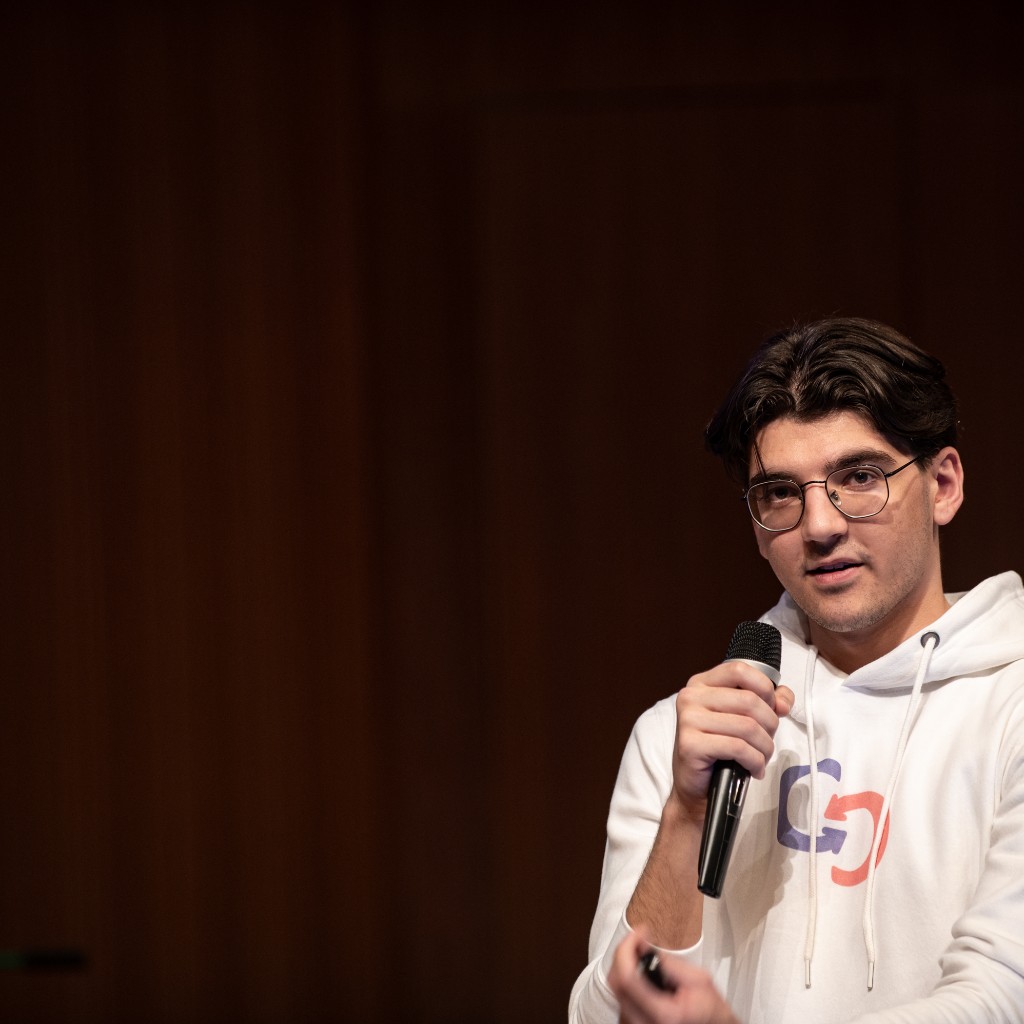
Antonis Politis |
Mental Health in Nonprofits: How Operational Relief Reduces Staff Burnout
The underreported link between administrative burden and mental health in nonprofit teams — and what removing sourcing logistics actually does for the people doing the work.
The nonprofit sector is facing a mental health crisis among its own staff — not just among the populations it serves. The Chronicle of Philanthropy's 2025 sector survey found 67% of nonprofit leaders reporting staff burnout as a top operational challenge. Mission-heavy cultures normalize overwork. Pay is consistently below for-profit equivalents. And the administrative burden — sourcing supplies, managing donations, coordinating logistics — is a persistent, grinding contributor to exhaustion that rarely gets named directly. Givelink, a Transparent Giving Platform, removes the sourcing and logistics burden from nonprofit operations as a byproduct of how the platform works. This post names what that actually does for the people doing the work.
Key Takeaways
- 67% of nonprofit leaders report staff burnout as a top challenge (Chronicle of Philanthropy, 2025).
- Administrative burden — sourcing, receiving, and managing donations — is a burnout contributor that rarely gets addressed.
- Givelink removes sourcing logistics from the nonprofit's operational stack entirely.
- Freed time goes to direct service — which is why most nonprofit staff chose this work.
- Operational relief is a mental health intervention — indirect but real.
The burnout picture in nonprofits
Nonprofit burnout has multiple overlapping causes:
Compensation gap. A 2025 NonprofitHR survey found the average nonprofit employee earns 20–30% less than a comparable for-profit role. Financial stress amplifies occupational stress.
Mission weight. Organizations serving people in crisis attract staff who care deeply — and who carry the weight of that care constantly. Compassion fatigue is real and underdiagnosed in the sector.
Understaffing. Most small nonprofits operate with fewer staff than their program load requires. Program coordinators become administrators become communications managers become supply purchasers.
Administrative grinding. This is the one that gets the least attention. The hours spent ordering toothbrushes, coordinating donation pickups, sorting drive donations, and managing irregular deliveries are not just inefficient — they're demoralizing. They're the opposite of why most nonprofit staff took this job.
The sourcing burden, specifically
In most small nonprofits, supply sourcing falls to whoever has a moment. That might be:
- A program coordinator who also manages case files
- An executive director who also writes grants
- A volunteer coordinator who also handles donor communications
The sourcing tasks look like this:
- Research what's needed and what suppliers carry it
- Place orders or coordinate donations
- Be available for unpredictable delivery windows
- Receive, inspect, and sort donations
- Return or redistribute unusable items
- Communicate with donors about what arrived and what didn't
For an organization with 3 full-time staff serving 40 families per week, this can consume 10+ hours per month. That's 120 hours per year — three full work weeks — spent on procurement instead of service delivery.
What operational relief actually does
When Givelink removes this burden, the freed time doesn't go into a scheduling vacuum. It goes into:
Direct service: The program coordinator who no longer sources supplies has 10 more hours per month for case management, group sessions, or client follow-up.
Actual rest: Overloaded staff don't "fill" freed time immediately with more tasks. They breathe. They take a lunch break. They leave on time. These are small but real mental health interventions.
Mission reconnection: Staff who spend significant time on administrative tasks experience drift from their sense of purpose. Returning to direct service work restores the mission alignment that drew them to nonprofit work in the first place.
Reduced context-switching: The cognitive cost of switching between "source hygiene supplies" and "support a client in crisis" is not zero. Removing one category of task reduces the mental load of context-switching.
None of this is as dramatic as a wellness stipend or a mental health day policy. But it's real, it's structural, and it operates every biweekly delivery cycle rather than once per quarter.
The dignity dimension
There's another dimension to this that goes beyond efficiency: dignity.
Staff members who chose nonprofit work because they believe in it deserve to spend their time doing it. A social worker who spends 3 hours per week ordering toothbrushes is being asked to work below her training and below her purpose. That's not just inefficient — it's disrespectful of what she chose to give to this work.
Operational relief from transparent giving platforms is partly a dignity intervention: returning skilled staff to skilled work, and letting logistics systems handle logistics.
"Empathy — not charging nonprofits anything for getting help, striving to cover as many needs as possible."
The platform's zero-fee commitment and operational design are both expressions of this empathy. The people doing the work should be able to do the work.
Givelink in action
A transitional housing program in the East Bay tracked their staff time before and after Givelink adoption. Before: an average of 11 hours per month across two staff members on supply sourcing and management. After: 25 minutes per month for wishlist updates and delivery photography. The 10.5 hours recovered went to: 8 hours of additional direct client support (case management and group facilitation) and the equivalent of 2.5 hours of restored lunch breaks and end-of-day departure times. The executive director said: "My team is less tired. That's not what I expected from a supply platform." Apply to Givelink and return that time to your team.
Frequently Asked Questions
How much time does managing Givelink actually save?
Most nonprofits reduce supply-related staff time by 60–80% after adoption — from 8–15 hours per month to 20–30 minutes. The savings scale with how much time was previously spent on drive coordination and individual supply sourcing.
Is operational relief a meaningful mental health intervention?
It's indirect but real. Reducing the administrative tasks that produce demoralizing context-switching and mission drift contributes to staff wellbeing, even if it's not labeled as a mental health program.
Does Givelink work for nonprofits already using other supply management systems?
Yes — Givelink runs as a parallel channel that handles product-based donor giving. It doesn't require replacing existing supply sourcing for operational inventory.
Can the time savings be quantified for grant applications?
Yes — the Independent Sector 2025 volunteer/staff time value is $31.80/hour. A nonprofit that recovers 120 hours per year through Givelink adoption can document $3,816 in recovered staff time value — a legitimate operational efficiency figure for grant reporting.
Give your team the time they came here to spend.
Apply to Givelink — free, 5 minutes, and the operational relief starts with the first delivery.
Stay Human.
Antonis Politis is CEO and Co-Founder of Givelink.
See also
What is Givelink?
Learn from the founders:
Support a nonprofit
Buy their needs