
Donated E-Bikes and Electronics: Battery Safety Guide
Lithium-ion batteries in donated e-bikes, tools and devices are a fire risk. Here's how nonprofits screen, store and dispose of them safely.

Nick Issaris |
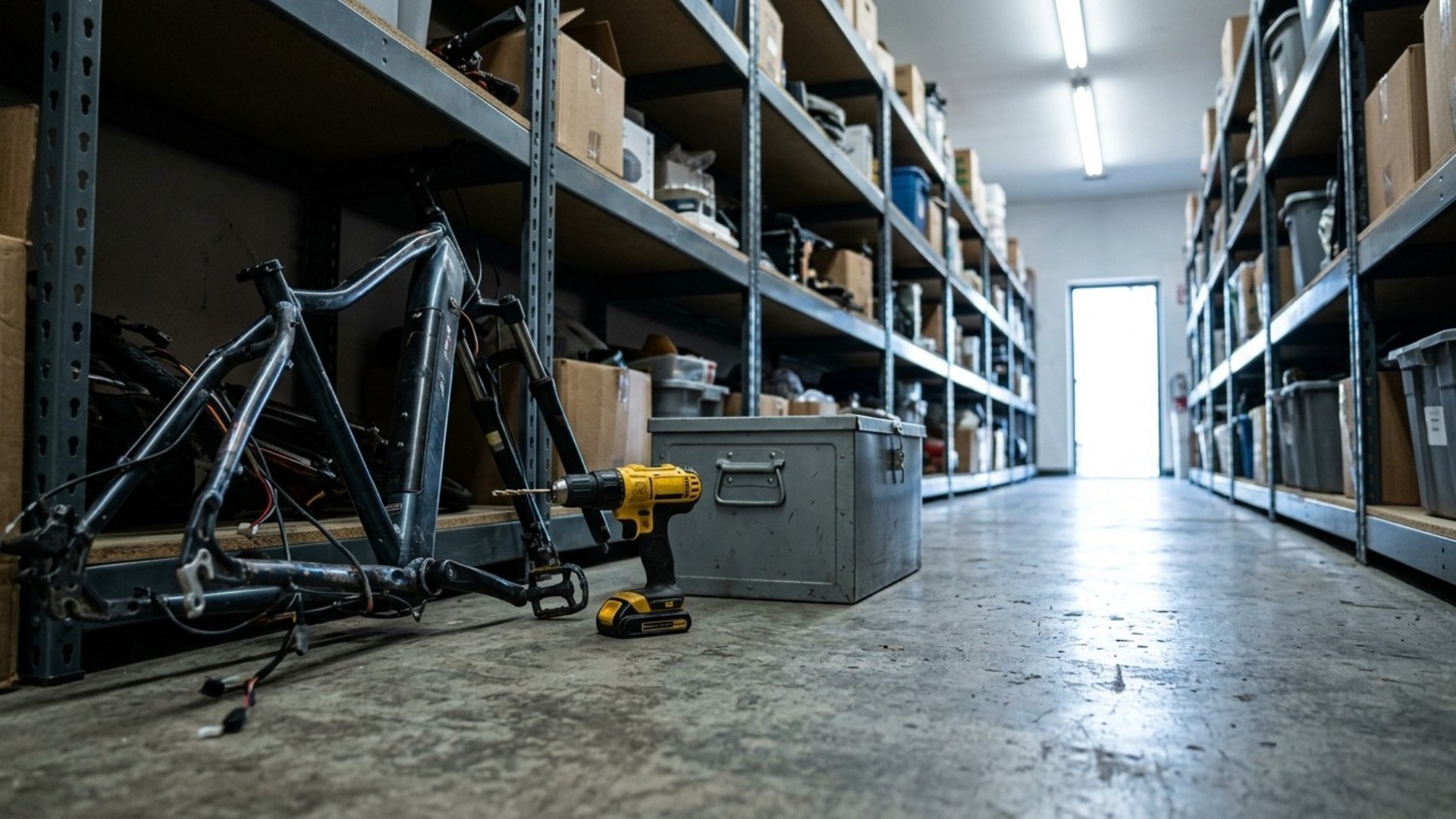
A nonprofit that accepts donated e-bikes, scooters, power tools or laptops is also accepting lithium-ion batteries, and a damaged one can catch fire. The safe approach is to screen every battery at intake, store the suspect ones apart from everything else, and send damaged units to a proper recycler instead of the dumpster.
You don't need an engineering degree to do this. You need a short checklist, a metal container and a clear "no" for batteries that fail the check.
Why lithium-ion batteries need their own intake step
Lithium-ion batteries power e-bikes, e-scooters, hoverboards, cordless tools, phones and laptops. When one is damaged, it can short circuit and ignite. EPA's page on its lithium-ion batteries workshop says that when damaged, these batteries can short circuit and catch on fire, creating a hazard for workers, communities and the infrastructure that handles waste.
The fire behavior is why storage matters. Vermont's environmental agency says lithium-ion battery fires burn extremely hot and produce toxic or flammable gases, and that fires can go out with other cells still intact, only to reignite hours or even days later (Vermont DEC fact sheet, 5/2026). A battery that looks fine on Friday can be a problem on Monday.
The consumer product data points the same way. CPSC's micromobility report for 2017 to 2023 counts 40 fire-related deaths involving e-scooters, hoverboards and e-bikes, 14 of them with e-bikes (CPSC report).
The 4-question intake screen
Ask the donor and check the item. If you get a "no" or an "I don't know," decline the battery.
- Is the battery swollen, cracked or leaking? Decline.
- Has the device been dropped, flooded or in a fire? Decline.
- Does it come with its original charger or a matching replacement? If not, accept the device without the battery, or decline.
- Is the label legible? You need the brand and model to check for recalls and to hand it to a recycler. New York State's emergency services agency lists the warning signs of a failing battery: the device is hot, swelling or bulging, a hissing, cracking or popping sound, an odor, or smoke (NY DHSES). Train volunteers on those five. Anyone handling donations should know that if a device is smoking, the answer is to leave the area and call 9-1-1.
Storage rules for batteries you keep
Vermont DEC's fact sheet lists practices worth copying for a small nonprofit stockroom:
- Keep batteries in a climate-controlled, well-ventilated space away from occupied areas, flammable materials and lead-acid batteries.
- Store them on an impermeable surface, protected from rain.
- Put them inside ventilated containers with sand or another flame suppressant.
- Isolate terminals with non-conductive tape or plastic bags, and keep the label legible.
- Store damaged, defective or recalled batteries separately from the rest.
- Do frequent visual checks, tell your local fire department what you store and have an evacuation plan. For a thrift-style program, a closed metal bin with a lid, a bag of sand and a "DDR" (damaged, defective, recalled) label on a second bin go a long way. Don't stack batteries on a charging shelf, and don't charge donated devices unattended. CPSC's consumer advice is to always be present when charging lithium-ion devices and never to charge them while sleeping.
Disposal: the rules are different for a nonprofit
Households get a pass in many places. Organizations generally don't. EPA's May 2023 memo on lithium battery recycling says most lithium-ion batteries on the market today are likely to be a hazardous waste at the end of their life, and that they may be managed as universal waste under 40 CFR Part 273 until they reach a destination facility, as All4's summary of the memo describes. States can be stricter.
Vermont's guidance goes further for damaged units: they must be managed as hazardous waste unless the generator is certain they're no longer ignitable or reactive.
What that means for you:
- Don't put batteries in the trash or regular recycling.
- Use a battery recycler or a municipal hazardous waste program. Check your state environmental agency's page for drop-off options and any weight limits.
- Ask your state about rules for organizations. The "household" exemption may not cover a nonprofit receiving hundreds of devices.
- Keep records of what went where, with dates.
Should you accept e-bikes at all?
Many bike programs do, because a working e-bike is worth far more than a standard bike. A reasonable policy is to accept e-bikes only when the battery passes the screen, the donor provides the charger, and a trained volunteer or partner shop inspects the bike before it goes to a client. Programs without that capacity can accept the frame and wheels and decline the battery. Say so on your wish list.
Frequently asked questions
Can a nonprofit refuse a donated battery? Yes. A nonprofit can set a policy to accept devices without batteries, or batteries only when they pass a screen. Publishing the policy on your donation page saves staff from having the conversation at the door.
How should we store donated lithium-ion batteries? In a cool, ventilated space away from flammables, on a non-combustible surface, in a closed container with sand or another suppressant, with terminals taped. Keep damaged or recalled batteries in a separate container.
What do we do with a swollen battery? Don't charge it or use it. Move it only if it's safe to do so, using gloves or tongs, keep it away from flammables, and contact a hazardous waste or battery recycler. If it's hot, smoking or making noise, leave the area and call 9-1-1.
Do we need a special recycler? Often yes. EPA says most lithium-ion batteries are likely hazardous waste at end of life, and nonprofits can't assume the household exemption applies. Check with your state agency before you pick a vendor.
Next step
Print the 4 intake questions, label two bins and write your battery policy into your public wishlist. A wishlist that names exactly which devices you take, and which you don't, keeps unsafe gifts from showing up at all. Givelink is a free in-kind donation platform where nonprofits list the specific items they need, and you can see how it works before you create a profile.
See also






What is Givelink?
Learn from the founders:
Run a nonprofit? Get what you need.
Set your nonprofit up yourself in about 15 minutes. It's free, there's no contract, and you don't need to talk to anyone first.