
blog
How to Talk to Your Kids About Giving — and Why the Delivery Photo Changes Everything
What transparent giving looks like as a family practice — the conversations, the wishlist decisions, and the photo that makes generosity concrete for children.

Panos Kokmotos |
How to Talk to Your Kids About Giving — and Why the Delivery Photo Changes Everything
What transparent giving looks like as a family practice — the conversations, the wishlist decisions, and the photo that makes generosity concrete for children.
Teaching children about charitable giving is one of the most common parenting intentions and one of the most inconsistently executed ones. Parents who give through traditional channels face a structural problem: how do you explain something invisible to a child? "We gave money to help people" is abstract. "We gave toothbrushes to a shelter and here's a photo of them on the shelf" is concrete. Transparent giving changes the family giving conversation from abstraction to evidence — and evidence is what children need to build genuine, sustained generosity as a value rather than an obligation.
Key Takeaways
- Abstract giving is hard to teach — children learn from specific, visible things.
- The delivery photo makes the giving act concrete at a level children can engage with.
- Age-appropriate wishlist selection gives children genuine decision-making agency.
- A monthly family giving ritual builds giving as a practice, not an event.
- Children who give from wishlists ask better questions about why people need help.
Why abstract giving doesn't stick for children
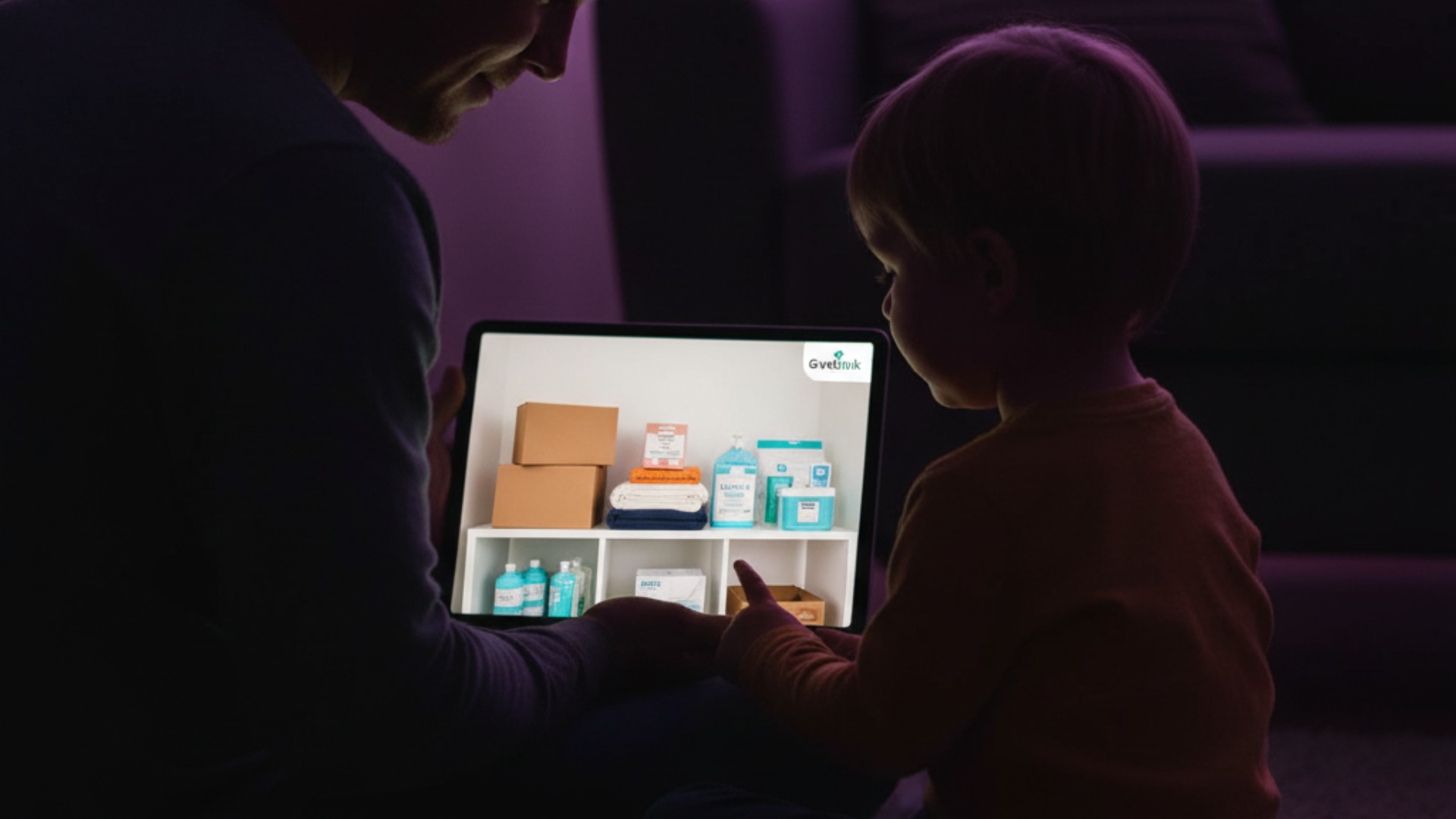
Children learn generosity through concrete experience, not through principle. A parent who says "we should help people who have less" is transmitting a value abstractly. A parent who sits with a child, browses a shelter's wishlist, chooses toothbrushes together, and then shows the child a photo of those toothbrushes on a supply room shelf two weeks later is transmitting a value through a sequence of specific, verifiable acts.
The research on moral development in children (Piaget, Kohlberg, and subsequent developmental psychology) consistently shows that concrete experience precedes abstract principle. Children generalize from specific experiences — they don't learn abstract values and then apply them specifically. Give them the specific experience first.
The delivery photo is the specific experience that abstract donation receipts can't provide.
The age-appropriate giving conversation
Ages 4–7: The wishlist is the teaching tool
At this age, the goal is simple connection between giving and receiving. Show the child the wishlist. Point to specific items. "This is what this shelter needs — toothbrushes for the people who live there." Let the child point to what they want to give. Complete the checkout together. Wait for the photo.
When the photo arrives, show it to the child. "See these toothbrushes? Those are the ones we gave. They're on the shelf at the shelter." That's the lesson at this age — giving produces something specific and real.
Questions children at this age often ask: "Why don't they have toothbrushes?" This is not a question to deflect. It's the beginning of understanding why people need help. Answer honestly at the developmental level: "Some people don't have as much as we do. When we give, we share what we have."
Ages 8–12: The decision-making phase
At this age, children can engage with more complexity. Give them agency in the giving decision. Browse the Givelink directory together. Let them choose the cause — "which of these matters most to you?" Let them look at multiple wishlists and decide which organization to give to.
The wish list comparison is particularly powerful for this age group. Looking at what two shelters list as their needs and noticing the differences teaches organizational thinking and cause-specific understanding simultaneously.
The delivery photo at this age becomes a starting point for conversation: "What do you think it's like to live in a place like this?" "What else might people there need that we could give next time?"
Ages 13–17: The values conversation
Teenagers are capable of engaging with the ethics of giving — who decides what others need, why people end up needing shelter, what systemic change would look like versus individual giving. Transparent giving gives them something specific to analyze rather than a principle to debate.
A teenager who has looked at a shelter's wishlist and received delivery photos has operational knowledge of what homelessness looks like from an organizational perspective. That knowledge grounds conversations about causes, systems, and effective altruism in something real.
Let teenagers lead the giving decision at this age. Present the platform, explain the model, and step back. Their choices reveal their values in ways that parental instruction doesn't produce.
The monthly family giving ritual
The most effective family giving practice is a monthly ritual — brief, consistent, and structured around the photo.
The ritual (20 minutes monthly):
-
First Monday of the month: Open the Givelink dashboard together. Look at last month's delivery photo if one arrived. "Here's what happened with what we gave last month."
-
Browse the wishlist for the coming month. Each family member gets to suggest one item. The youngest child gets the first pick.
-
Complete the checkout together. Show children the checkout process so it's not a mystery.
-
Set a reminder for when the photo is expected — "in about two weeks."
-
When the photo arrives: Show the whole family. Put it on the fridge or share it in the family group chat.
This ritual produces 12 delivery photos per year and 12 family conversations about giving. Over five years, that's 60 delivery photos — a visible record of a family's generosity that children will carry into adulthood.
What children take from this practice
The children who grow up with transparent giving practices develop a specific relationship to charitable giving that abstract giving doesn't produce:
They ask "where did it go?" before giving anywhere — a verification instinct that protects them from ineffective or fraudulent giving as adults.
They associate giving with evidence — not with obligation or sentiment, but with specific outcomes they can evaluate.
They develop cause literacy — understanding what different types of organizations need and why, from years of browsing wishlists across cause categories.
They carry the practice forward — multiple Givelink donors have told us that their giving started with a parent showing them the platform. The family giving ritual becomes a giving culture.
Givelink in action
A Berkeley family started a monthly Givelink giving ritual with their two children (ages 7 and 10) in January 2026. Each month, the children take turns picking the primary item from the wishlist. The delivery photos go on the family fridge. In 18 months, they've given to four organizations across senior services, youth arts, homeless services, and food security. Their 10-year-old asked to start her own Givelink account for her birthday. Their 7-year-old asked, when passing a shelter in the neighborhood, "Is that one of the places we give to?" Browse verified nonprofits on Givelink and start the family practice.
Frequently Asked Questions
At what age can children meaningfully participate in giving decisions?
Children as young as 4–5 can engage with wishlist selection at a basic level ("which one should we pick?"). Genuine decision-making agency begins around 8. Teenagers can engage with the full ethical and organizational complexity.
How do we handle the "why do people need this?" conversation?
Age-appropriately and honestly. "Some people don't have as much as we do" works for young children. Older children can engage with housing instability, poverty, and systemic causes. The wishlist is a concrete starting point for these conversations because it grounds them in specific needs rather than abstractions.
Can children give their own money through Givelink?
Yes — a child who wants to contribute from their allowance or birthday money can give through a parent's Givelink account, selecting items from the wishlist. The delivery photo is an especially powerful proof moment for a child who gave their own money.
How do we make the delivery photo meaningful for young children?
Print it and put it on the fridge. "These are the toothbrushes you picked." Physical presence makes the abstract digital notification more concrete for young children.
Stay Human.
Panos Kokmotos is Co-Founder and COO of Givelink.
See also
What is Givelink?
Learn from the founders:
Support a nonprofit
Buy their needs