
How to Run a Donation Drive Without a Drop-Off Location
You don't need a garage, a lobby, or a volunteer with a pickup truck. Here's how to run a donation drive when there's nowhere to drop anything off.

Givelink Team |
How to Run a Donation Drive Without a Drop-Off Location
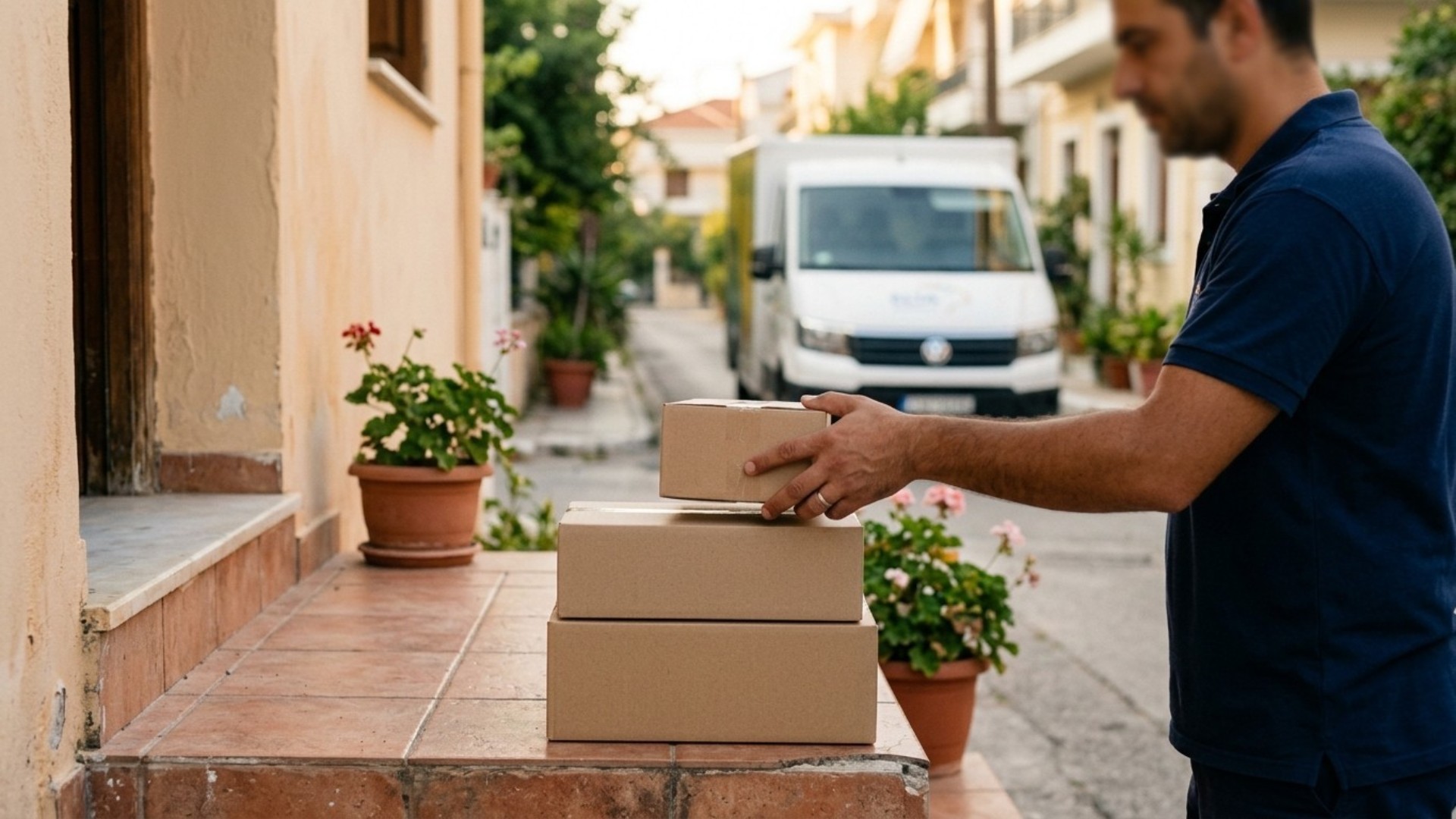
Short answer: run the drive as a published list of specific items, let supporters buy those items online, and have them shipped straight to you. No collection point, no sorting table, no volunteer driving a carload across town. The drive becomes a link you send instead of a place people visit.
Most donation drive advice assumes you have somewhere to put things. A church hall, a school lobby, a bin by the front desk, somebody's garage. If you don't, the standard playbook falls apart at step one.
Plenty of organizations are in that position. You might be fully remote. You might run programs out of a space you share and can't store anything in. You might serve a county rather than a block, so a single drop-off point is useless to most of the people who'd give. Or you might have done it the old way once and decided never again.
The drop-off location was never the point. It was just the mechanism. Here's what to use instead.
Why the drop-off location is usually the part that fails
A physical collection point quietly limits your drive in four ways.
It limits who can give. A drive only reaches people who can physically get there. Your supporter two towns over, the one who moved last year, the person who works nights, they're all out.
It creates work you didn't budget for. Someone has to be there to receive things. Someone has to sort them. Someone has to figure out what to do with the eleven mismatched winter coats when you asked for socks.
It hides what's coming. Until the bags are open, you have no idea whether you're getting what you need. You plan around a guess.
It breaks the thread back to the donor. Goods arrive in a pile. You can't tell which supporter gave what, so you can't thank anyone properly, and the person who gave generously hears nothing back.
What replaces the collection point
Three things, and you probably have two of them already.
A specific list. Not "we need clothing." Sizes, quantities, the actual thing. "40 pairs of adult crew socks, size 9 to 12." Specificity is what makes an online drive work, because the supporter isn't guessing and neither are you.
A way for supporters to buy from that list. This is the part that replaces the garage. Supporters pick an item, pay for it, and it ships to your address. You're not receiving cash and then shopping. You're not receiving mystery bags. You're receiving the thing you asked for.
A shipping address you can actually receive at. A program site, an office, a partner agency, even a staff member's home if that's what you've got. One address, not twelve.
That's the whole substitution. The list is your bin, the link is your location, and the mail carrier is your volunteer with a truck.
How to run it, step by step
1. Write the list before you announce anything. Sit with whoever runs the program and get the real needs, in the real quantities, with the real sizes. This takes about half an hour and it determines whether the drive works.
2. Cap it. Decide how many of each item you actually want. An uncapped drive is how you end up with 400 toothbrushes and no toothpaste.
3. Set a window. 2 to 3 weeks is usually right. Shorter and people forget, longer and the urgency dies.
4. Publish the list somewhere supporters can act on it immediately. The gap between "I'd like to help" and "done" should be one click and under two minutes. Every extra step costs you gifts.
5. Name the shipping address once and check it. Confirm someone will be there to sign, confirm the address format is right, and confirm the mailroom knows to expect volume.
6. Announce it three times, not once. Launch, midpoint with a progress number, and a final call with 48 hours left. The last one usually outperforms the first.
7. Log what arrives against who sent it. This is the step people skip and regret. See the next section.
8. Close the loop within a week. A photo of the items in use, sent to the people who bought them, is worth more than any thank-you letter you'll write.
What to tell your supporters
Say the quiet part. People respond to a drive when they understand the constraint.
Something like: "We don't have a warehouse or a drop-off site, so this year we're doing it differently. Here's exactly what our clients need this month. Pick an item, and it ships straight to the program. You'll see a photo when it arrives."
That framing does three things at once. It explains why there's no address to drive to, it tells them the gift is specific rather than symbolic, and it promises them proof. All three raise the odds they act.
Avoid the phrase "wish list" if you can. It sounds optional. "What our clients need this month" doesn't.
The record-keeping you still owe
Going digital doesn't remove your substantiation duties. Two things stay true.
Donors who give goods rather than cash still need a written acknowledgment from you if the gift is worth $250 or more, and it must describe the property without assigning it a value. Valuing the gift is the donor's job, not yours. The IRS covers this in Publication 1771, and donors work from Publication 526 and Publication 561.
You still need in-kind gifts on your books. Contributed nonfinancial assets get recognized at fair value and, since ASU 2020-07, presented separately with disaggregation by category. Your auditor will ask. A drive that produces a clean item-level record is much easier to close out than a pile of receipts in a shoebox.
The upside of running the drive online is that this record builds itself. You know what was bought, by whom, and when it landed.
Where Givelink fits
This is the workflow Givelink was built for. Your organization publishes the specific items it needs, supporters fund the exact item rather than a guess at it, the goods ship to you, and the delivery is photo-verified on arrival and tied back to that donor and that gift. You can see what's coming before it lands, so you're not planning around a guess.
It's free for nonprofits. No setup fee, no platform fee, no subscription. Roughly 10 minutes a month once it's running.
Swords to Plowshares, which serves veterans in the Bay Area, has received 18 gifts from 12 donors this way, totaling $2,110. That's what a modest, well-specified list looks like in practice, not a headline number.
If you'd rather run the whole thing on a spreadsheet and a shipping address, that also works. The mechanics in this post don't depend on any particular tool. What they depend on is being specific about what you need and closing the loop with the people who send it.
Frequently asked questions
Can you run a donation drive with no physical location at all? Yes. Publish a specific list of needed items, have supporters purchase from that list online, and have the items shipped directly to a single address you can receive at. The collection point is replaced by the list and the shipping address.
How do you collect donations without a drop-off point? Supporters buy the specific item you've asked for and it ships to you. You never handle cash, sorting, or transport, and you receive what you actually asked for rather than whatever people had spare.
How long should a virtual donation drive run? 2 to 3 weeks works for most organizations. Announce at launch, again at the midpoint with a progress figure, and again with 48 hours remaining.
Do you still have to send tax receipts for a virtual drive? Yes. A written acknowledgment is required for gifts of property worth $250 or more. Describe the item but don't assign it a value, because valuing the donation is the donor's responsibility. See IRS Publication 1771.
What's the biggest mistake in a no-location drive? Being vague about the items. "We need supplies" produces nothing usable. "40 pairs of adult crew socks, size 9 to 12" gets fulfilled.
See also
What is Givelink?
Learn from the founders:
Support a nonprofit
Buy their needs