
resource
How to Run a Donation Drive That Actually Works in 2026
Most donation drives create more sorting work than they solve. Here's the structure that produces specific goods, named donor relationships, and a drive that compounds year over year.

Antonis Politis |
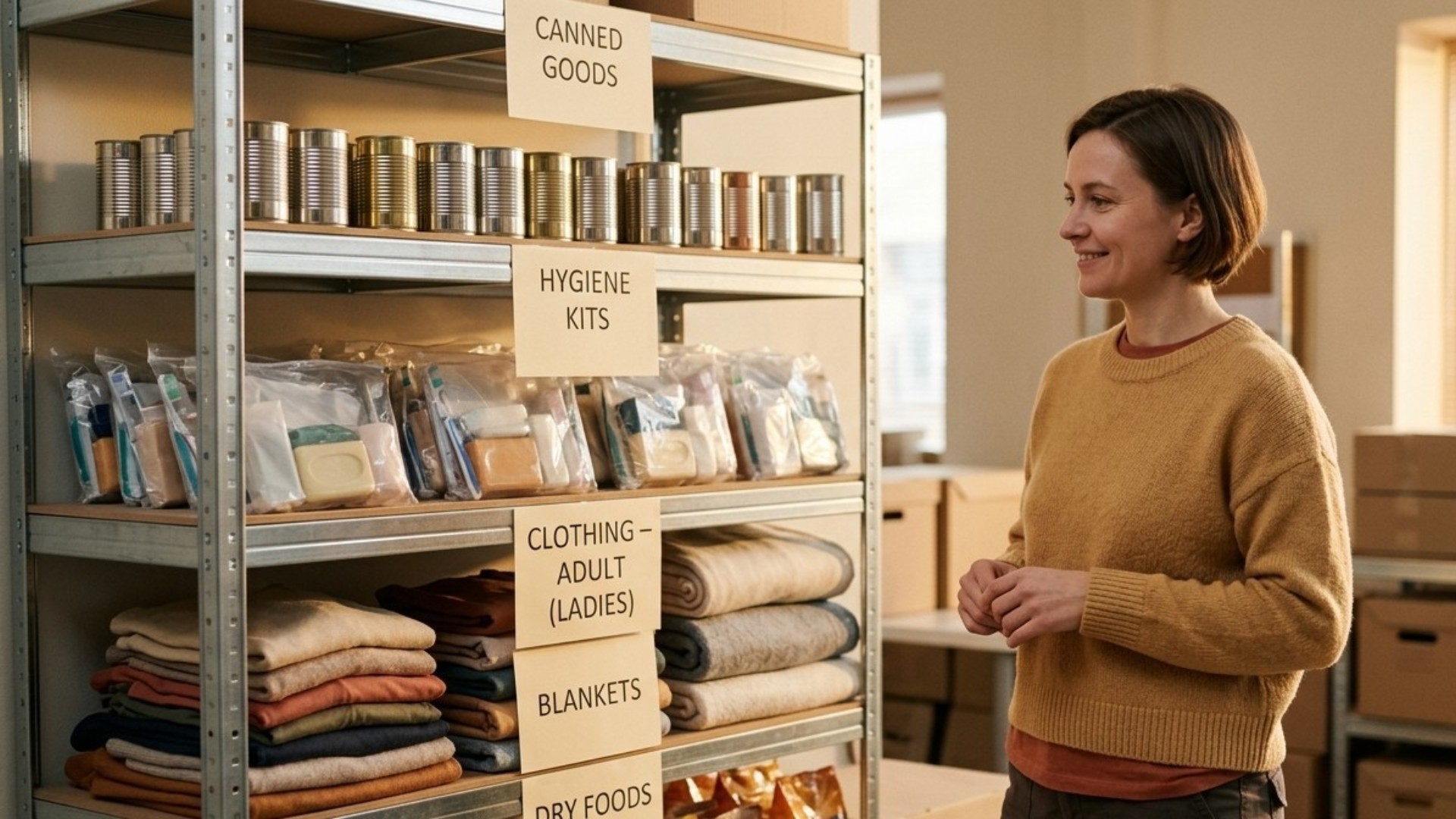
A donation drive works when it produces exactly what you asked for, from donors you can follow up with, confirmed as delivered. Most drives miss on all three: a general "collect what you can" appeal brings in a mix of useful and unusable items, most donors never leave contact information, and nobody follows up because there's no record of who gave what. Fix the structure and the drive stops being a sorting problem and starts being a donor-acquisition tool.
Why a generic drive creates more work than it solves
A drive built on a vague ask has three structural flaws, all fixable before the drive even starts:
No specificity. "We're collecting winter coats" tells a donor almost nothing about size, condition, or quantity still needed, so donors guess. Some guesses land, plenty don't, and every item still has to be opened and sorted to find out which is which. A real, documented cost of this pattern: research from Washington University's Olin Business School and the University of Pittsburgh, published in Production and Operations Management, found Australian charities spent $13 million in a single year disposing of unwanted clothing donations, and that food banks without clear item guidelines routinely end up managing donations they can't use (source).
No donor data capture. A drop-off box collects items, not names. Without a name and a way to reach that donor again, a drive is a single transaction with no path to a second one.
No confirmation of impact. A donor who gives and never hears anything again has no reason to believe their gift did anything. The same Olin/Pittsburgh research found donors whose contributions were rejected or went unacknowledged were meaningfully less likely to give a second time, a pattern the researchers documented directly in blood donation data (29% less likely to donate again within roughly four years after a rejected donation). The underlying mechanism, confirmation changes whether someone comes back, holds for physical goods drives too, even without an equivalent published number for that exact case.
The seven-step structure for a drive that works
- Publish a specific wishlist, not a category. "40 boxes of size 4 diapers," not "diapers." Every item on the list should be something a donor can act on without guessing.
- Run it through an online platform, not just a drop-off box. A platform lets a donor buy against the exact list, which removes the guesswork and the sorting step at once. See how this works on Givelink's for-nonprofits page.
- Capture donor information as part of the gift, not as an afterthought. A platform-based drive does this automatically, since a purchase requires an account or contact details; a physical drop-off drive needs a sign-up sheet at the table.
- Coordinate delivery so items arrive when you can actually process them, not all at once on the last day of the drive.
- Photograph the outcome and confirm it to donors. A quick photo of the item received, sent back to the donor who bought it, closes the loop a generic drop-off box never closes.
- Send a real re-engagement message after the drive, referencing the specific item that donor gave, not a generic thank-you blast.
- Schedule the next drive while the list is still fresh in donors' minds, rather than starting from zero months later.
Setting up a donation drive on Givelink
Givelink is built around this exact structure: post the items you need, donors buy directly against the list, each item ships to you, and the platform handles the photo confirmation and donor record automatically. No setup fee, no platform fee. Start by browsing how other verified nonprofits use it, then create your own profile and publish your first list.
FAQ
What makes a donation drive successful? A successful drive produces specific, usable items, captures donor contact information, and confirms delivery back to the donor. Any drive missing one of those three usually creates real sorting or storage cost even when it "succeeds" at collecting a lot of items.
How do I know if a drive is actually effective, not just busy? Track three things: what share of items collected matched a real, current need; how many donors left contact information you can reach again; and whether you followed up with each one. A drive can look busy and still fail all three.
Does capturing donor data during a drive actually matter? Yes. A donor with no record attached is a one-time transaction. A donor you can reach again is the start of a relationship, and a repeat donor costs far less to re-engage than acquiring a new one from scratch.
Can this structure repeat, or is it a one-time fix? It's designed to repeat. Once a wishlist platform and a donor list exist, each future drive starts from an existing base of people who already gave once, rather than from zero.
How long does it take to set this up on Givelink? Creating a nonprofit profile and publishing an initial wishlist typically takes under an hour. The ongoing work is keeping the list current as needs change, not rebuilding the setup each time.
See also
What is Givelink?
Learn from the founders:
Support a nonprofit
Buy their needs