
blog
How to Donate Items to a Charity Online: A Step-by-Step Guide
Drop-off, pickup, or ship-it-yourself: here's how each online donation method actually works, and how to pick the right one for what you're giving.

Panos Kokmotos |
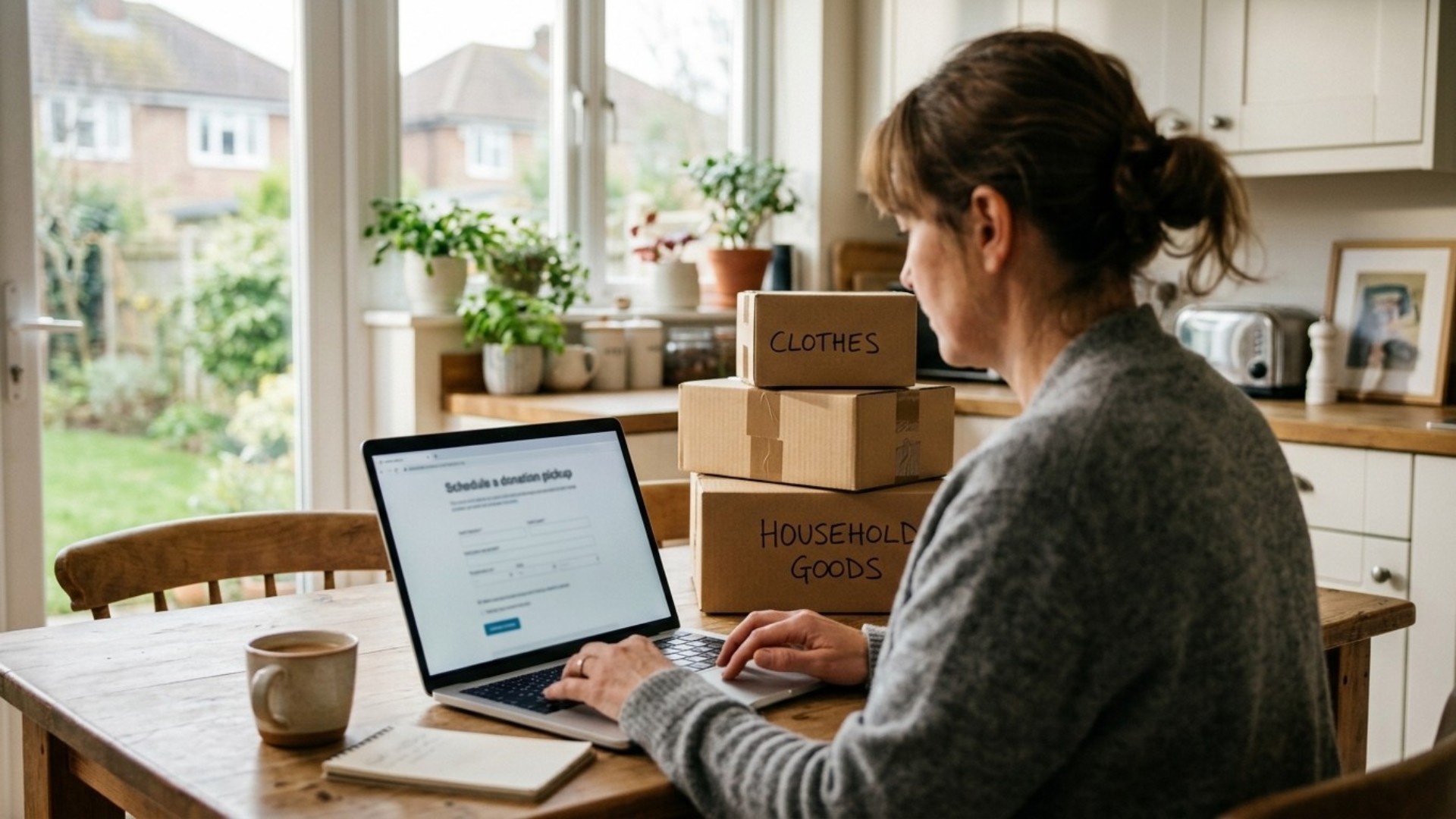
You don't have to load a car and find a drop-off location to donate goods anymore. Most major charities now let you schedule a free pickup, ship items directly, or buy something new that ships straight to the organization, all started online, in a few minutes. Which method makes sense depends on what you're giving and how confident you want to be that it actually gets used.
Option 1: Schedule a free pickup from your home
This works best for larger items, furniture, appliances, bags of clothing, that are impractical to drop off yourself.
- The Salvation Army offers free pickup in most areas. Enter your zip code on their scheduling page, list what you're donating, and pick a date. A driver handles the rest. They accept appliances, clothing, furniture, toys, and more.
- Habitat for Humanity ReStore picks up furniture, appliances, and building materials in many regions. Find your nearest ReStore by zip code and schedule a Priority or Standard pickup.
- Goodwill offers pickup at some locations, but not all. Call your local store directly to confirm before assuming it's available.
- PickUpMyDonation.com is an aggregator: enter your zip code and item details, and it connects you with a local nonprofit partner offering free or low-cost pickup.
- Furniture Bank Network picks up furniture and household items, though pricing at some locations starts around $150 depending on your area and what's being collected. (Details via Move.org's donation pickup guide.)
Option 2: Drop off at a location you schedule online
Some organizations let you book a drop-off slot in advance so you're not guessing at hours or waiting in line once you arrive. This suits smaller loads, a few bags of clothes, books, or household goods, where a full pickup isn't necessary and you're already going to be nearby.
Option 3: Buy and ship a specific item a nonprofit actually needs
This is the newest and, for a lot of donors, the most satisfying option. Instead of giving away something you already own, you buy a new item from a nonprofit's published needs list and it ships directly to them.
This is how Amazon and Chewy wishlists work for nonprofits and animal shelters, and it's the entire model behind Givelink: a nonprofit posts the exact items it needs, not a vague category, a specific item and quantity, a donor buys against that list, the item ships to the organization, and the donor gets a photo confirming it arrived. Browse live, real needs from verified nonprofits at givelink.app/charities.
The advantage over dropping off used items: there's no sorting on the nonprofit's end, since every item that arrives was already requested, and no guessing on the donor's end about whether the gift will actually be useful once it gets there.
How to choose
| You have... | Best option |
|---|---|
| Furniture, appliances, or a large load | Scheduled pickup (Salvation Army, Habitat ReStore) |
| A few bags of clothes or household items | Scheduled drop-off |
| Nothing to give away, but want to help with what's actually needed | Buy directly from a nonprofit's wishlist (Givelink, or the organization's own Amazon/Chewy list) |
| Items in poor condition | Check the organization's accepted-items list first |
A note on that last row: most organizations won't accept torn, broken, heavily worn, or expired goods, even though it can feel generous to offer them. Donating unusable items doesn't save the item from a landfill, it just shifts the sorting and disposal cost onto the nonprofit's staff, who now have to make that same call you already could have made at home.
What to check before you give, no matter which method
Whichever option you pick, a few checks take less than a minute and make the gift more likely to land well:
- Confirm the organization actually needs what you're giving. A drop-off or pickup service will take a wide range of items, but that doesn't mean every item is currently needed. Where possible, check a current needs list first.
- Check the item condition against what the organization actually accepts. Most pickup services publish a list of what they will and won't take.
- Keep any confirmation or receipt. Whether it's an email from a pickup service or an order confirmation from a wishlist purchase, it's the record you'll want if you plan to claim the gift on your taxes.
FAQ
Is it better to donate used items or buy something new from a wishlist? Both are legitimate. Used items are the right call when they're in good, usable condition and match what an organization actually needs. A wishlist purchase removes the guesswork entirely, since you're buying exactly what was asked for, which is why it tends to be the more reliably useful option for the nonprofit.
How do I know a donation pickup or wishlist platform is legitimate? Confirm the organization is a real, registered 501(c)(3). Most pickup services and wishlist platforms only work with verified nonprofits, and you can also check an organization directly through the IRS Tax Exempt Organization Search. A platform that shows you exactly which real, named nonprofits participate, like Givelink's public directory, makes that easy to verify yourself before giving.
Can I get a tax receipt for an online donation? Yes, for both used-item drop-offs and direct wishlist purchases to a registered 501(c)(3), keep the confirmation or receipt either way. Consult a tax professional for how to value and claim an in-kind donation, since the rules differ from a cash gift.
What if I don't know what a charity actually needs? Check whether the organization publishes a specific needs list rather than guessing. Platforms built around published, itemized needs, Amazon wishlists, Chewy lists, or Givelink, exist specifically to answer that question before you give.
Do all of these options cost anything to use? The pickup and drop-off services listed here are free for the donor in most areas (Furniture Bank Network being the exception, where pricing can apply). Buying directly from a wishlist costs whatever the item costs, the same as buying it for yourself, with no added platform fee on Givelink for either the donor or the nonprofit.
See also
What is Givelink?
Learn from the founders:
Support a nonprofit
Buy their needs