
for nonprofits
How Small Nonprofits Compete for Donations Against Bigger Names
You can't out-market a national charity's brand recognition. Here's what actually moves a donor's decision when name recognition isn't on your side.

Panos Kokmotos |
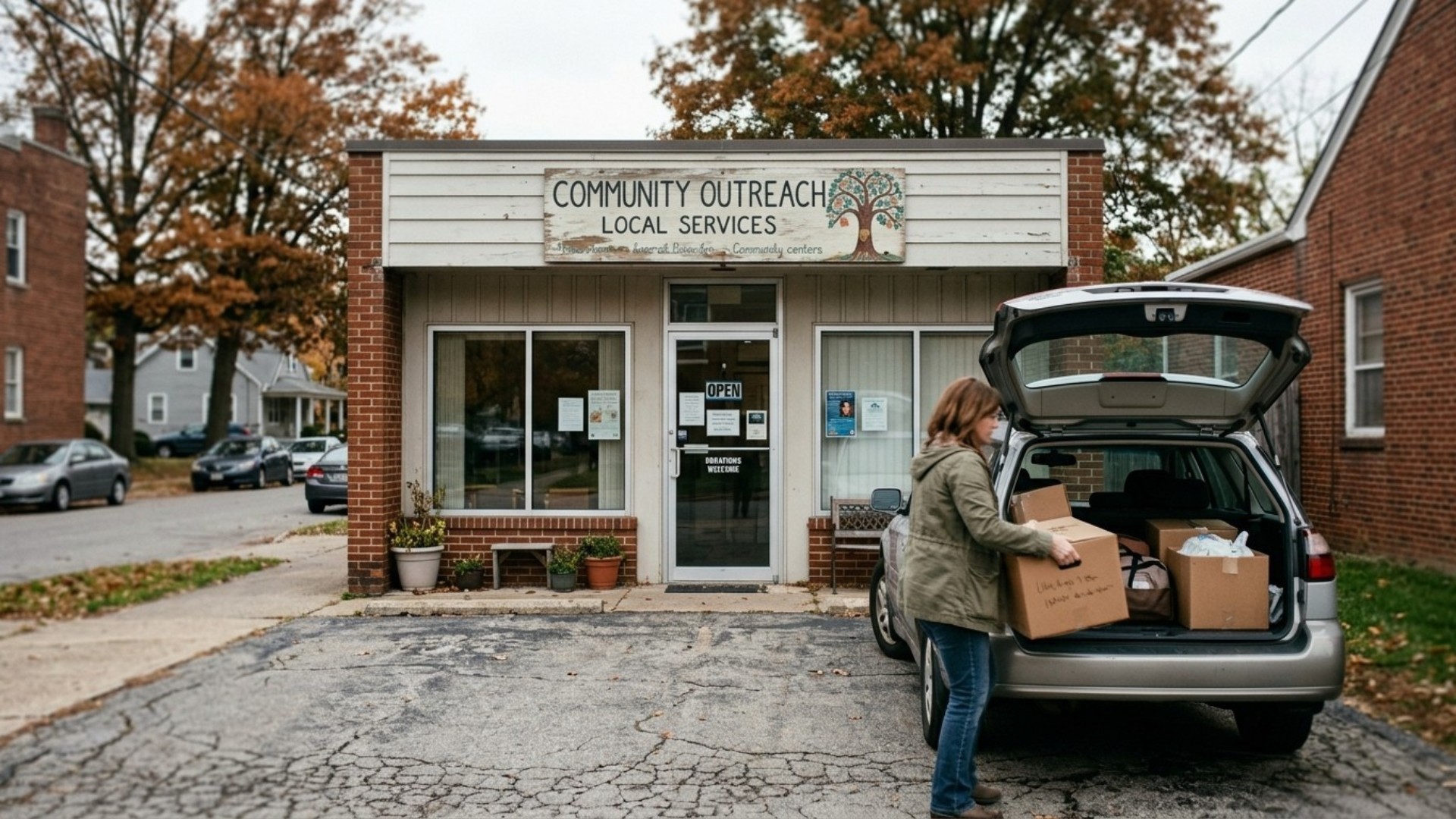
A small nonprofit can't out-spend a national charity's marketing budget or match its name recognition. It doesn't need to. Donors don't give because an organization is the biggest one in the category. They give because they trust exactly where their gift is going and can see it land. That's the lever a small, local organization actually has, and it works better at small scale than at large scale.
US charitable giving reached $617.2 billion in 2025, and individuals accounted for $394.2 billion of it, 64% of the total, per Giving USA's 2026 report. That money isn't locked to household names. It's split across more than 1.8 million recognized 501(c)(3) organizations in the US, per Candid, most of them small, local, and unknown outside their own community. Individual donors are the majority of that giving, and individual donors respond to specificity and trust, not brand size.
Why brand size isn't the deciding factor
It's worth being honest about why this feels counterintuitive. Big charities spend real money on visibility, and visibility clearly matters for awareness. But awareness isn't the same thing as the decision to give. A donor who's already aware of a large national charity still has to decide that this particular gift, right now, is worth making to that organization instead of somewhere else. That decision runs on trust and specificity, not on how many times they've seen the name before. A small, local organization that answers those two questions well can win that decision even against a donor who's never heard of it until today.
Where a small organization actually wins
Specificity beats scale. A national charity's ask is necessarily broad. "Support our mission" covers dozens of programs at once, spread across a budget too large for any one donor to picture clearly. A small nonprofit can say exactly what a gift buys: this shelter needs 30 winter coats by November, this food pantry is short on formula this week. A donor can picture the specific outcome of a specific gift, which a large multi-program budget line can't offer.
Local trust is a real asset, not a consolation prize. A donor who knows the neighborhood, the population served, or someone on staff trusts the organization more than an unfamiliar national brand, even though that trust doesn't show up in a marketing budget. Local coverage, a recognizable local cause, and word of mouth do the work a national ad campaign would otherwise have to buy at real cost.
Proof of delivery closes the trust gap. The biggest objection to giving to an unfamiliar small organization isn't skepticism about the cause, it's not knowing whether the gift actually gets used. A photo confirming an item arrived, tied to that specific donor's gift, answers the question directly instead of asking the donor to take it on faith. That's a harder thing for a large, distant organization to offer at the individual-gift level, since its scale makes item-by-item confirmation impractical for every single donor.
Being findable when someone searches matters more than being famous. A donor searching "donate winter coats near me" or "what does a shelter actually need right now" isn't looking for the biggest name. They're looking for the organization that answers the question in front of them. Showing up clearly in that search, with a specific, current list of needs, competes directly with a national brand's recognition advantage, because search doesn't reward size, it rewards relevance to the exact question asked.
What this looks like in practice
- Publish exact needs, not general appeals. "We need $500" competes with every other appeal in a donor's inbox. "We need 15 pairs of size 8 children's shoes" doesn't compete with anything, since it's the only ask that specific.
- Show the outcome, not just the ask. A donor who sees confirmation that their gift arrived and was used is far more likely to give again than one who gave and never heard anything back at all.
- Make the current need easy to find online, whether that's a page on your own site or a platform built for exactly this. Givelink lets a nonprofit post its real, current in-kind needs publicly, with each fulfilled gift photo-verified on arrival. See the live directory of participating organizations at givelink.app/charities.
- Don't compete on scale. Compete on the thing a small organization can credibly offer that a large one structurally can't: a direct, visible line between one donor's gift and one real outcome.
A note on where not to spend the effort
It's tempting for a small organization to try to look bigger, a slicker logo, a broader mission statement, more frequent generic social posts. None of that closes the trust gap that actually decides a donor's choice. If anything, it moves the organization's messaging closer to the vague, broad tone that only a large brand can afford to be trusted on. The better use of limited time is almost always the opposite: get more specific about what's needed, not more polished about how it's said.
FAQ
Does donor loyalty really favor small, local organizations over big national ones? Donors report giving to causes they feel personally connected to, and that connection is easier to build at a local, specific scale. A national organization competes on trust built over decades of brand recognition. A small organization competes on trust built through direct, visible proof that a gift did what it promised.
Is it worth trying to compete with big charities on marketing at all? Generally no. A small nonprofit's marketing budget can't match a national campaign, and trying to imitate that scale usually means a smaller organization ends up with a diluted version of a strategy built for a different budget. Specificity and local trust are levers that work regardless of budget size.
How much of US giving actually goes to small, local nonprofits? Giving USA doesn't break totals down by organization size, but with 1.8 million 501(c)(3)s and $394.2 billion in individual giving in 2025 alone, the money isn't concentrated only in the largest names. Most organizations receiving that money are small and local by definition, since large national charities are a small fraction of the 1.8 million total.
What's the single highest-leverage change a small nonprofit can make this month? Replace a general fundraising appeal with a specific, itemized list of current needs, published somewhere a donor can act on immediately. It costs nothing and directly addresses the trust gap that otherwise favors bigger, more familiar names.
See also
What is Givelink?
Learn from the founders:
Run a nonprofit? Get what you need.
Set your nonprofit up yourself in about 15 minutes. It's free, there's no contract, and you don't need to talk to anyone first.