
for nonprofits
How Habitat ReStore Building Material Donations Work
What a ReStore actually accepts, what the tax receipt covers, and where the $500 and $5,000 thresholds actually come from.

Panos Kokmotos |
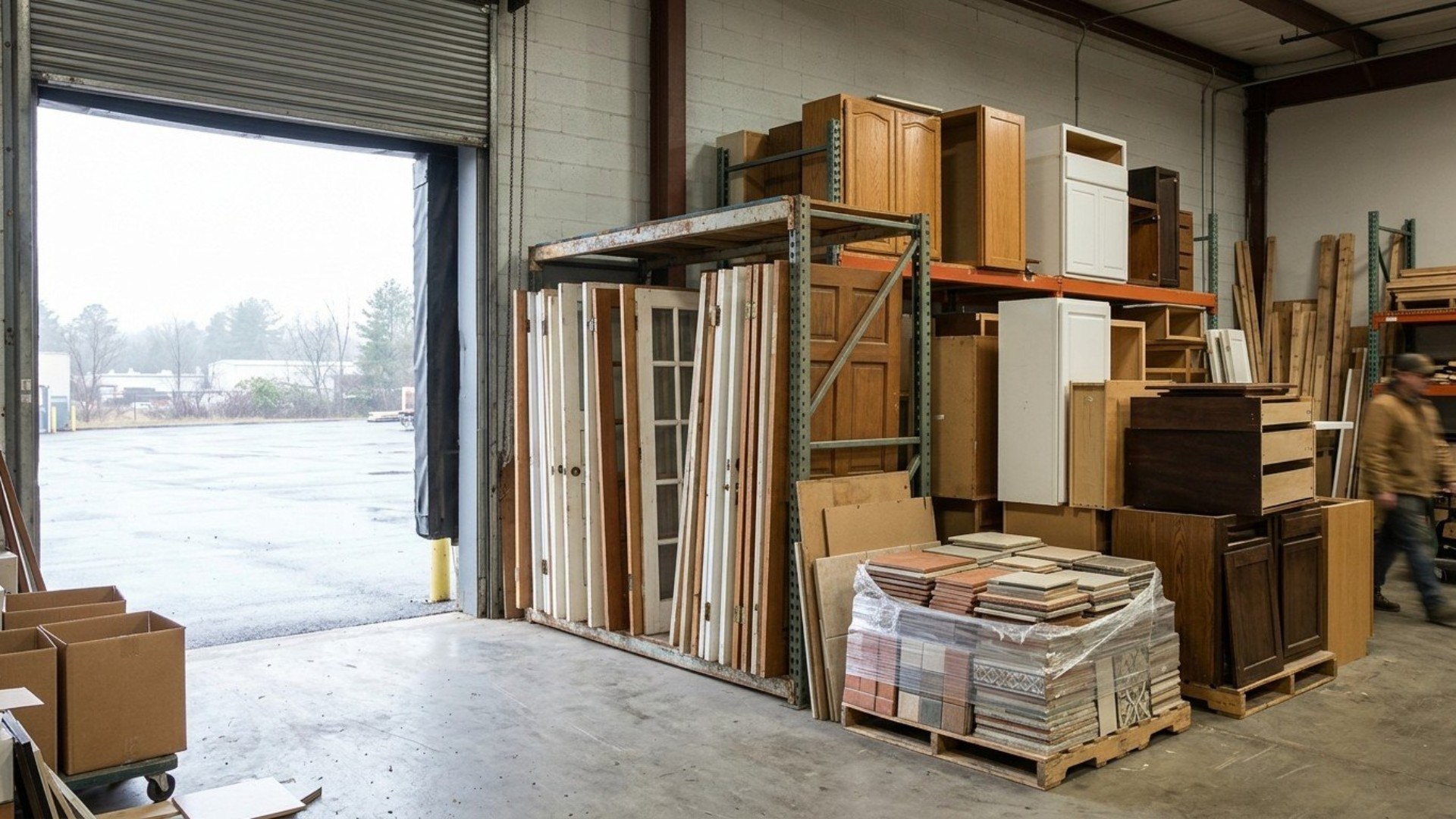
A Habitat for Humanity ReStore takes home improvement surplus the same way a thrift store takes clothes: appliances, cabinetry, doors, flooring, tile, lighting, and leftover building materials from a renovation, as long as they're in working or usable condition. Appliances specifically need to be working, in good shape, and generally under ten years old. The store resells everything at a discount, and the proceeds fund that local Habitat affiliate's home-building work, not a national pool.
What a ReStore actually wants
Think "home improvement store surplus," not "garage sale leftovers." A typical ReStore accepts:
- Working major appliances under roughly ten years old, in good condition
- Cabinetry, countertops, and vanities, especially from a kitchen or bath remodel
- Doors, windows, and trim
- Flooring and tile, including unopened boxes left over from a project
- Lighting fixtures and hardware
- Furniture in resellable condition Every local affiliate runs its own list and its own drop-off hours, so the exact acceptance policy varies store to store. The pattern that holds everywhere: if it's something a contractor would have specified on a renovation job, a ReStore probably wants it; if it's broken, outdated past the point of resale, or missing parts, it probably isn't worth the trip.
The tax receipt, and where the real thresholds come from
ReStore staff hand out a receipt at drop-off, and donors can claim a deduction if they itemize on their federal return. Where things get misreported: there's no flat "$500 cap" on in-kind donation deductions. What actually exists is an IRS reporting requirement, Form 8283, that kicks in at specific thresholds regardless of which charity received the gift:
- Over $500 in total noncash donations for the year (not per item, across everything you donated), you need to file Form 8283 with your return.
- Over $5,000 for a single item or group of similar items, the IRS requires a qualified written appraisal, not just a store receipt, or the deduction is likely to be denied on review. For most individual donors dropping off a used washer or a box of leftover tile, this never comes up, the value is well under $500 and a basic receipt covers it. It matters most for a business or contractor donating a larger batch of materials from a single renovation or demolition project, where the combined value can cross $500 or even $5,000 fast.
The landfill problem a ReStore donation actually solves
Construction and demolition work generates an enormous amount of material in the US, roughly 600 million tons in a recent year the EPA measured, which is more than twice the volume of all municipal solid waste combined. Demolition alone accounts for over 90% of that total. The good news: about 76% of it gets diverted to a next use rather than landfilled, mostly as aggregate. The remaining 24%, still well over 100 million tons, goes to a landfill, and a meaningful share of that is exactly the kind of usable surplus, cabinetry, doors, fixtures, leftover tile, that a ReStore would take if someone thought to call before the dumpster showed up. A donated kitchen from a remodel isn't just funding Habitat's next build; it's one less set of cabinets added to that 24%.
Why ReStore donations matter beyond the tax receipt
The resale proceeds are the actual point. A ReStore functions as a retail arm that funds home construction, which means a donated cabinet set or a box of unopened tile does two things: it keeps usable material out of a landfill, and it generates cash for building a home for a family that wouldn't otherwise be able to afford one. That's a different model from most in-kind giving, where the item itself goes directly to the person who needs it. At a ReStore, the item becomes the funding mechanism.
What to check before you drop something off
A few minutes of prep before a ReStore run saves a wasted trip. Call or check the specific affiliate's accepted-items list first, since policies vary store to store, especially for appliances and anything electrical. Keep the original box or packaging for unopened materials like tile or flooring if you still have it, since it speeds up intake and resale pricing. For anything over roughly ten years old, especially appliances, expect it to be turned away even if it still technically works, since resale value and safety liability both drop fast past that point. And bring whatever paperwork you have for higher-value items, a receipt or model number, since it makes the donation receipt more useful if the total for the year crosses the $500 reporting threshold.
What this means for a nonprofit running its own building-material donation program
A Habitat affiliate's ReStore model works because it has retail infrastructure: a storefront, staff, and a built-in resale channel. Most nonprofits that need building materials, like a transitional housing program renovating a unit or a community center fixing up a space, don't have any of that. They just need the materials themselves, delivered, not resold.
This is where a direct in-kind platform does something a resale model can't: it lets a nonprofit post the specific materials a renovation project actually needs this month, a donor commits to that exact item, and it ships straight to the project instead of sitting in a resale warehouse waiting for the right buyer. See how publishing a specific needs list works for nonprofits, or browse the live directory of charities with current needs. Our complete guide to in-kind donations covers how this differs from a cash gift in more depth.
FAQ
What does a Habitat ReStore accept? Working appliances generally under ten years old, cabinetry, countertops, doors, windows, flooring, tile, lighting, and furniture in resellable condition. Each local affiliate sets its own exact list, so it's worth checking the specific store's policy before a large drop-off.
Is there really a $500 cap on tax deductions for building material donations? No. The $500 figure is a reporting threshold, not a cap. Once your total noncash donations for the year exceed $500, you need to file IRS Form 8283 with your return. There's no dollar limit on the deduction itself.
When do I need a professional appraisal instead of just a receipt? When a single item or group of similar items is worth more than $5,000. Below that, a store receipt documenting the donation is generally sufficient; above it, the IRS requires a qualified written appraisal.
What happens to the money a ReStore makes selling donated materials? It funds that local Habitat for Humanity affiliate's home-building work. The ReStore functions as a retail business whose entire purpose is generating revenue for construction, not distributing donated materials directly to people in need.
If my nonprofit needs building materials directly, should we go through a ReStore? Not usually. A ReStore resells to the general public and keeps the proceeds for its own building projects. If your organization needs specific materials delivered to a project, a direct in-kind request, where a donor commits to that exact item and it ships to you, gets the material to where it's needed faster than buying it back from a resale store.
See also
What is Givelink?
Learn from the founders:
Run a nonprofit? Get what you need.
Set your nonprofit up yourself in about 15 minutes. It's free, there's no contract, and you don't need to talk to anyone first.