
blog
How Diaper Banks Actually Get Diapers to Families
What diaper banks need, how they source it, and where in-kind donations fit next to bulk purchasing.

Panos Kokmotos |
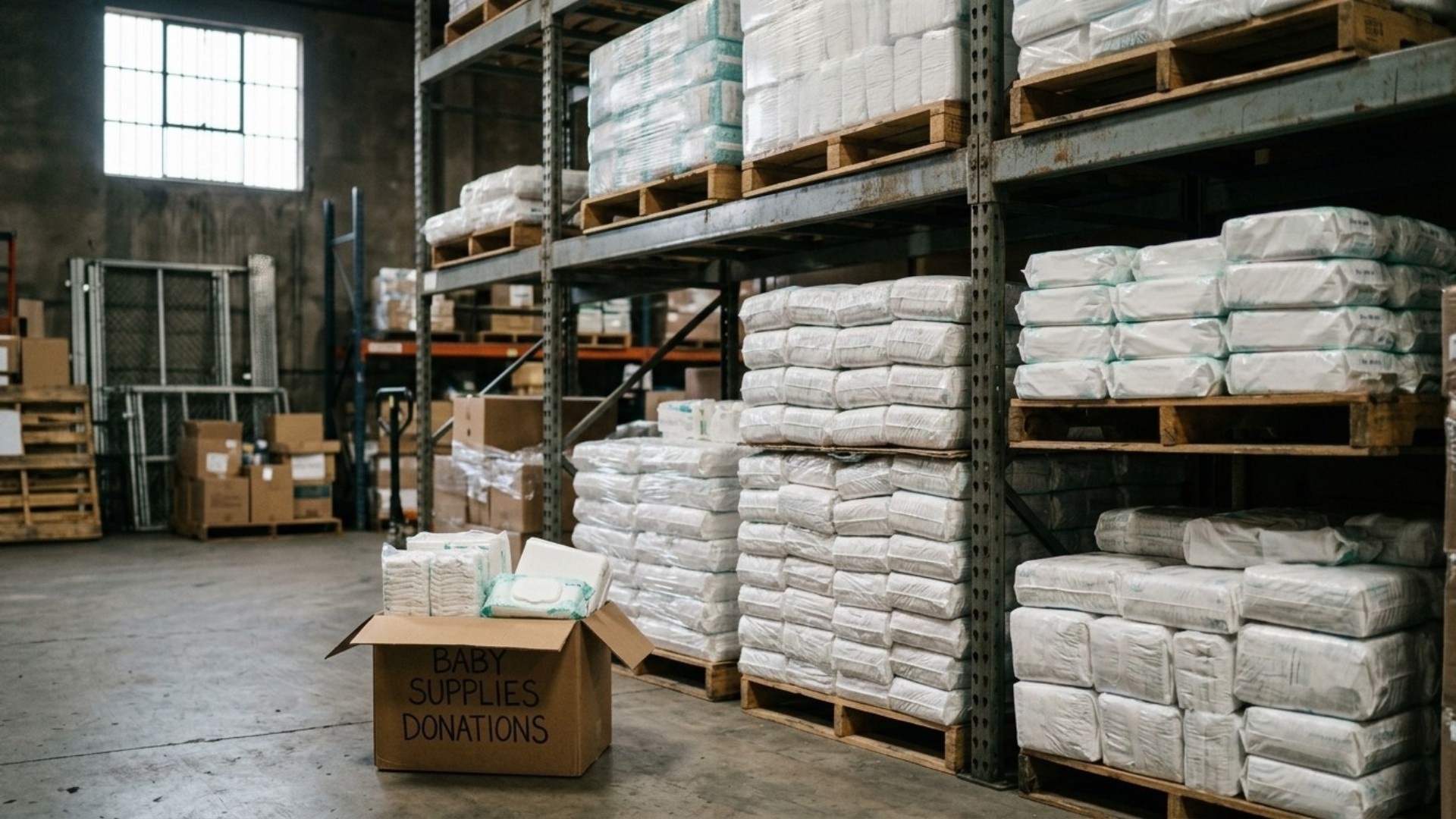
A diaper bank is a nonprofit that collects and redistributes diapers, wipes, and other baby basics to families who can't consistently afford them. Most don't manufacture or buy everything themselves. They run on a mix of bulk purchasing, retailer donations, and drives, then hand diapers off to a network of partner agencies, like pregnancy centers, shelters, and churches, who get them directly to families.
Why diaper need is a real, defined problem
"Diaper need" is the term researchers use for not having enough diapers to keep a baby clean, dry, and healthy. It's distinct from general poverty because most safety-net programs don't cover it. WIC and SNAP don't pay for diapers. Daycares in most states require a full supply before they'll even accept a child, which means diaper need can block a parent from going to work.
The National Diaper Bank Network now counts more than 300 diaper banks and basic-needs banks in its network, distributing over 30 million diapers a year combined. That scale only works because distribution is decentralized: a diaper bank in one city partners with dozens of smaller agencies that already have relationships with the families who need help, rather than trying to run its own intake process for every parent.
How a diaper bank actually fills its shelves
Three sourcing paths run side by side at most diaper banks:
Bulk purchasing. Diaper banks buy in volume, often through manufacturer or retailer partnerships that bring the per-diaper cost down close to wholesale. This is the backbone of most operations, funded by grants and cash donations.
Retailer and corporate donations. Overstock, discontinued sizes, or damaged-box inventory from manufacturers and big retailers. These arrive in bulk, unpredictably, and diaper banks take what shows up.
Individual and community drives. Diaper drives, often run through a diaper bank's partner network, where people buy and drop off packages directly. This is the smallest volume of the three but the one that gets a donor closest to the actual need.
The gap in that third path is visibility. A diaper drive flyer says "size 4 and 5 diapers needed," but nobody donating knows if that need got met this week, this month, or at all. The donor drops a package in a bin and never finds out what happened to it.
Where a platform like Givelink fits
Givelink closes that specific gap rather than replacing bulk purchasing. A nonprofit lists the exact items and sizes it needs, a donor funds that specific item, and it ships straight to the organization with a photo confirming it arrived. No warehouse step for the nonprofit, no guessing for the donor.
Helping Mamas, a Georgia-based baby supply bank, is a working example: as of early October 2026, it's received 130+ donations from 125+ donors through its Givelink profile. That's donors funding specific, needed items directly rather than a diaper drive box sitting in a lobby with no feedback loop.
Frequently asked questions
Do diaper banks accept opened or used diaper packages? Almost never. Diaper banks distribute these to families as new products, so donated diapers need to be unopened, in original packaging, within the printed size range the bank is currently requesting. Check a specific diaper bank's current sizes before buying, since need shifts by season and by what's already in stock.
What sizes are usually in shortest supply? Size 4, 5, and 6 diapers (toddler sizes) tend to run short more often than newborn sizes, because toddlers go through them for longer and newborn sizes get donated more heavily right after baby showers and registries.
Can a small nonprofit start its own diaper bank, or does it need to partner with an existing one? Most small nonprofits that distribute diapers don't run as standalone diaper banks. They partner with a regional diaper bank for bulk supply and supplement with their own donor drives for specific, immediate needs, which is where a donor-funded wishlist approach is most useful.
Is cash or diapers themselves more useful to donate? Cash generally goes further at the bulk-purchasing stage because of wholesale pricing. But item-specific donations solve a different problem: they let a donor see exactly what they funded and let a nonprofit flag an urgent, specific gap, like a particular size running out, that cash sitting in a general fund doesn't communicate.
Where to start
Browse real nonprofits already using item-specific donations, including baby-supply organizations like Helping Mamas, in the Givelink charity directory. If you run a diaper bank or baby-supply nonprofit and want to see exactly how the donor-funds-the-item model works, start a profile.
See also
What is Givelink?
Learn from the founders:
Support a nonprofit
Buy their needs