
for nonprofits
How Book Donations Actually Work for Nonprofits and Libraries
What counts, what's deductible, and where unsold or unwanted books really end up.

Panos Kokmotos |
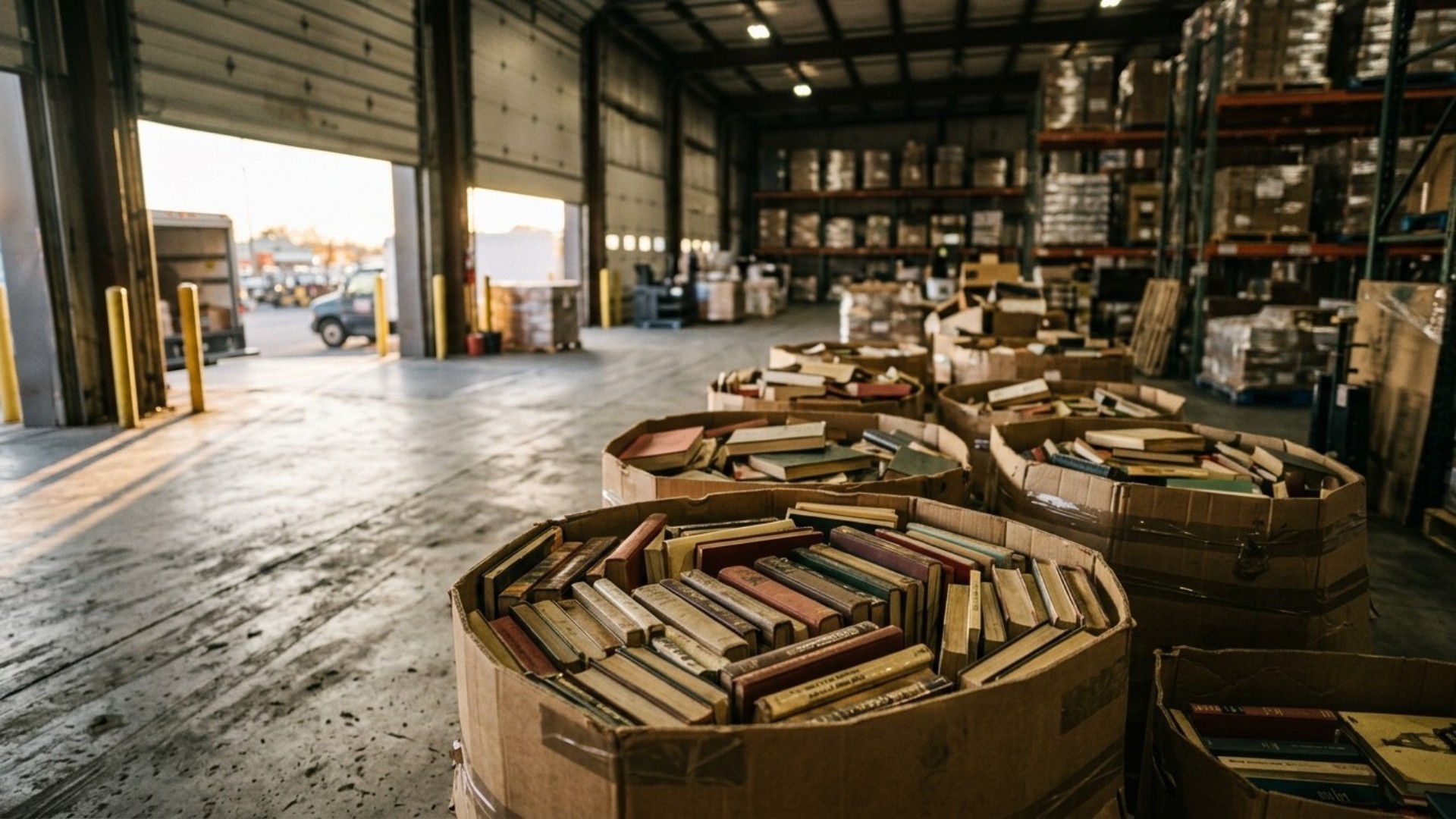
A book donation is deductible to the donor at fair market value, which for most used books runs one to ten dollars a copy depending on condition, not the cover price. For the nonprofit or library receiving it, the real work isn't accepting the box, it's deciding fast whether a book goes on the shelf, into a resale pipeline, or out to a redistribution program, because most donated books end up in one of those last two buckets, not the first.
If your organization takes book donations at all, whether as a standalone program or as one line on a broader wishlist, the mechanics are different enough from other physical goods that it's worth having a clear policy before the boxes start arriving.
What a book donation is actually worth
The IRS treats books like any other used-property donation: the deduction is fair market value, not replacement cost. Per general noncash-donation guidance, condition drives the number more than edition or format. A new or like-new book can reasonably be valued around ten dollars. A book in good, shelf-ready condition is closer to three dollars. A book in fair condition with visible wear drops to around a dollar. A book in poor condition, water-damaged, moldy, or missing pages, generally isn't deductible at all, which is also exactly the condition most organizations should decline outright.
The paperwork thresholds are the same as any other in-kind gift. A donor claiming more than 500 dollars across their books for the year needs to attach Form 8283 to their return. Past 5,000 dollars for a single collection, the IRS generally requires a qualified appraisal, which almost never applies to a box of paperbacks but can matter for a donated rare-book or special collection.
What actually happens to the books after they arrive
Most libraries and nonprofits don't have shelf space for everything that comes in the door, so a donation policy usually sorts books into three paths. The library guidance from the American Library Association puts it plainly: organizations retain full discretion over what they keep, and have the right to sell a donation at a book sale or discard it outright rather than shelve it.
Resale programs. Better World Books runs the best-known version of this for libraries: the organization pays to ship donated books from the library to one of its distribution centers, lists what's sellable on major online marketplaces, and pays the library a percentage of net sales on anything that moves. There's no signup fee and no cost to the library. For every book sold, the company also donates a book to a literacy program, so even a shelf-clearing donation drive indirectly funds a second gift.
Redistribution to need. Books that don't fit a resale pipeline, or that a program specifically wants to route to readers rather than buyers, go through named redistribution organizations. Books for Africa ships to schools and libraries across the continent. Bridge of Books Foundation and Kids Need to Read get books directly to underserved children and underfunded schools in the US. Reader to Reader sends collections to under-resourced school and public libraries. Each has its own intake process, typically bulk pallet or box shipments rather than a one-at-a-time donation, so they're a better fit for an organization clearing out a large backlog than for an individual donor dropping off a grocery bag.
Recycling. Water-damaged, moldy, or otherwise unsellable and unreadable books go to paper recycling. This is the least satisfying outcome for a donor, which is exactly why a clear, upfront condition standard, visible on your donation page, saves staff time later: if a book wouldn't sell at a yard sale, say so before it arrives rather than after.
Writing a condition policy that actually prevents the problem
A short, specific policy does more work than a vague one. "We gladly accept books in good condition" invites every condition of book imaginable. A policy that names what's out, no water damage, no mold, no missing pages, no markings beyond light highlighting, and names what's especially needed, specific subjects, reading levels, or languages, does two things at once: it cuts down on unusable donations arriving at all, and it tells a donor exactly what would actually help, which tends to produce better donations, not just fewer bad ones.
This is also where accounting catches up with donation policy. Under the 2020 FASB update on gifts-in-kind reporting, a nonprofit has to separately disclose noncash contributions by category and describe how it determines fair value, so a library or literacy program taking in a meaningful volume of donated books should already be tracking condition and estimated value at intake, not reconstructing it at year-end for the auditor.
What this means if books sit on your organization's own wishlist
A literacy nonprofit, a school library, or a shelter running a children's reading room doesn't just receive books passively, it often lists specific, named titles or categories it actually needs, the way any organization lists any in-kind need. That's a meaningfully different ask than "we'll take whatever you don't want anymore," and it changes what shows up. A donor buying a specific book off a named wishlist, rather than clearing their own shelf, is choosing exactly what your program asked for, in new or near-new condition, which skips the sorting problem entirely. It's the same logic behind any specific-item wishlist: the more precisely an organization names what it needs, the less time it spends triaging what it gets.
Frequently asked questions
Can a donor deduct the cost of a brand-new book bought specifically for us? Yes, in that case the deduction is simply the purchase price, since that's the fair market value of a new item. The condition-based valuation tables matter for used books, where the original purchase price no longer reflects what the item is actually worth today.
Do we need to give every book donor a receipt? For any donation where the donor might claim a deduction, yes, a written acknowledgment showing your organization's name, the date, and a description of the items (not a dollar value, which is the donor's job to determine) protects both sides if the IRS ever asks.
Should we ever just say no to a book donation? Yes, and it's a normal, professional response. If a collection arrives moldy, water-damaged, or otherwise unsellable, decline it or redirect the donor to a recycling program rather than accepting it out of politeness. A posted condition standard makes this an easy, unawkward conversation instead of a surprise.
Is there a faster way to get specific, needed titles instead of sorting through general donations? Yes. Posting the exact books, reading levels, or categories your program actually needs, the way you'd post any item on an in-kind wishlist, tends to get you usable material faster than an open call for "any books welcome."
Do we have to use a program like Better World Books, or can we just sell donated books ourselves? You can run your own book sale, and plenty of libraries do exactly that for at least part of what comes in. A partnership program is worth it mainly when your volume outpaces what staff and volunteers can realistically sort, price, and sell on a regular schedule.
Want to see how a named, item-level wishlist works for a program like yours? Browse live nonprofit needs on Givelink or start your own profile.
See also
What is Givelink?
Learn from the founders:
Run a nonprofit? Get what you need.
Set your nonprofit up yourself in about 15 minutes. It's free, there's no contract, and you don't need to talk to anyone first.