
blog
The Hidden Cost of Nonprofit Platform Fees (And Who Actually Pays Them)
How fundraising platform fees flow through the giving system — and why the organizations that can least afford them pay the most
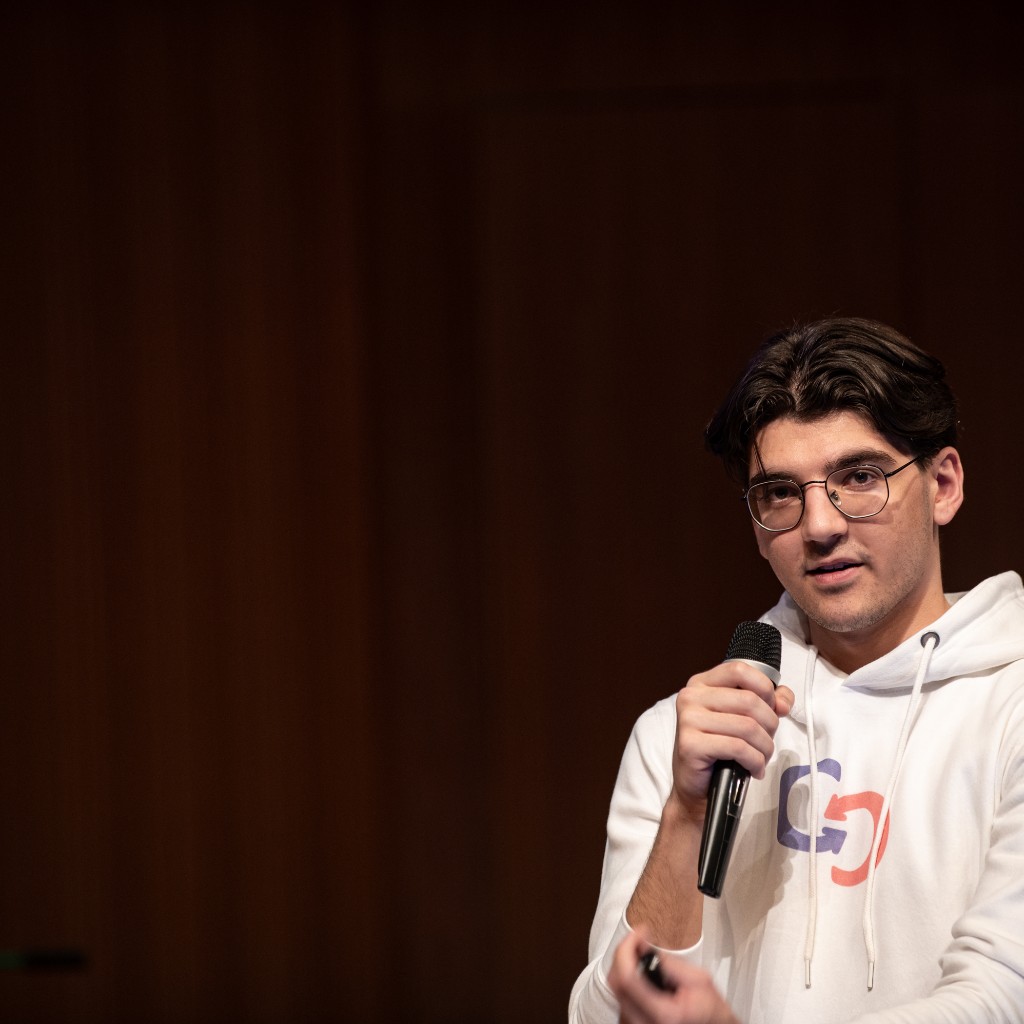
Antonis Politis |
The Hidden Cost of Nonprofit Platform Fees (And Who Actually Pays Them)
How fundraising platform fees flow through the giving system — and why the organizations that can least afford them pay the most.
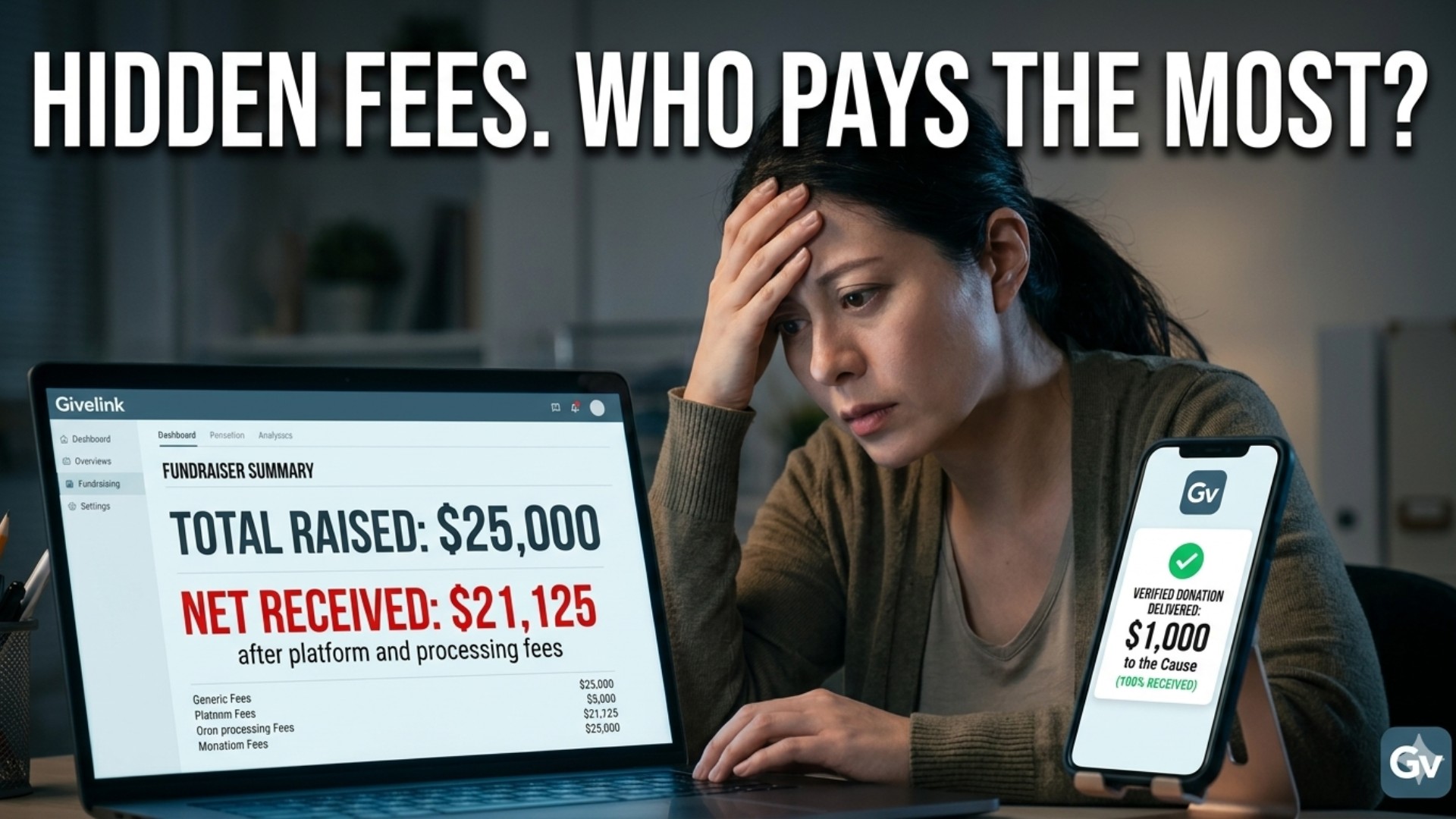
Most fundraising platforms charge nonprofits fees. This is rarely hidden — the fee structures are published. What is less visible is how those fees flow through the sector, who ultimately absorbs them, and what the cumulative cost looks like for a small nonprofit running on thin margins. A nonprofit that processes $100,000 in donations through a platform charging 5% loses $5,000 to platform fees annually — $5,000 that doesn't reach the people the organization serves. Givelink, a Transparent Giving Platform, charges nonprofits zero. Not as a growth-phase promotion. Permanently. Here's why it matters — and what nonprofit leaders should ask when evaluating any platform.
Key Takeaways
- Most fundraising platforms charge 3–8% of transactions processed, plus payment processing fees.
- Small nonprofits pay proportionally more — they can't negotiate volume pricing.
- $5,000/year in platform fees is a part-time staff position for a small organization.
- Givelink charges zero — supported by optional donor tips and supplier-side markup.
- The question to ask every platform: show me the full fee stack, including payment processing.
The full fee stack: what nonprofits actually pay
Platform fees are rarely just one number. The full cost of a fundraising platform typically includes:
Transaction fees: A percentage of each donation processed (typically 3–7%).
Payment processing fees: Stripe, PayPal, or another processor charges 2.2–2.9% + $0.30 per transaction, which many platforms pass through directly.
Monthly subscription fees: Some platforms charge monthly or annual subscription fees for access to basic or premium features.
Premium feature gates: Features like CRM integration, advanced reporting, or multiple campaign management may require paid upgrades.
Setup or onboarding fees: Less common but present on some platforms.
Early termination fees: Some platforms require multi-year contracts with termination penalties.
A realistic example: a nonprofit processing $100,000/year through a platform charging 5% platform fee + 2.9% payment processing:
- Platform fee: $5,000
- Payment processing: $2,900
- Total annual cost: $7,900
That's $7,900 not reaching programs.
Who pays these fees in practice
Technically, fees are charged to the nonprofit. In practice, the cost flows in multiple directions:
Programs: When platform fees are drawn from donation revenue, less money reaches programs. The fee is effectively a tax on the mission.
Donors: Some platforms encourage — or require — donors to cover fees on behalf of nonprofits ("cover our costs for only $1.50 more"). Donors often say yes without realizing they're subsidizing the platform's revenue model.
Staff time: When small nonprofits spend hours understanding, managing, and reporting around platform fee structures, that's operational cost that doesn't show up in the fee number but is real.
Why small nonprofits pay more
Volume discounts are the norm in fee-based SaaS and payment processing. Organizations processing $10 million/year negotiate different rates than organizations processing $100,000/year.
The result: the organizations that can least afford platform fees — small nonprofits with thin margins and no procurement leverage — pay the highest effective rate. The largest organizations with negotiating power pay less.
This is a structural inequity that fee-based platforms create regardless of intent.
The alternative model
Givelink's zero-fee model for nonprofits is funded differently:
- Optional donor tip: At checkout, donors are offered an optional tip (default 10%, fully removable). Many choose to leave it. This funds the platform without charging nonprofits.
- Supplier-side markup: A small markup (~5%) on products flowing through verified U.S. suppliers covers sourcing, logistics, and delivery. This is a transitional model — the long-term goal is a fully supplier-funded platform.
The result: nonprofits on Givelink keep 100% of the value donors intend for them. No platform cut. No processing fee. No subscription.
What to ask before signing up for any fundraising platform
Before committing to any fundraising platform, run through this checklist:
- What is the transaction fee percentage?
- Is payment processing included or additional?
- Are there monthly or annual subscription fees?
- What features require paid upgrades?
- Is there a contract with termination fees?
- Can we export our donor data freely if we leave?
- What does the fee structure look like at our current donation volume?
Running the math on your current volume gives you the true annual cost — not the headline percentage.
Why this matters in 2026
Federal funding cuts are tightening nonprofit budgets across the sector. The Center for Effective Philanthropy found 34% of nonprofits reported federal funding declines in 2025. For organizations already operating on thin margins, platform fees are not background noise — they're a real budget line that competes with program spending.
In this environment, a free platform is not just convenient. For small nonprofits, it's the difference between maintaining a program and cutting it.
"Empathy — not charging nonprofits anything for getting help."
That's not positioning. It's the constraint that shapes every Givelink product decision.
Givelink in action
A youth arts nonprofit in Los Angeles was paying $180/month ($2,160/year) for a mid-tier fundraising platform subscription, plus 4.5% transaction fees on $80,000 in annual donations ($3,600), for a total annual cost of $5,760. After migrating to Givelink: $0. The $5,760 now goes to program delivery — the equivalent of a 15-hour/week program assistant. Apply to Givelink and redirect your platform budget to your mission.
Frequently Asked Questions
What fees does Givelink charge nonprofits?
Zero. No transaction fees, no subscription fees, no setup fees, no termination fees. Ever.
How does Givelink make money without charging nonprofits?
An optional donor tip at checkout (default 10%, fully removable by the donor) and a small supplier-side product markup (~5% in the U.S., transitional model).
What is a typical nonprofit fundraising platform fee?
Most platforms charge 3–7% transaction fees plus 2.2–2.9% payment processing, often with additional subscription fees. Total cost on $100,000 in donations can reach $7,000–$10,000/year.
Can nonprofits export their donor data from Givelink if they leave?
Yes. Givelink supports full donor data export in standard formats. Nonprofit donor data belongs to the nonprofit.
Stop paying to ask for help.
Apply to Givelink — zero fees, and the first step toward keeping more of every donation.
Stay Human.
Antonis Politis is CEO and Co-Founder of Givelink.
See also
What is Givelink?
Learn from the founders:
Support a nonprofit
Buy their needs