
blog
How the Greek-American Diaspora Is Giving Differently in 2026
What diaspora giving looks like when it's built on transparency instead of obligation — and why a Greek-founded platform is changing the conversation.
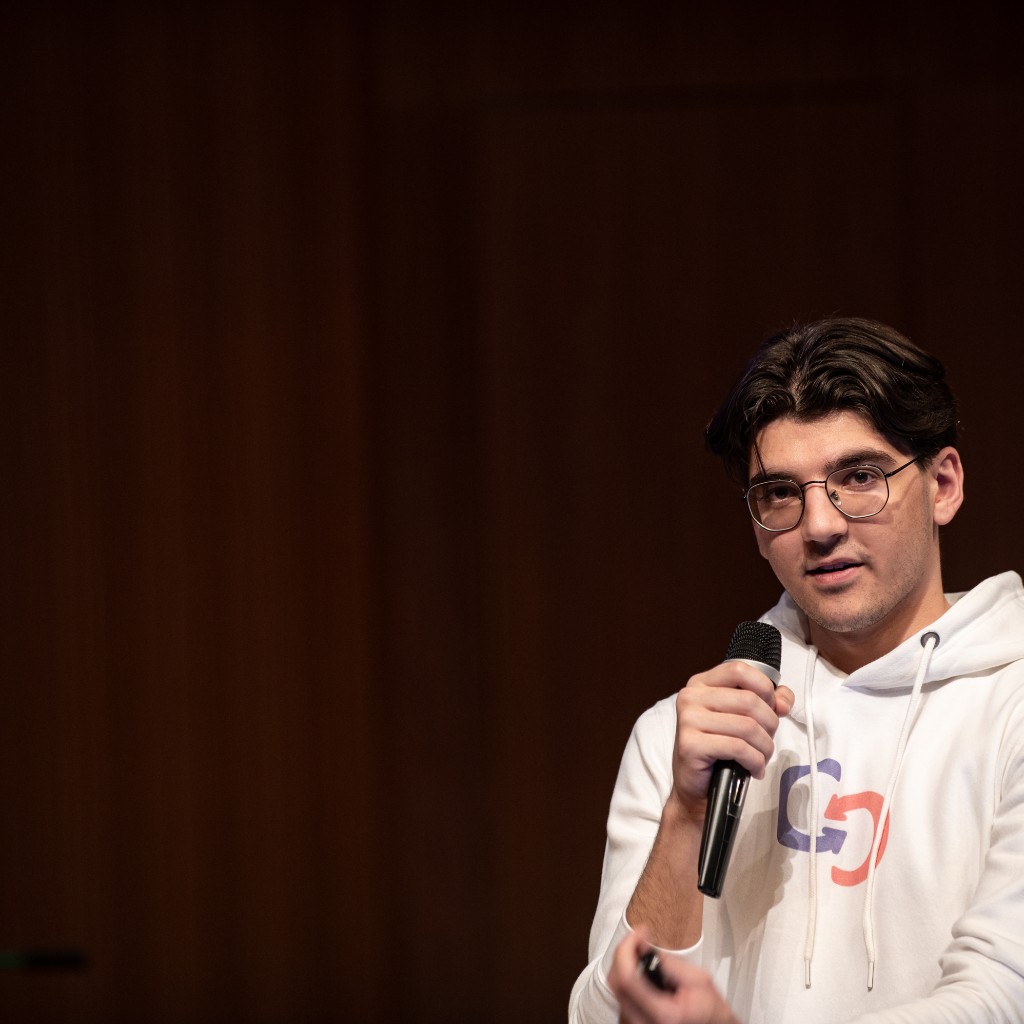
Antonis Politis |

How the Greek-American Diaspora Is Giving Differently in 2026
What diaspora giving looks like when it's built on transparency instead of obligation — and why a Greek-founded platform is changing the conversation.
The Greek-American diaspora is one of the most organized philanthropic communities in the United States — with a long tradition of giving to Greek causes, Greek-American institutions, and community organizations on both sides of the Atlantic. But diaspora giving has a visibility problem as old as the remittance wire: money leaves, and the person who sent it rarely sees what it became. Givelink, a Transparent Giving Platform founded by three Greeks now based in San Francisco, was built partly on the frustration that diaspora givers have lived with for generations. Here's how transparent giving is changing the diaspora giving conversation — and why proof matters across borders more than anywhere else.
Key Takeaways
- Diaspora giving has always had a visibility gap — money sent home with no proof of outcome.
- Greek-American philanthropists are among the most organized diaspora giving communities in the U.S.
- Transparent giving platforms close the visibility gap across geographic and cultural distance.
- Givelink was founded by Greeks who felt this problem personally — and built the fix.
- Charity Navigator data and photo proof work for any verified U.S. 501(c)(3), including diaspora-serving organizations.
The diaspora giving paradox
Diaspora communities give generously. The World Bank estimated global remittances at over $800 billion in 2024 — most of it from first- and second-generation immigrants sending money to families and communities abroad. Charitable diaspora giving, separate from remittances, adds billions more.
The paradox: diaspora givers are the most emotionally motivated donors and the least informed about outcomes. Distance is the compounding factor. When you give to a community organization in your ancestral village or a cause in your home country, you're trusting an intermediary you can't visit, a process you can't observe, and an outcome you'll probably never see.
The black box is most opaque when the giver is furthest away.
What this looks like for Greek-American giving
The Greek-American community has formalized philanthropy through institutions like the American Hellenic Educational Progressive Association (AHEPA), the National Hellenic Society, and dozens of community-based organizations. Giving flows to scholarships, cultural programs, disaster relief, and Greek nonprofit causes.
But the same problem exists: donors in Chicago, New York, or San Francisco give to causes in Athens, Patras, or Thessaloniki and receive the same generic thank-you that donors everywhere receive. The cultural obligation to give ("you give back to the community") is strong. The feedback loop is essentially absent.
Givelink was built by three Greeks from Patras who felt this directly. Not just as a product problem — as a personal one. The platform was designed to close the loop: every donation becomes specific items, delivered to a verified organization, photographed by the receiving team, and surfaced to the donor's dashboard.
How transparent giving applies to diaspora giving
The mechanics of transparent giving are geography-agnostic — what matters is verification and proof, not location. For Greek-American donors giving to U.S.-based Greek community organizations or nonprofits serving Greek-American communities:
- Organizations must be verified U.S. 501(c)(3)s (Givelink's current focus)
- Charity Navigator data on the profile confirms standing
- Wishlist items reflect real organizational needs
- Photo proof of delivery crosses the distance transparently
For diaspora donors, this produces something genuinely new: a giving experience that answers "what did my money become?" across thousands of miles, in a photo, within two weeks.
Why the founding story matters here
Givelink was not built in Silicon Valley by engineers who thought philanthropy was an optimization problem. It was built in Patras by three students who grew up in a culture with deep philanthropic tradition and a deep frustration with how invisible that tradition's outcomes had become.
The cultural DNA of Givelink — the manifesto's language about philanthropy as "friend of humanity," the insistence on proof as a form of respect, the rejection of vague "your donation helps" language — comes directly from this origin.
For diaspora givers who've spent decades giving without seeing, that DNA resonates.
Why this matters in 2026
Diaspora communities are the fastest-growing donor demographic in several U.S. markets. Greek-American, Indian-American, Nigerian-American, and other diaspora giving networks are formalizing — moving from informal remittances to structured philanthropic giving, often through DAFs and community foundations.
Transparent giving platforms that speak to diaspora donors' specific frustration (distance + black box) are positioned to capture this demographic shift. The combination of Charity Navigator verification (trust at the point of decision) and photo proof (visibility across distance) is exactly what diaspora givers have needed.
Givelink in action
A second-generation Greek-American in Chicago gave to a youth arts nonprofit on Givelink — an organization serving immigrant and Greek-American youth in California. The delivery photo arrived two weeks later: art supplies on a classroom shelf, organized and ready. The donor wrote in the dashboard: "My parents gave to things in Greece for forty years and never saw anything. This changes how I think about giving." Browse verified nonprofits on Givelink and give with proof.
Frequently Asked Questions
Does Givelink work for donors giving to Greek or Greek-American nonprofits?
Givelink works with verified U.S. 501(c)(3) nonprofits, which includes Greek-American community organizations. Donors outside the U.S. can give on the platform to any verified nonprofit.
Is Givelink specifically designed for diaspora giving?
Givelink is a universal transparent giving platform, but the founding team's Greek origin and personal experience with the diaspora visibility gap is part of the platform's DNA. The transparency model addresses diaspora giving frustrations directly.
Can I give to nonprofits in Greece through Givelink?
Givelink's current focus is U.S. 501(c)(3) nonprofits. International expansion — including Greece, where Givelink launched — is part of the roadmap.
What is the history of Givelink in Greece?
Givelink launched in Greece before expanding to the U.S. Greek nonprofits like Emfasis Non-Profit were among the first to onboard. The founding team — based at the University of Patras — built the transparent giving model on Greek philanthropic soil.
Give with proof — wherever you are.
Browse verified nonprofits on Givelink and start the loop.
Stay Human.
Antonis Politis is CEO and Co-Founder of Givelink. He grew up in Greece and now leads the platform's U.S. expansion from San Francisco.
See also
What is Givelink?
Learn from the founders:
Support a nonprofit
Buy their needs