
blog
What Givelink's Supplier Network Will Look Like in 2030
From 10 verified U.S. suppliers to a fully commission-based national distribution network — the supplier roadmap and what it means for donors and nonprofits.

Alexandros Karagiannis |
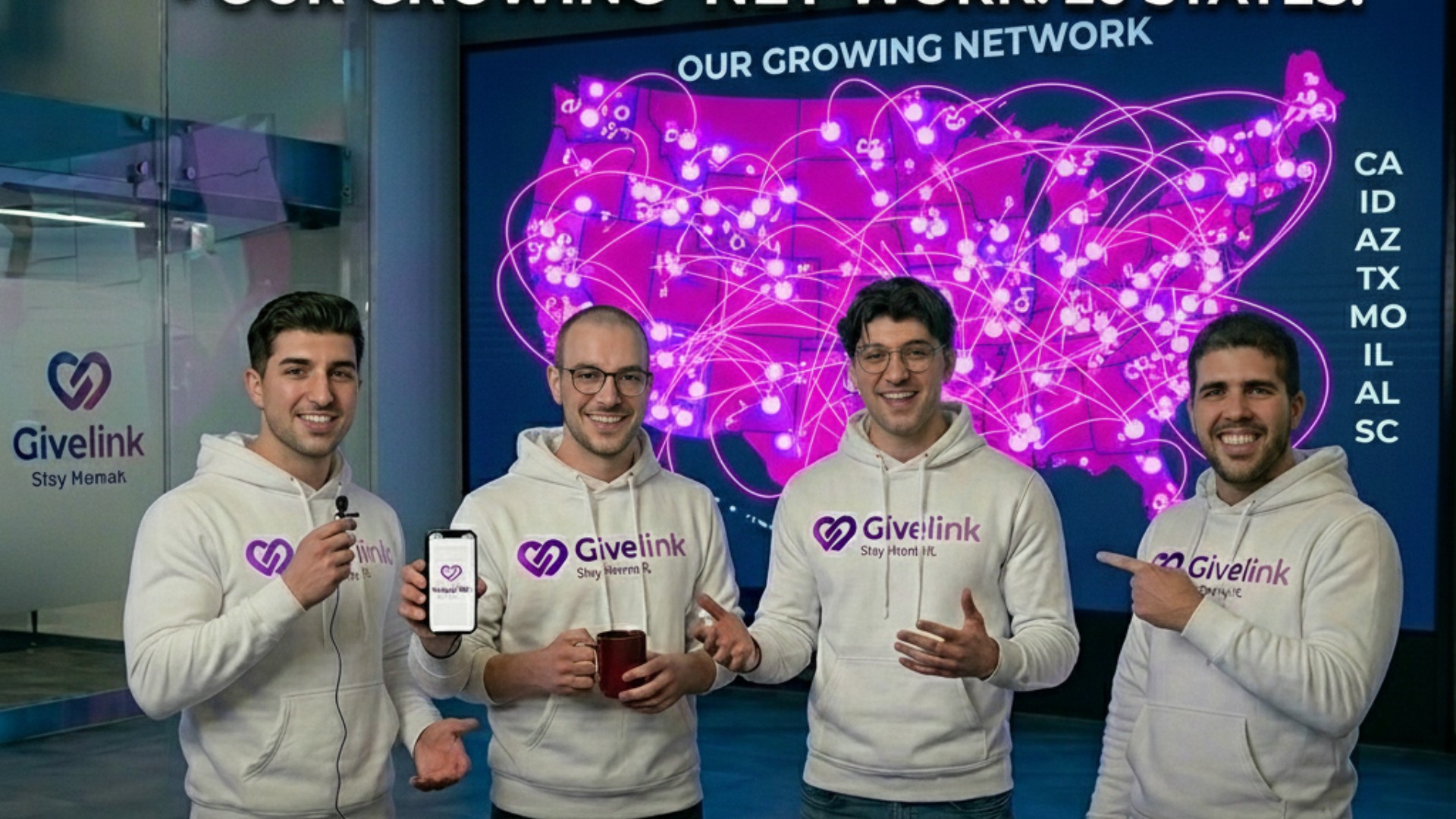
What Givelink's Supplier Network Will Look Like in 2030
From 10 verified U.S. suppliers to a fully commission-based national distribution network — the supplier roadmap and what it means for donors and nonprofits.
The supplier network is the operational spine of Givelink. Donors give. The wishlist specifies. The supplier fulfills. The nonprofit receives. The photo proves it happened. Every step between donor checkout and delivery photo depends on the verified supplier network performing reliably. This post explains where the network is now, where it's going by 2030, and what each phase of growth means for donors and nonprofits.
Where the network is now (2027)
Active supplier categories:
- Hygiene and personal care (primary — highest volume)
- Food and nutrition (growing — protein-rich items, supplements, baby food)
- Baby and infant care (established — diapers, wipes, formula)
- School and education supplies (seasonal peak — back-to-school)
- Senior care (established — grip socks, incontinence, nutritional supplements)
- Clothing basics (established — socks, underwear)
- Art and creative supplies (growing — driven by arts nonprofit demand)
- Household and cleaning supplies (supporting — shelter operations)
Current model: ~5% product markup on supplier cost. All U.S. verified. Biweekly batched purchase orders. API-connected inventory management for real-time availability.
Supplier count: Approximately 15 verified U.S. suppliers across active categories.
Geographic limitation: Current supplier network is optimized for California delivery. National expansion requires building supplier relationships with regional fulfillment capacity.
Phase 1: National expansion supplier build (2028)
The transition from California-first to national coverage requires regional supplier relationships. A verified hygiene supplier with California fulfillment capability cannot cost-effectively ship to Texas or New York without regional distribution infrastructure.
2028 supplier network goals:
- East Coast regional supplier relationships: Hygiene, food, and basic needs suppliers with fulfillment capacity for New York, Massachusetts, and adjacent markets
- Texas/South Central supplier relationships: Suppliers with regional distribution capability for Texas, Oklahoma, Arkansas, and Louisiana
- Midwest supplier relationships: Suppliers serving Illinois, Michigan, Ohio, and adjacent states
This doesn't require 50 state-specific suppliers — regional distribution hubs serve multi-state geographies efficiently. The 2028 goal is 25–30 total verified suppliers with national geographic coverage.
What changes for donors: Donors outside California begin finding verified nonprofits in their regions with the same delivery reliability they see in California-based giving.
What changes for nonprofits: Organizations in new markets receive the same biweekly delivery service with equivalent photo documentation.
Phase 2: Category expansion (2028–2029)
Product categories expand beyond current coverage as demand signals from nonprofit wishlists justify new supplier relationships.
Priority categories for expansion:
Medical and adaptive equipment: Blood pressure cuffs, glucose monitors, and basic adaptive equipment for senior care and disability services programs. These require supplier relationships with medical device regulatory compliance — more complex than consumer goods.
Technology basics: Prepaid phones, tablets for youth programs, and Chromebooks for digital literacy programs. Higher unit cost items with more complex warranty and support requirements.
Specialized food items: Expanded halal and kosher certified products, culturally specific food staples, and medical nutrition products for specialized populations.
Pet care: As animal welfare nonprofits grow in the Givelink network, pet food, supplies, and veterinary basics become a logical category extension.
What changes for nonprofits: More complete wishlist coverage — fewer situations where a needed item isn't in the Givelink catalog.
Phase 3: The commission model transition (2028–2029)
This is the most significant business model change in the 2030 roadmap: the transition from product markup to supplier commission.
Current model: Givelink adds ~5% to supplier cost. Donors pay supplier cost + markup.
Commission model: Suppliers offer Givelink a distribution commission (equivalent to standard wholesale-to-retail margin) for access to the verified nonprofit customer base. Donors pay exact retail price. Givelink earns from the commission, not the markup.
What triggers the transition: Sufficient supplier volume to justify commission relationships. Suppliers pay commissions for distribution channels that move meaningful volume — typically above thresholds that Givelink's current size doesn't reach. As the nonprofit network grows to 500+, supplier volume justifies commission relationships in each category.
What changes for donors: Donors pay exact retail prices — no markup. This is the cleaner, more transparent model.
What changes for suppliers: The relationship shifts from a margin arrangement to a distribution partnership. Suppliers access a verified B2B distribution channel to 500+ nonprofits with ESG documentation as a byproduct.
Phase 4: The 2030 network
Target supplier profile in 2030:
- 40–50 verified U.S. suppliers with national or regional distribution
- All categories covered, including specialty items (medical, technology, pet care)
- Fully commission-based relationships with majority of suppliers
- Same-week fulfillment available for Emergency Button activations (currently 8–10 days, target <5 days)
- Suppliers receive quarterly delivery documentation for ESG reporting
What changes for donors: Near-exact retail pricing with delivery confirmation to 1,000+ verified nonprofits nationwide. The giving experience is as frictionless as e-commerce, with proof and verification built in.
What changes for nonprofits: The supply chain is national and reliable. Predictable biweekly delivery regardless of geography. More complete product catalog. Same zero-fee model.
Why the supplier network is the competitive moat
Givelink's verification standard, delivery photo system, and donor dashboard are differentiators. But the supplier network is what makes them sustainable.
A competitor could build a delivery photo system. Building a verified national supplier network with biweekly batched fulfillment, nonprofit-grade compliance review, and ESG documentation capability takes years and significant operational investment. The supplier network is not easily replicated — it's the structural advantage that compounds as the nonprofit network grows.
Frequently Asked Questions
Why does Givelink use biweekly batching instead of real-time delivery?
Biweekly batching reduces per-item logistics cost, lowers carbon footprint per item, and gives nonprofits predictable delivery windows for operational planning. Real-time individual delivery would be technically simpler but operationally and environmentally worse.
When will donors pay exact retail prices (no markup)?
The supplier commission model is piloting in 2028, with full transition targeted for 2028–2029 as commission volume thresholds are reached with priority suppliers.
Can suppliers apply to join the Givelink network?
Yes — contact contact@givelink.app to begin the supplier qualification process. Priority categories for new supplier applications in 2027–2028 are medical and adaptive equipment, technology basics, and expanded food categories.
What ESG documentation does Givelink provide to suppliers?
Quarterly impact reports including delivery photos (sourced from nonprofit uploads), nonprofit identity and Charity Navigator verification data, item-level delivery records, and verified delivery timestamps. Suppliers use this for supply chain ESG reporting.
Stay Human.
Alexandros Karagiannis is CTO and Co-Founder of Givelink.
See also
What is Givelink?
Learn from the founders:
Support a nonprofit
Buy their needs