
blog
Givelink 2026 Impact Report: 150,000 Lives, 100,000 Items, One Thread
The numbers behind transparent giving's first chapter in the U.S. — what was delivered, who it reached, and what the data says about where giving is heading.
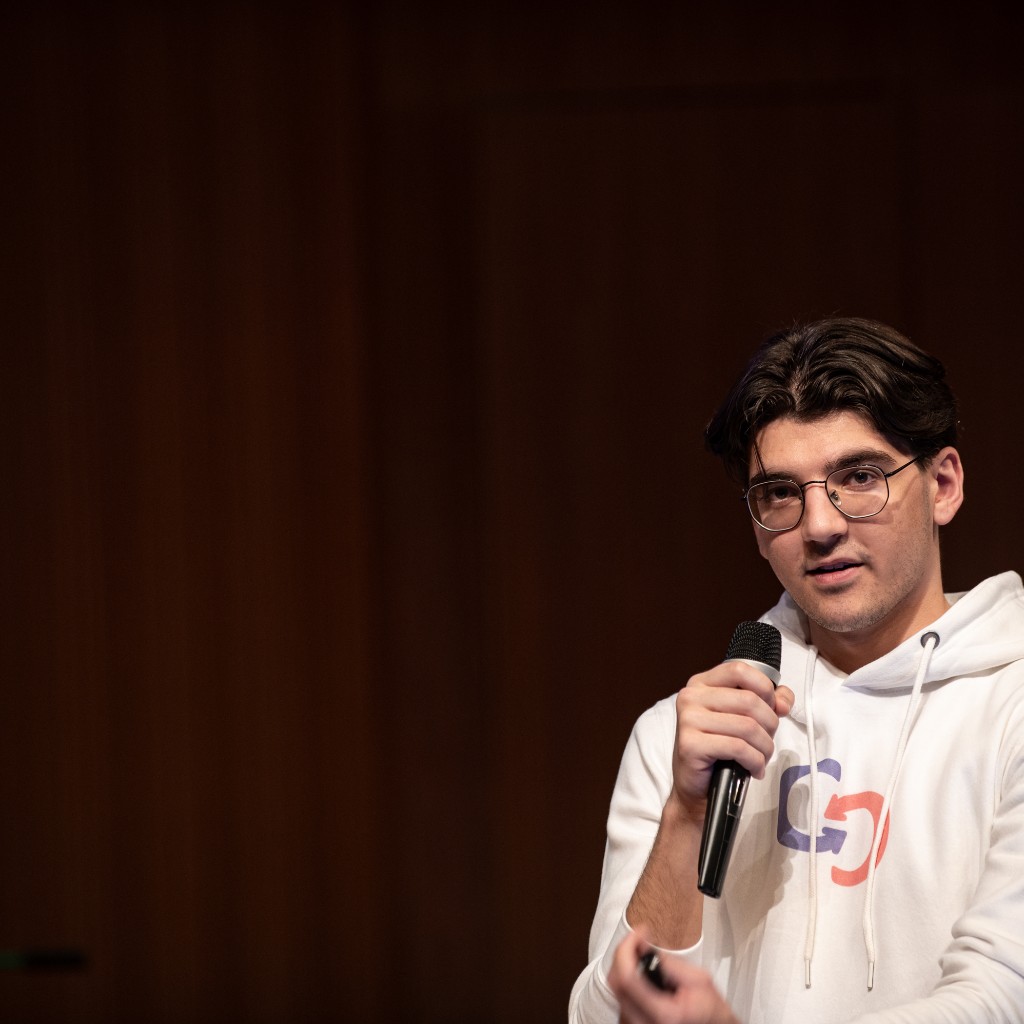
Antonis Politis |
Givelink 2026 Impact Report: 150,000 Lives, 100,000 Items, One Thread
The numbers behind transparent giving's first chapter in the U.S. — what was delivered, who it reached, and what the data says about where giving is heading.
Every number in this report is a real thing that happened. Not a projection. Not an estimated reach. A specific item, delivered to a specific nonprofit, photographed by a real person, received by someone who needed it. Givelink, a Transparent Giving Platform, publishes this impact report because radical transparency isn't just a product feature — it's a standard we apply to ourselves. Here's what transparent giving has produced in its first full chapter, what the data reveals, and what it means for the sector going forward.
The numbers
| Metric | Figure |
|---|---|
| Lives impacted | 150,000+ |
| Items delivered | 100,000+ |
| Donations tracked | 9,900+ |
| Verified nonprofits | 100+ |
| U.S. nonprofit partners | 30+ |
| Donor giving frequency lift | 60% more times per year vs. traditional giving |
| In-Kind Donation Button lift | Up to 40% more donations for partner sites |
These are Givelink's current figures as of 2026. They are first-party data — tracked through the platform, verified through delivery confirmation, and cross-referenced with nonprofit records.
What "150,000+ lives impacted" means
Impact figures in philanthropy are often aspirational. We define "lives impacted" specifically: a person who received an item delivered through Givelink's platform to a verified nonprofit that confirmed the delivery via photo documentation.
This is a conservative count — it excludes secondary impact (family members of residents, communities served by nonprofits' broader programs) and counts only direct documented service interactions with delivered items.
We use this definition deliberately. In a sector where "impact" is frequently inflated, we'd rather undercount than overclaim.
What "100,000+ items delivered" means
Each of the 100,000+ items is a specific product — a case of diapers, a box of toothbrushes, a set of school supplies, a nutritional shake — that was purchased by a donor, sourced from a verified supplier, shipped in a biweekly batched delivery, received by a verified nonprofit, and photographed.
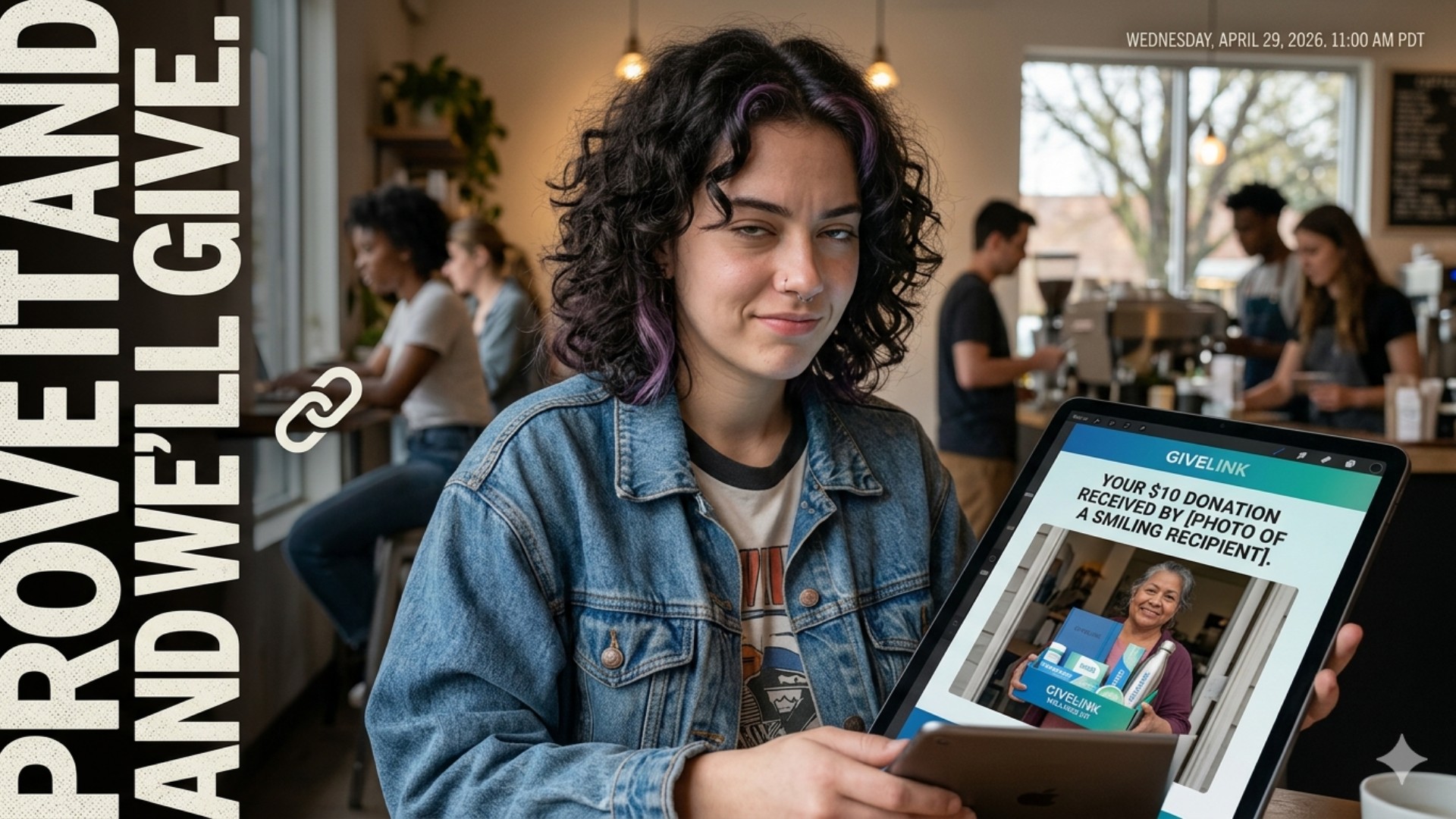
The photo is what makes this number verifiable. Not every donation platform can point to a photo for every item delivered. Givelink can.
What the 60% frequency lift means
Givelink donors give 60% more times per year than donors using traditional giving methods.
This is our most significant platform metric because it demonstrates the mechanism, not just the outcome. Donors don't give more because we asked them to more often. They give more because they saw what happened — and wanted to repeat it.
The photo proof loop is the retention engine. The 60% is what it looks like at scale.
For the nonprofit sector, this metric carries a direct implication: donors on transparent giving platforms are structurally more valuable than donors on traditional platforms, not because of who they are but because of what the experience produces.
The cause breakdown
The 100+ verified nonprofits on the platform represent a wide range of causes. The highest-volume categories by items delivered:
- Homeless and housing services
- Domestic violence and family services
- Senior services and elder care
- Youth education and arts
- Veterans services
- Food security and hunger relief
- Mental health and recovery
Hygiene products, food and pantry items, and baby and infant supplies are the top item categories by volume — reflecting the daily operational needs of organizations serving people in acute situations.
The California footprint
The U.S. expansion started in California. The 30+ U.S. nonprofit partners are concentrated in the Bay Area and Los Angeles — Bayview Senior Services, Big Sunday, Swords to Plowshares, 24th Street Theater, and Social Good Fund–sponsored projects among them.
California-first is the strategy for a specific reason: the highest concentration of tech-native donors demanding verifiable impact, the largest state nonprofit sector, and the deepest federal and state funding pressure on community organizations.
The results validate the thesis. California donors are adopting transparent giving faster than any other region in our data.
What the data says about the sector
Three signals from the platform data that matter beyond Givelink:
1. The visibility gap is solvable. The 60% giving frequency lift is not an accident of demographics or campaign design. It's structural — a direct product of proof. This means the sector's retention crisis is fixable with the right infrastructure.
2. Small nonprofits benefit most. The organizations with the biggest frequency improvement are small and mid-sized nonprofits — the ones most squeezed by funding volatility and least able to invest in sophisticated stewardship. Transparent giving works hardest where it's most needed.
3. Item-level specificity matters more than dollar amount. Our highest-converting wishlist items are not the most expensive. They're the most specific. A "Dove unscented bar soap 8-pack" converts better than "hygiene supplies." Specificity is the conversion mechanism — and it's free to build.
What's next
The roadmap has three priorities.
National expansion: California-first was the proof of concept. New York, Texas, Illinois, and Washington are the next markets. The nonprofit infrastructure exists in all of them. The donor demand is there. The supplier relationships are building.
Deeper Charity Navigator integration: More nonprofits gain CN profiles over time. Deepening the data integration — adding financial health trends, governance scores, and results reporting — will increase the trust layer on the platform.
The supplier-funded model: The long-term goal is a fully supplier-funded platform where donors pay exact retail and suppliers fund the model through distribution commissions. Getting there requires scale. The current trajectory makes it possible within the platform's next chapter.
A note on how we count
We publish this report because transparency is not selective. We apply the same standard to our own numbers that we ask of every nonprofit on the platform.
If you'd like to verify any figure, question our methodology, or discuss the data, reach out at contact@givelink.app. We answer.
"Giving was always supposed to be a thread between two lives."
150,000 lives. 100,000 items. 9,900 donations. Each one a thread.
Browse verified nonprofits on Givelink and start one.
Stay Human.
Antonis Politis is CEO and Co-Founder of Givelink. He built the first version of this platform at the University of Patras and is scaling it from San Francisco.
See also
What is Givelink?
Learn from the founders:
Support a nonprofit
Buy their needs