
blog
Why Most Corporate Giving Campaigns Fail — and the One Thing That Fixes Them
The structural problems with standard corporate giving campaigns — and why photo proof of impact is the single change that moves the needle on employee participation.
Antonis Politis |
Why Most Corporate Giving Campaigns Fail — and the One Thing That Fixes Them
The structural problems with standard corporate giving campaigns — and why photo proof of impact is the single change that moves the needle on employee participation.
Corporate giving campaigns — the "we're donating to X charity this quarter" announcements, the year-end matching drives, the Giving Tuesday emails — have some of the lowest engagement rates in all of corporate communications. A 2025 Benevity Sector Survey found median employee participation in corporate giving programs at 23% — meaning three-quarters of employees ignore the giving campaigns their company invests in designing and promoting. The campaigns aren't failing because employees don't care. They're failing because the campaigns don't show what happens. Here's the diagnosis — and the one structural fix.
Why corporate giving campaigns fail
Failure 1: Generic beneficiaries "We're donating to support veterans." Which veterans? Where? What specifically will the money do? The absence of specificity makes the campaign feel like a PR exercise rather than an act of genuine generosity. Employees who sense this respond accordingly — they don't participate.
Failure 2: No post-campaign proof The campaign ends. The company announces the total raised. Nobody sees what it produced. The employee who participated received a matching confirmation email and nothing else. The cycle repeats next quarter with no evidence that last quarter mattered.
Failure 3: Campaign fatigue Corporate giving campaigns often run on a fixed calendar: Q1, Q2, Q3, Q4, year-end. By Q3, employees have seen three campaigns with identical structure, identical absence of proof, and identical generic beneficiaries. Participation declines through the year.
Failure 4: The emotional disconnect Corporate giving campaigns are typically designed by CSR departments, approved by legal, and distributed by HR. The resulting communication is institutional — carefully worded, risk-managed, emotionally neutral. Giving is an emotional act. Institutional language doesn't activate it.
The one structural fix
Photo proof of impact — delivered to employees after the giving cycle.
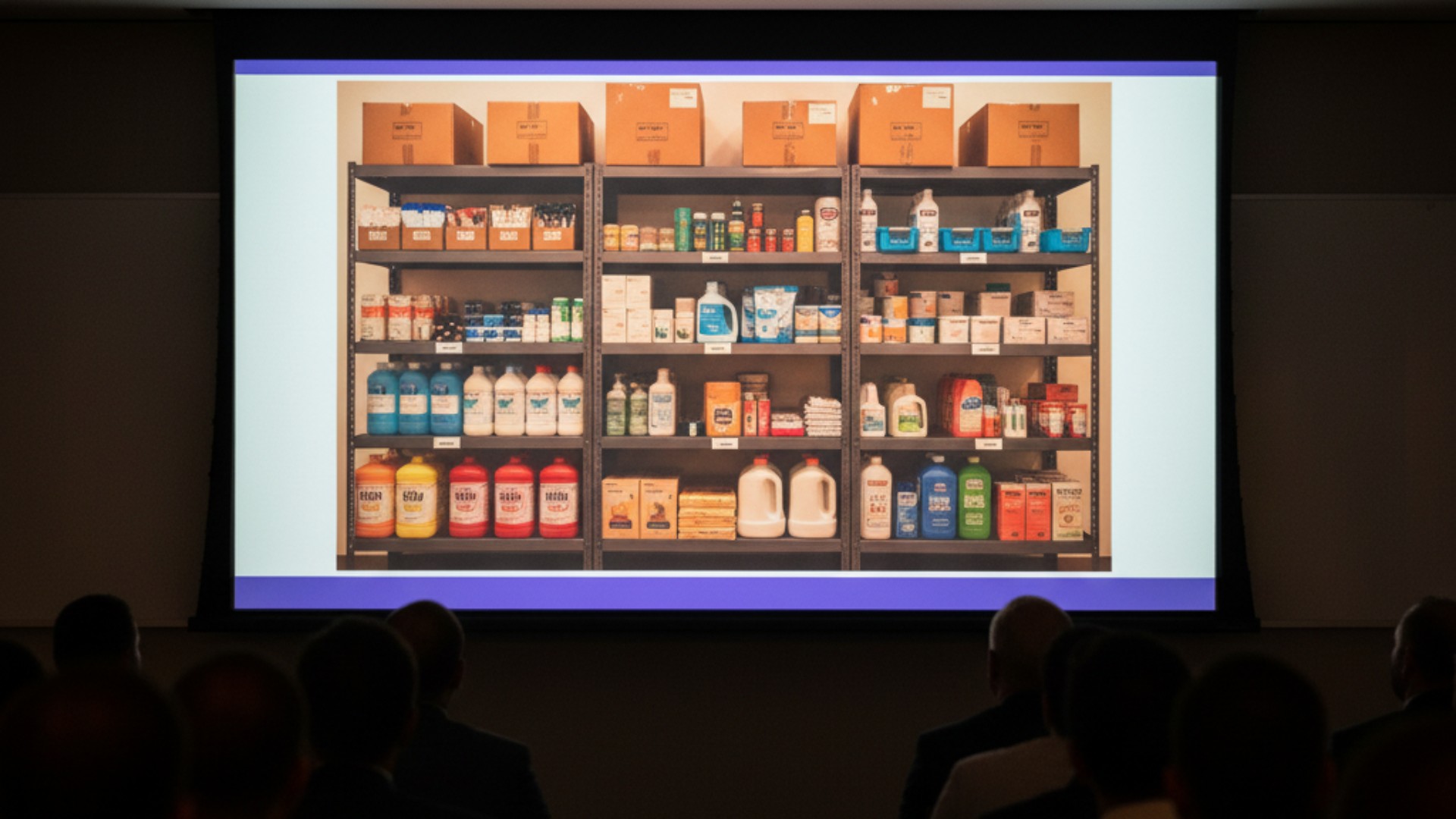
Not a better subject line. Not a sleeker campaign design. Not gamification or leaderboards. A delivery photo from the organization that received the donation, showing specific items on a real shelf, with a caption from a real program coordinator.
Here's why this is the fix and not just another feature:
It closes the loop. The employee who gave participated in something. The photo shows what that participation produced. The loop that was open — donation → ? → ? — closes: donation → specific items → photo → "I see what happened."
It creates shareable content. A delivery photo is something an employee can share in Slack, in a team meeting, in a casual conversation. "Here's what our giving campaign produced" with an attached photo is a fundamentally different communication than "we raised $X for Y organization."
It drives repeat participation. The campaign that ends with a photo has one more asset than the campaign that doesn't: the proof that makes the next campaign believable. Employees who saw what last quarter's campaign produced are significantly more likely to participate in this quarter's.
It's real. In a corporate context saturated with optimized language and managed messaging, an unpolished delivery photo from a Bay Area shelter's supply room coordinator is conspicuously genuine. Employees respond to genuine.
How to build photo proof into a corporate giving campaign
Step 1: Partner with Givelink-onboarded nonprofits as your campaign beneficiaries. These organizations already photograph every delivery — the proof infrastructure is built in.
Step 2: Run the campaign with specific wishlist items rather than general fund contributions. "Our team is buying hygiene supplies for Bay Area shelters this quarter" is more activating than "we're supporting homeless services."
Step 3: Set a delivery photo commitment. Tell employees when the photo will arrive — "you'll see a photo of what your giving produced within three weeks of the campaign close."
Step 4: When the photo arrives, distribute it company-wide. In Slack, in the CSR newsletter, in the all-hands meeting. Make it a shared visible moment, not a quiet receipt in an inbox.
Step 5: Use the photo to open the next campaign. "Last quarter's giving produced this. Here's what this quarter's campaign will produce."
What participation looks like with proof
Organizations that have implemented proof-based corporate giving campaigns report participation rates in the 50–70% range — two to three times the sector average of 23%.
The difference is not budget, brand, or campaign sophistication. It's whether employees can see what their participation produced.
Givelink in action
A 300-person fintech company in San Francisco ran their Q3 2027 giving campaign through Givelink: employees gave from wishlists at three verified Bay Area nonprofits. The CSR team committed to sharing the delivery photos company-wide within three weeks. Photos arrived in week two and were shared in Slack and in the all-hands. Q3 participation: 64%. The previous quarter (no proof): 19%. The CSR director's note at the Q4 planning meeting: "We're not changing anything except keeping the proof." Contact Givelink to design your next corporate campaign with proof built in.
Frequently Asked Questions
What is the average employee participation rate in corporate giving programs?
23% (Benevity Sector Survey, 2025). Two-thirds of employees eligible for corporate giving programs don't participate.
What produces the biggest improvement in participation?
Delivery photo proof distributed company-wide after the campaign. Organizations that implement this report participation rates of 50–70% — two to three times the sector average.
How does Givelink integrate with corporate giving campaigns?
Corporate campaigns can route employee giving to Givelink-onboarded nonprofits, which produce delivery photos as a standard part of their platform operations. Contact contact@givelink.app to design a corporate campaign structure.
Can we show photos to employees without violating nonprofit client privacy?
Yes — Givelink's delivery photos show supply rooms and items, not clients or beneficiaries. The dignity standard means every photo is distributable in corporate communications without privacy concerns.
Show the photo. Watch the participation numbers.
Contact Givelink and design the campaign that closes the loop.
Stay Human.
Antonis Politis is CEO and Co-Founder of Givelink.
See also
What is Givelink?
Learn from the founders:
Support a nonprofit
Buy their needs