
blog
How Foster Care Closets Source Supplies for Kids
Why foster care closets need new-only items, how CASA chapters connect to them, and what a donor can actually do.

Panos Kokmotos |
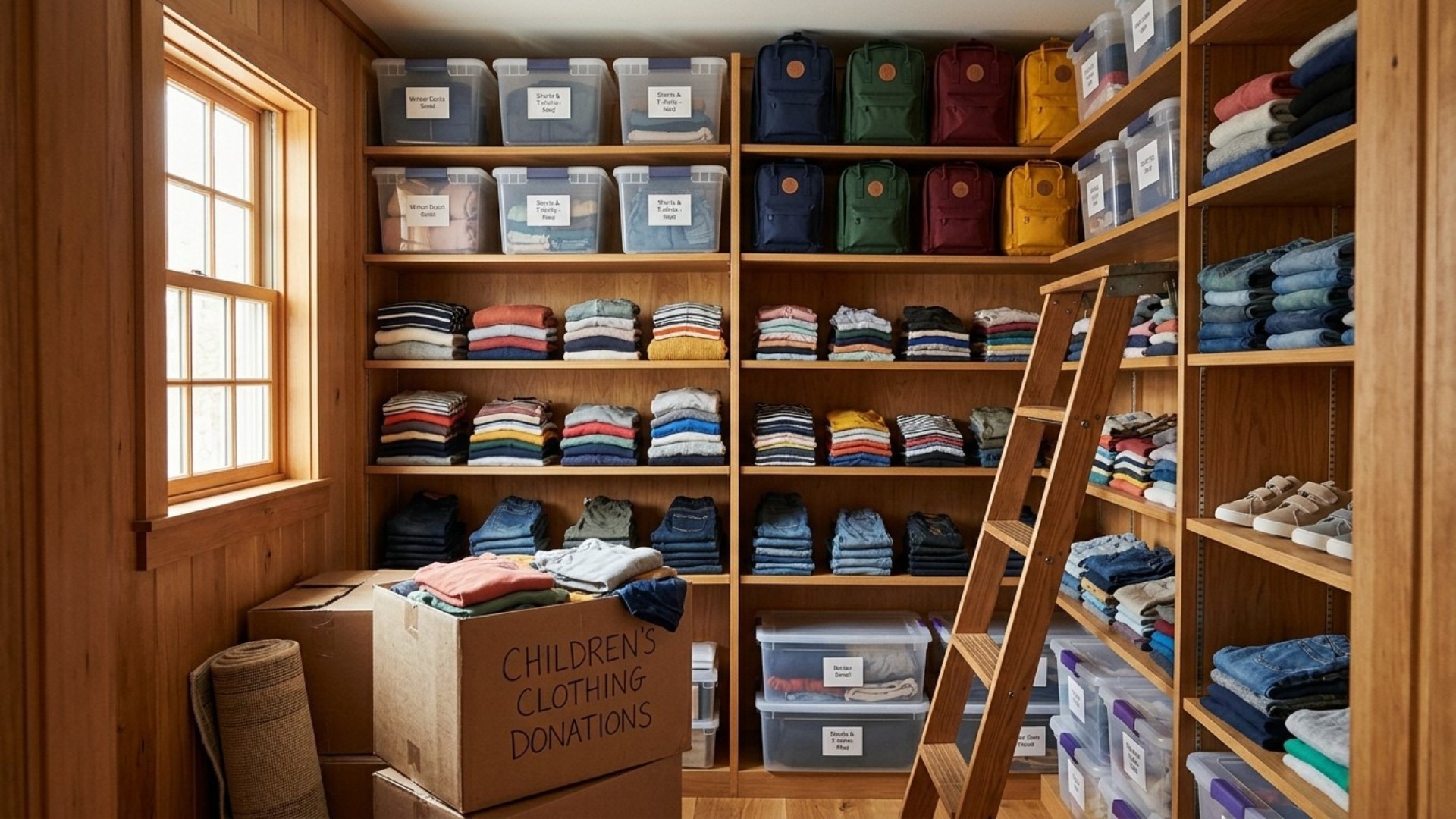
A foster care closet is a dedicated space, usually run by a nonprofit or church, that stocks new clothing, hygiene items, and basic gear for kids entering or already in foster care. CASA (Court Appointed Special Advocate) programs don't usually run the closets themselves, but their volunteers are often the ones who know, case by case, exactly what a specific child needs this week.
The problem a foster care closet exists to solve
Kids entering foster care frequently arrive with almost nothing. The image of a child's belongings packed into a trash bag isn't exaggerated: it's documented closely enough that several states, including Texas, now track how often it happens, and national nonprofits like Comfort Cases and My Bag My Story exist specifically to replace trash bags with proper luggage. A move into foster care is often sudden, unplanned, and disruptive to whatever the child had before.
Foster care closets fill the practical gap right after that: a change of clothes, shoes that fit, a toothbrush, a backpack for school on Monday. National CASA/GAL Association data puts the network at 890 state and local programs across 49 states, with about 79,000 volunteers advocating for roughly 214,000 children a year. Each of those children may need something different, at a different size, on a different week.
Why "new only" is the hard rule, not a preference
Almost every foster care closet, including organizations like the Michigan Foster Care Closet, restricts certain categories to new, unworn items: underwear, socks, hygiene products, and car seats or cribs in particular. Clothing can sometimes be gently used, but the closer an item is to a child's body or safety, the stricter the new-only rule gets.
That rule creates real friction for donors. A standard clothing drive brings in a mix of used and new items that then has to be sorted, and anything that doesn't meet the new-only bar for its category has to be rejected or redirected, which takes staff time the closet doesn't always have.
Where CASA fits into the picture
A CASA volunteer is assigned to one child's case and sees that child's actual, current situation up close: which school they're starting, what size they're wearing now, whether they have a coat for winter. That's specific, time-sensitive information a general donation drive doesn't capture. In practice, a CASA volunteer often becomes the referral point who tells a foster care closet, or a donor directly, exactly what one child needs right now, rather than guessing at an average.
Where an item-specific donation platform helps
That's the exact shape of problem Givelink is built for: a nonprofit (the foster care closet, in this case) lists a specific, current need, like "boys' size 10 winter coat" or "new toddler car seat," a donor funds that exact item, and it ships straight to the organization with a photo on arrival. No secondhand sorting problem, because what shows up is what was ordered new. No guessing by the donor, because the need is listed item by item instead of as a general clothing-drive ask.
Frequently asked questions
Can CASA volunteers accept donations directly for "their" kid? Usually no. Most CASA programs route physical donations through the local foster care closet or agency rather than letting individual volunteers collect items themselves, partly for liability reasons and partly so the closet can track what's been given to avoid duplicating or missing needs.
What items are almost always needed, regardless of season? New underwear and socks in a full range of sizes, backpacks, and basic hygiene items are consistently in demand across foster care closets, since kids can enter care at any point in the year and these items wear out or get outgrown constantly.
How is a foster care closet different from a general clothing bank? A foster care closet typically serves a much narrower, more time-sensitive population, specifically kids with an active case in the child welfare system, and operates under stricter new-only rules for certain item categories than a general-purpose clothing bank serving the broader community.
Do foster care closets take cash as well as items? Yes, and cash is often what covers categories that are hardest to get as in-kind donations, like car seats and cribs, which have strict new-and-unexpired safety requirements that make secondhand or even older new stock risky to accept.
Where to start
Browse nonprofits already using item-specific donations in the Givelink charity directory, or if you run a foster care closet and want to list specific, current needs by item instead of running a general drive, set up a profile.
See also
What is Givelink?
Learn from the founders:
Support a nonprofit
Buy their needs