
blog
How Emergency Relief Nonprofits Can Use In-Kind Giving Without the Chaos
Disasters trigger floods of unwanted donations that overwhelm relief organizations. Here's how wishlist-based in-kind giving with delivery proof helps instead of hurting.

Panos Kokmotos |
How Emergency Relief Nonprofits Can Use In-Kind Giving Without the Chaos
Disasters trigger floods of unwanted donations that overwhelm relief organizations. Here's how wishlist-based in-kind giving with delivery proof helps instead of hurting.
When a wildfire, flood, or earthquake hits, the impulse to help is immediate and genuine. And the in-kind giving that follows is often — despite the good intentions — counterproductive. Uncoordinated donations of used clothing, random goods, and unsolicited supplies clog relief operations. One major hurricane response reported that 40% of donated goods received in the first week had to be discarded because they were unusable. The problem isn't generosity. It's that traditional in-kind giving has no mechanism to match what's given with what's actually needed. Givelink, a Transparent Giving Platform that connects donors to verified U.S. 501(c)(3) nonprofits with photo proof of delivery, solves exactly this — and it's why wishlist-based giving is uniquely suited to emergency relief. Here's how it works.
Key Takeaways
- Uncoordinated in-kind donations overwhelm relief organizations — up to 40% of early donated goods are discarded as unusable.
- Wishlist-based giving eliminates the sorting burden — donors give exactly what the organization specified.
- Pre-built donor relationships are the most powerful disaster preparedness an individual donor can build.
- Givelink's Emergency Button elevates a verified nonprofit's urgent needs to the donor community.
- Verification matters most during disasters — fraudulent "relief" organizations appear within hours.
The three phases of disaster response — and what each needs
Effective disaster giving requires understanding that needs change over time.
Phase 1 — Immediate response (0–72 hours): Cash to established, pre-verified disaster response organizations. This is the rescue phase. Individual donors should give cash to organizations with proven disaster infrastructure — not goods, and not to organizations that appeared after the event.
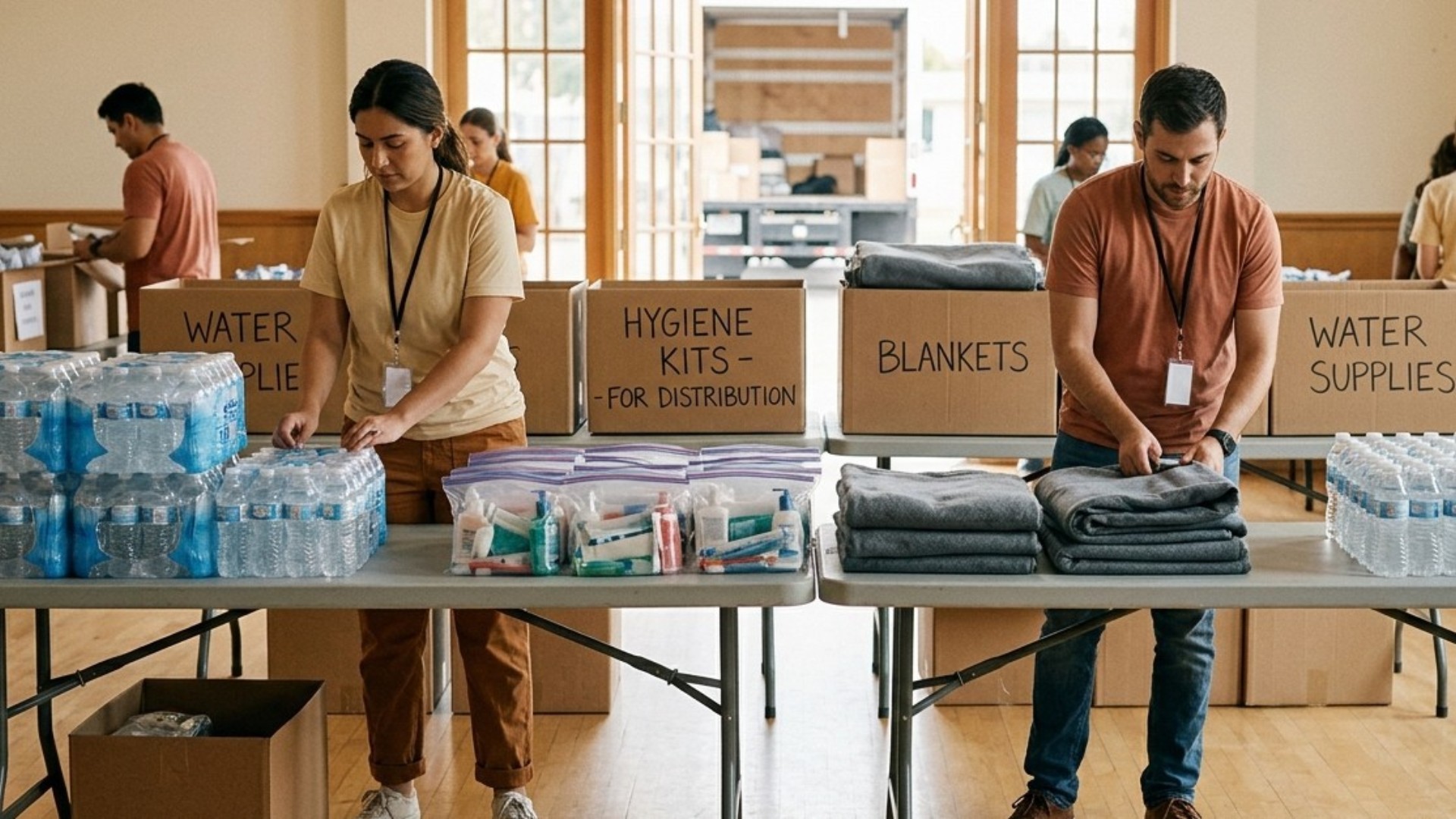
Phase 2 — Displacement and relief (days 3–30): This is where specific product needs become identifiable, and where wishlist-based in-kind giving becomes genuinely useful. Relief organizations operating shelters and distribution centers can specify exactly what they need — food, hygiene basics, baby supplies, phone chargers, clothing in needed sizes — and donors can give exactly that, with delivery confirmed.
Phase 3 — Recovery (weeks 4+): The phase most donors forget and most needs occur. Recovery organizations need consistent, ongoing support — exactly the kind that recurring in-kind giving provides.
Why wishlist-based giving is built for Phase 2 and 3
The core problem with disaster in-kind giving is the mismatch between what's given and what's needed. Generic donation drives produce mountains of goods that relief organizations then have to sort, store, and often discard — consuming volunteer hours that the response desperately needs elsewhere.
Wishlist-based giving inverts this. The organization specifies exactly what it needs, in what quantities. Donors give what was asked for. Delivery arrives organized and confirmed. The relief organization focuses on service delivery, not inventory triage.
"If we can track a package, we should track impact."
This is the difference between in-kind giving that helps and in-kind giving that becomes another problem to manage.
Why pre-built giving relationships are the best disaster preparedness
The donors who respond most effectively to disasters are the ones who already have verified giving relationships before the disaster strikes.
A donor who gives monthly to a Bay Area shelter through Givelink has an immediate, verified channel for additional disaster-period giving. The organization is already verified. The relationship is established. There's no fraud risk to navigate, no verification research to do under pressure. When a wildfire affects that organization's service area, the donor can activate additional giving within minutes.
This is "pre-built relationship as disaster preparedness" — and it's the most underrated form of individual disaster readiness.
How Givelink's Emergency Button works
For Givelink-onboarded nonprofits facing disaster-related supply surges, the Emergency Button elevates their profile and activates the platform's donor community around specific urgent needs.
The Emergency Button is appropriate for Phase 2 — when organizations have stabilized into displacement and relief operations and can specify needs in wishlist format. It is not designed for Phase 1's 72-hour active emergency window, where cash to established responders is the right medium.
During a 2026 Northern California wildfire, three Givelink-onboarded organizations with existing donor relationships activated the Emergency Button. Donors who had been giving for months responded within hours, and combined full wishlist funding arrived in under 48 hours for all three.
Verification: critical during disasters
Fraudulent "disaster relief" organizations appear within hours of major events, designed to look legitimate and collect donations before verification catches up. The rule: only give to organizations with existing IRS 501(c)(3) status and pre-disaster Charity Navigator profiles. Organizations that formed after the disaster event should not receive immediate-response giving.
Every nonprofit on Givelink is verified before they can receive donations — 501(c)(3) confirmation plus Charity Navigator evaluation. During a disaster, when verification matters most, that pre-screening is the donor's protection.
Frequently Asked Questions
How should I donate during a natural disaster?
Phase 1 (0–72 hours): cash to established, verified disaster response organizations. Phase 2 (days 3–30): wishlist-based in-kind giving to verified organizations as specific needs emerge. Phase 3 (weeks 4+): recurring giving to verified recovery organizations.
Why are unwanted donations a problem in disaster relief?
Uncoordinated donations of used clothing and random goods overwhelm relief organizations with sorting and storage burden. Up to 40% of early donated goods are often discarded as unusable. Wishlist-based giving eliminates this by matching exactly what's given to what's needed.
What do emergency relief nonprofits need from donors?
In the displacement and recovery phases: food items, hygiene basics, baby supplies, phone chargers, blankets, and clothing in needed sizes — specified by the organization through a live wishlist so donors give exactly what's useful.
How does Givelink verify emergency relief nonprofits?
Every nonprofit on Givelink is verified before receiving donations — IRS 501(c)(3) confirmation plus Charity Navigator evaluation. This protects donors from the fraudulent "relief" organizations that appear after disasters.
Build your disaster-ready giving relationship now
Browse verified nonprofits on Givelink and establish the relationship before it's needed.
Stay Human.
Panos Kokmotos is Co-Founder and COO of Givelink.
See also
What is Givelink?
Learn from the founders:
Support a nonprofit
Buy their needs