
blog
How to Donate to Immigrant and Refugee Services Organizations
Subtitle: What organizations serving immigrants and refugees actually need, how to give with cultural relevance, and why product-based giving works especially well for this cause.

Antonis Politis |
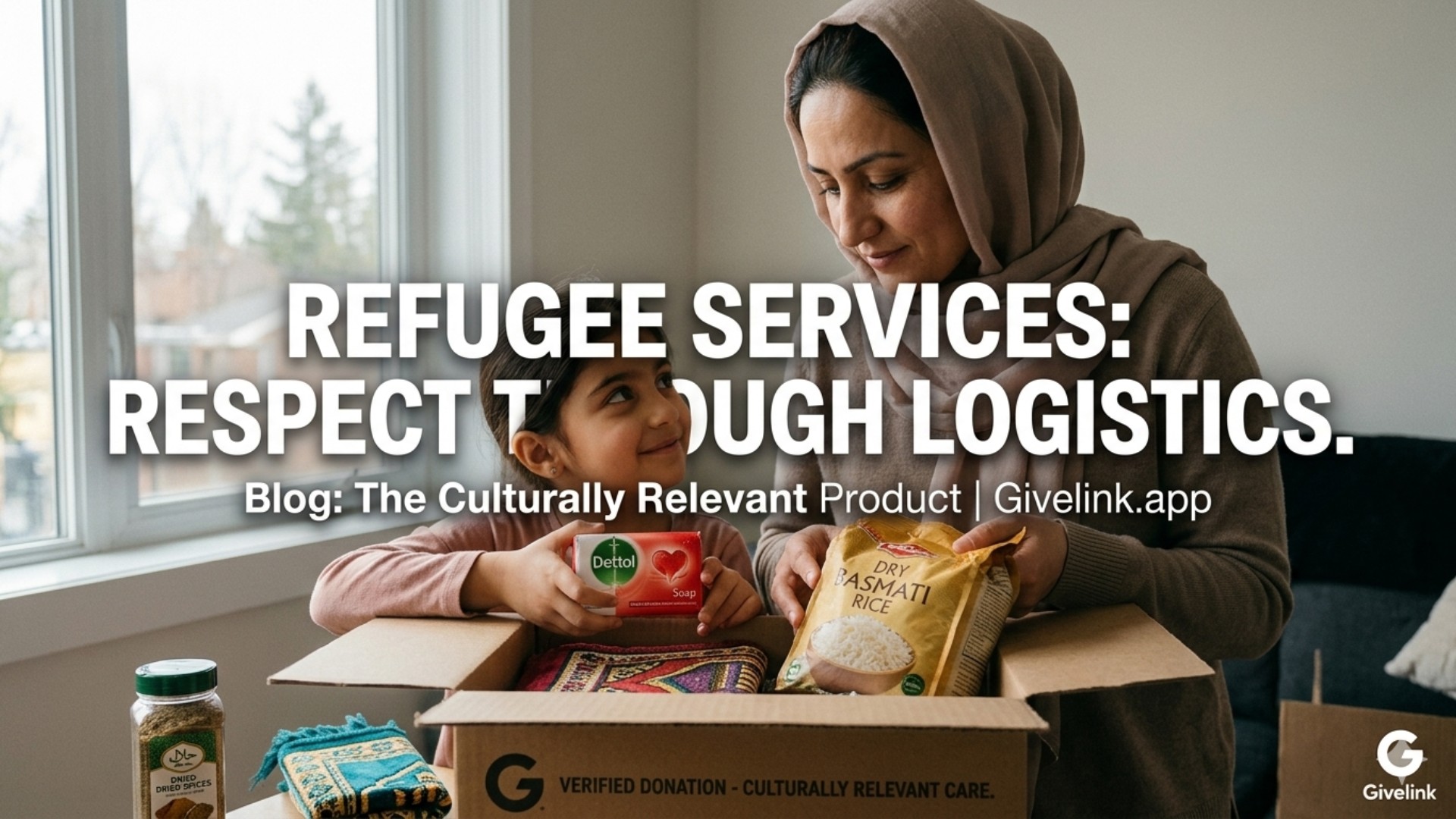
How to Donate to Immigrant and Refugee Services Organizations
What organizations serving immigrants and refugees actually need, how to give with cultural relevance, and why product-based giving works especially well for this cause.
Organizations serving immigrant and refugee communities — resettlement agencies, legal aid programs, community health clinics, cultural support organizations, and food pantries — operate at the intersection of complex needs and significant funding gaps. The populations they serve are diverse, the supply needs are specific (often culturally relevant in ways generic donation drives miss entirely), and the funding environment is under particular pressure in 2026. Givelink, a Transparent Giving Platform connecting donors to verified U.S. 501(c)(3) nonprofits with photo proof of delivery, includes immigrant and refugee services organizations on the platform. Here's what these organizations actually need and how to give in a way that reaches them.
Key Takeaways
- Cultural relevance matters — food and hygiene donations work best when they reflect community preferences.
- Legal and documentation support needs are often unmet — gift cards and transportation assistance are high-priority.
- Language access materials and interpretation support are consistently needed.
- Wishlists specify cultural preferences — Givelink's model eliminates the guesswork.
- Photo proof confirms delivery to the specific organization serving your intended community.
What immigrant and refugee services organizations actually need
The supply profile for immigrant and refugee services organizations is more specific than most donors realize — and the specificity matters more here than almost any other cause category.
Food and pantry items:
- Culturally relevant staples (rice varieties, legumes, spices used in the communities served)
- Halal or Kosher certified items where applicable
- Shelf-stable complete meal components (not just individual ingredients)
- Culturally appropriate snacks and beverages
Hygiene and personal care:
- Fragrance-free and gentle products (preferences and sensitivities vary by community)
- Hair care products appropriate to the communities served (natural hair care, specific textures)
- Standard hygiene basics (toothbrushes, soap, deodorant)
Documentation and practical support:
- Transportation gift cards (for legal appointments, medical visits, employment interviews)
- Phone cards and prepaid phones (for staying connected during resettlement)
- Backpacks and organizational supplies (for employment and school enrollment)
- Notebooks and pens (for English classes, job applications, documentation)
Children and family:
- School supplies for children enrolling mid-year
- Children's books in both English and the community's primary language (where available)
- Diapers and baby supplies for families with young children
Clothing:
- Professional clothing for job interviews
- Weather-appropriate clothing for communities resettling from different climates
- New socks and underwear in a range of sizes
Why product-based giving works especially well for this cause
Cultural relevance is the differentiator. A generic food drive donation — canned soup, pasta, peanut butter — may be largely unusable for a community whose dietary practices and culinary traditions are different. Wishlists solve this by letting organizations specify exactly what's culturally appropriate for the communities they serve.
This is true for food, hygiene products, clothing, and almost every supply category. The organization knows what its community uses. The wishlist communicates it. The donor provides it.
Photo proof closes the loop — confirming that culturally relevant supplies arrived at the specific organization serving the specific community.
Why this matters in 2026
Immigrant and refugee services organizations are facing a particularly acute funding crisis in 2026. Federal resettlement program funding has fluctuated significantly, and many community-based organizations that supplement formal resettlement services have seen their funding bases contract while community need has grown.
Individual donors with transparent giving access — who can give specific, culturally relevant supplies with photo proof to verified organizations — are an important counterbalance to institutional funding volatility.
According to Givelink data (2026), donors using transparent giving platforms give 60% more times per year than donors using traditional methods. For cause-connected donors motivated by immigrant and refugee issues, this recurring relationship is what sustains organizations through funding cycles.
Givelink in action
A donor motivated by refugee resettlement issues found an immigrant services organization on Givelink — Charity Navigator data confirmed their 501(c)(3) status and program efficiency. The wishlist included Halal-certified pantry staples, transportation gift cards for employment appointments, and backpacks for children enrolling in school. She bought from all three categories. Two weeks later, a photo arrived: the pantry items organized on the food bank shelf, the backpacks on a ready-to-distribute rack. She gives monthly. Browse verified immigrant and refugee services nonprofits on Givelink.
Frequently Asked Questions
What do immigrant and refugee services organizations need most?
Culturally relevant food items, hygiene products, transportation gift cards, phone cards, school supplies for children, professional clothing for employment, and documentation support materials. Specific needs vary significantly by community — Givelink wishlists show exactly what each verified organization is asking for.
How do I find immigrant and refugee services nonprofits to donate to?
Browse verified nonprofits on Givelink and filter by cause category. Every organization is pre-verified for 501(c)(3) status with Charity Navigator data on the profile.
Are donations to immigrant services nonprofits tax-deductible?
Yes — donations to verified 501(c)(3) immigrant and refugee services organizations are fully tax-deductible at fair market value. Givelink auto-issues tax receipts after delivery.
Why does cultural relevance matter for donation drives?
Food, hygiene products, and clothing that don't match community dietary practices, skin and hair care needs, or clothing preferences may be unusable or culturally inappropriate. Wishlist-based giving lets organizations specify exactly what works for the communities they serve.
Give what's actually needed — and see it arrive.
Browse verified nonprofits on Givelink and give with cultural relevance and photo proof.
Stay Human.
Antonis Politis is CEO and Co-Founder of Givelink.
See also
What is Givelink?
Learn from the founders:
Support a nonprofit
Buy their needs