
blog
How to Donate to Homeless Shelters Online (Without Guessing)
What homeless shelters actually need, why product donations beat cash, and how to give in a way you can verify.

Panos Kokmotos |
How to Donate to Homeless Shelters Online (Without Guessing)
What homeless shelters actually need, why product donations beat cash, and how to give in a way you can verify.
If you want to donate to a homeless shelter online, the most effective path in 2026 isn't a generic donate button — it's picking the specific items the shelter needs and shipping them directly. Most well-intentioned donations to homeless shelters miss the mark because donors guess what's needed: a coat in summer, snacks the kitchen can't store, supplies the shelter already has. Givelink, a Transparent Giving Platform that connects donors to verified U.S. 501(c)(3) nonprofits with photo proof of delivery, lets you browse real shelter wishlists, buy exactly what they need, and see the items arrive. This guide covers what shelters actually need, how to give safely, and how to make your donation count.
Key Takeaways
- Donate from a wishlist — guessing wastes shelter staff time on items they can't use.
- Hygiene supplies, socks, and underwear are almost universally needed and rarely donated.
- Cash is helpful — but specific products are more useful and more retainable for donors.
- Givelink shows you photo proof of every delivery, with Charity Navigator–verified shelters.
- 100+ verified nonprofits are on the platform, including homelessness-focused organizations.
What homeless shelters actually need
Most donors guess. Most guesses are wrong.
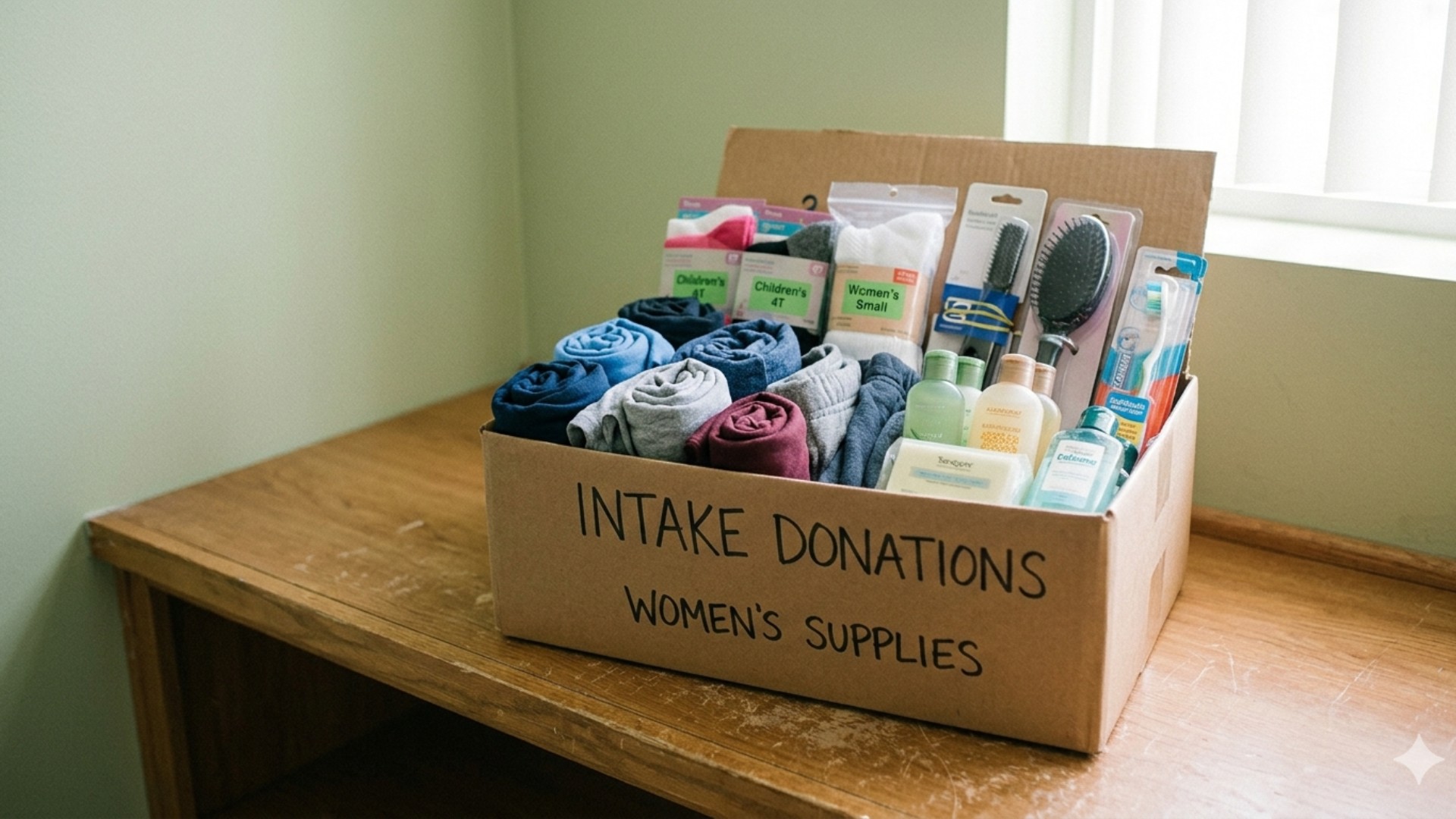
The items shelters most consistently need — and most consistently lack — aren't the ones donors think to give. Coats and old clothes pile up. Strollers, used kitchen equipment, and random furniture create storage problems. Meanwhile, the basics run out constantly.
The shortlist that almost every shelter needs year-round:
- Hygiene supplies — toothbrushes, toothpaste, soap, deodorant, shampoo, razors
- Socks and underwear — new only, multiple sizes
- Feminine hygiene products — chronically underdonated
- Diapers and baby wipes — for shelters serving families
- Backpacks and duffel bags — for residents transitioning out
- Bottled water and shelf-stable snacks — for outreach teams
- Phone chargers and prepaid phones — critical for housing applications and job searches
- Bus passes and gift cards — for transportation and emergencies
The reason wishlists matter is that needs vary by shelter. A women's shelter prioritizes different items than a youth shelter or a family shelter. The platform shows you which.
Why product donations beat cash for shelters
Cash isn't bad — it's just inefficient compared to direct product giving. Three reasons.
1. Sourcing time is real overhead. A shelter with $1,000 cash has to spend staff hours ordering, receiving, and organizing supplies. A shelter that gets the supplies delivered skips that work entirely.
2. Bulk purchasing is already optimized. Transparent giving platforms negotiate pricing with verified U.S. suppliers. Your $50 gets the shelter more than $50 worth of cash would.
3. Specific impact retains donors. According to Givelink data (2026), donors using the platform give 60% more times per year than donors using traditional giving methods. The visibility flywheel runs hardest for cause-specific giving like homeless services.
"Online giving feels like throwing money into a vague donation basket."
For homeless shelters, the cost of vague giving isn't just emotional. It's operational. Wrong items mean wasted staff time. Right items mean more capacity to serve residents.
How to give safely and effectively
A 5-step process that works.
-
Verify the shelter is a real 501(c)(3). Use Charity Navigator, Candid (formerly GuideStar), or the IRS Tax Exempt Organization Search. On Givelink, every shelter is pre-verified with Charity Navigator data on the profile.
-
Browse their actual wishlist. Pick from items the shelter listed — not items you assume they need.
-
Choose specific products. Quantities matter. A shelter often needs 50 toothbrushes, not 500.
-
Pay through the platform. Givelink coordinates batched delivery from verified U.S. suppliers (biweekly fulfillment cycle).
-
Receive your photo proof. The shelter photographs the delivery and uploads it to your dashboard. Auto-issued tax receipt arrives shortly after.
What about volunteering or in-person drop-offs?
Both are valuable — but they're not always practical, and they're often less efficient than online product giving. Most shelters have specific volunteer onboarding processes (background checks, training, scheduled shifts) and limited intake hours for physical donations. Online product giving lets you support a shelter at 11pm on a Tuesday, in 90 seconds, with no logistics on either side.
If you want to volunteer, contact the shelter directly. If you want to give, do it online with proof.
Why this matters in 2026
Homelessness in the U.S. has intensified, particularly on the West Coast. California shelters are operating near capacity. Federal funding declines reported by 34% of nonprofits in 2025 (Center for Effective Philanthropy) hit homelessness organizations especially hard, and donor counts are shrinking nationally.
Shelters that can prove impact — photographically, verifiably, immediately — keep donors. Shelters that can't, lose them. Transparent giving is how that proof gets built.
This is also why the Givelink × Charity Navigator partnership matters for cause-specific giving. Donors want third-party verification on the same screen where they decide to give.
Givelink in action
A donor in Los Angeles browsed Givelink for a homeless shelter near her office, found one with hygiene supplies on the wishlist, and bought a case of toothbrushes and deodorant. Two weeks later, the shelter photographed the delivery on their supply room shelf and tagged the donor in the dashboard. She came back the next month and added new socks and feminine hygiene products. Browse verified homelessness nonprofits on Givelink to start.
Frequently Asked Questions
What do homeless shelters need most?
Hygiene supplies, new socks and underwear, feminine hygiene products, diapers (for family shelters), phone chargers, bus passes, and shelf-stable snacks. Specific needs vary by shelter, which is why wishlists matter — Givelink shows you exactly what each verified shelter is asking for.
Are donations to homeless shelters tax-deductible?
Yes — donations to verified 501(c)(3) homeless service organizations are fully tax-deductible at fair market value. On Givelink, the shelter issues your tax receipt automatically after delivery.
How do I find a legitimate homeless shelter to donate to?
Use Charity Navigator, Candid, or the IRS Tax Exempt Organization Search to verify. On Givelink, every shelter is pre-verified for 501(c)(3) status with Charity Navigator data displayed on the profile.
Can I donate clothes to a homeless shelter online?
Most shelters strongly prefer new items over used clothing because of hygiene, sizing, and storage limitations. Givelink-listed shelter wishlists typically focus on new hygiene goods, socks, underwear, and supplies — the items that go furthest.
How long does it take for my donation to arrive?
Givelink batches donations and ships every two weeks. After that, delivery typically takes 4–7 days. The biweekly schedule makes deliveries predictable for shelter staff and reduces shipping costs and carbon footprint.
Help a shelter — and see it land
If you've meant to donate to a homeless shelter and never gotten around to it, the friction is gone. Browse verified shelters on Givelink, pick from a real wishlist, and watch the proof land in your dashboard.
Stay Human.
Panos Kokmotos is Co-Founder and COO of Givelink. He's leading the platform's U.S. expansion from San Francisco.
See also
What is Givelink?
Learn from the founders:
Support a nonprofit
Buy their needs