
for nonprofits
Can a Nonprofit Resell Donated Items? The UBIT Rules Explained
Yes, and it usually stays tax-free. Here's the 85 percent rule that decides it, and when Form 990-T shows up instead.

Panos Kokmotos |
Can a Nonprofit Resell Donated Items? The UBIT Rules Explained
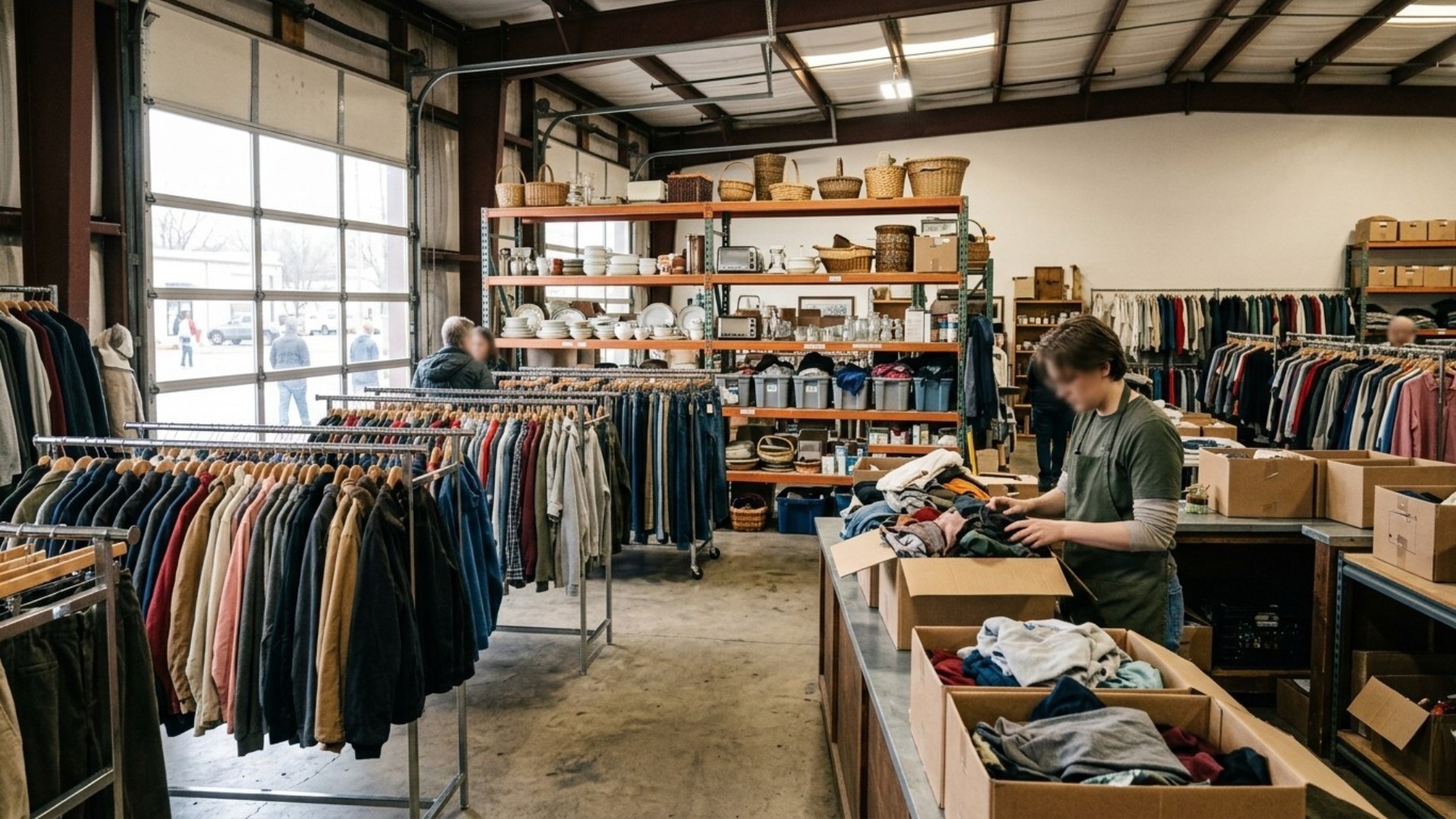
Yes, a nonprofit can resell donated goods, and in almost every real thrift-store setup, the proceeds stay exempt from tax. The exemption hinges on one number: if substantially all of what you're selling arrived as a gift rather than something you bought to resell, the income doesn't count as unrelated business income. The IRS treats "substantially all" as roughly 85 percent. Below that line, or if you're running the operation with paid staff instead of volunteers, the calculus changes and Form 990-T can enter the picture.
The three-part test for unrelated business income
The IRS looks at three things before it taxes any nonprofit's earned revenue:
- Is it a trade or business, meaning carried on for the production of income from selling goods or services?
- Is it regularly carried on, meaning run with a frequency and continuity comparable to a for-profit competitor?
- Is it substantially related to your exempt purpose, meaning does the activity itself further your mission beyond just raising money? A weekly or daily thrift shop clears the first two tests easily. It's the third test, and specifically its exceptions, where a resale operation escapes UBIT.
The donated-merchandise exclusion
Selling merchandise where substantially all of the inventory was received as gifts, rather than purchased for resale, is specifically excluded from unrelated business income, regardless of whether the activity otherwise looks exactly like a retail store. In practice, the guidance treats "substantially all" as roughly 85 percent of inventory by value or volume. A shop stocked almost entirely from donation bins clears this easily. A shop that supplements donations by buying closeout merchandise to resell at scale risks falling under the 85 percent line for that portion of its operation.
The volunteer-labor exclusion
There's a second, independent exclusion: if substantially all the work of running the activity, again read as roughly 85 percent of labor hours, is performed by uncompensated volunteers, the income is excluded from UBIT even if the goods being sold weren't donated. This is why an all-volunteer resale shop selling a mix of donated and purchased goods can still stay exempt, as long as paid staff aren't doing most of the actual running of the store.
Either exclusion is independently sufficient. Most nonprofit thrift operations qualify on the donated-goods test alone and never need to lean on the volunteer-labor test at all.
What actually triggers UBIT
- Buying new merchandise specifically to resell, when it makes up more than roughly 15 percent of what you sell, and paid staff run the operation.
- Consignment arrangements, which the IRS treats as a service rather than a sale of donated goods.
- Renting out retail or warehouse space to another business.
- Advertising revenue sold on your website, receipts, or storefront. Each of these is evaluated as its own activity, not blended into your resale numbers. A nonprofit that runs a clean donated-goods thrift shop and separately rents out an unused loading dock has two activities to evaluate, not one.
The filing line: Form 990-T
If your unrelated income, from any excluded-from-exemption activity, reaches $1,000 in gross receipts for the year, you're required to file Form 990-T. The federal rate on net unrelated business income is a flat 21 percent, with a $1,000 specific deduction applied first. If your estimated annual liability exceeds $500, quarterly estimated payments are required. Each unrelated activity has to be tracked, and reported, separately, so losses from one can't offset profits from another.
FAQ
Does selling donated clothing at a thrift store ever get taxed? Only if the store stops being substantially donation-supplied, meaning it's buying a meaningful share of what it sells, or if paid staff (not volunteers) are running the bulk of the operation, and neither exclusion applies. A typical volunteer-run or mostly-donated thrift shop stays exempt.
What counts toward the 85 percent threshold, dollar value or item count? The IRS guidance doesn't specify a single measurement method with precision, and organizations generally track it by value since that's what matters for revenue reporting. If you're close to the line, talk to a nonprofit CPA about which measure your specific operation should use.
Do we need to report thrift-store revenue on our 990 even if it's not taxed? Yes. Exempt revenue still gets reported on your annual Form 990 as program or other revenue. Form 990-T is the separate filing that only applies once you owe actual unrelated business income tax.
Does an online resale shop follow the same rules as a physical thrift store? Yes, the same three-part test and the same exclusions apply regardless of whether the storefront is physical or online. What matters is where the inventory came from and who's running it, not the sales channel.
Where this connects to what you take in
The line between a safe, tax-exempt resale operation and one that needs a 990-T often comes down to knowing exactly what share of your inventory is donated versus purchased, in real time, not at year-end reconciliation. A documented wishlist that tracks what's coming in as a gift, item by item, makes that split easy to prove if the IRS ever asks. See how nonprofits track incoming in-kind gifts on Givelink.
See also
What is Givelink?
Learn from the founders:
Run a nonprofit? Get what you need.
Set your nonprofit up yourself in about 15 minutes. It's free, there's no contract, and you don't need to talk to anyone first.