
blog
Can Nonprofits Count Volunteer Hours as an In-Kind Donation?
The IRS says no for tax deductions, but grant match rules often say yes. Here's the real difference.

Panos Kokmotos |
Short answer: not for tax purposes, but often yes for grant matching. Those are two different rules, and mixing them up is the most common mistake nonprofits make with volunteer time.
The IRS doesn't let a volunteer deduct the value of their time as a charitable contribution, full stop. There's no form, no workaround, no exception for specialized skills. A lawyer who spends ten hours drafting a nonprofit's bylaws for free can't write off her normal hourly rate, even though the nonprofit saved real money. That's settled IRS policy, not a gray area.
Grant funders are a different story. A lot of federal, state, and foundation grants that require matching funds explicitly allow volunteer labor as part of that match, valued at a documented hourly rate. The rules just live in the grant agreement, not the tax code, and they vary by funder.
What the IRS actually says
IRS Publication 526 is direct about this: the value of your time or services isn't deductible. A volunteer can deduct unreimbursed out-of-pocket expenses tied to the volunteering (mileage at the charitable rate, supplies bought for the organization, a uniform that isn't suitable for everyday wear), but never the hours themselves. This applies no matter how specialized the skill. A CPA who does a nonprofit's books for free, a contractor who installs shelving at cost, a graphic designer who builds a new logo: none of it is deductible to the person donating the work.
This trips up donors more than nonprofits. If a volunteer asks for a receipt valuing their time, the honest answer is that no such receipt exists, because the IRS won't recognize it. Pointing them to Publication 526 directly, rather than just saying no, tends to land better.
What GAAP says about recording it on your own books
This is the part nonprofits actually need to get right, because it shows up in an audit. Under FASB ASC 958-605-25-16, a nonprofit can only recognize contributed (volunteer) services as revenue and an expense on its financial statements if the services meet one of two tests: they create or enhance a nonfinancial asset (building a structure, renovating a building), or they require specialized skills, are provided by someone who has those skills, and would typically need to be purchased if not donated.
That second test is narrower than it sounds. An accountant who volunteers to prepare your 990, a contractor who volunteers labor on a renovation, or an attorney who volunteers legal review all clear it. A group of volunteers who spend a Saturday sorting donated clothing or stuffing envelopes does not, no matter how many hours they put in or how much the work was needed. General volunteer labor, even a lot of it, doesn't get recorded as in-kind revenue on audited financials. This is a common correction auditors flag, so if your nonprofit has been recording all volunteer hours as in-kind support, it's worth checking against this standard before the next audit.
How grant match requirements treat it differently
Grant compliance is where volunteer hours do count, and this is the rule most development staff actually care about. Many federal programs (AmeriCorps, HUD Community Development Block Grants, and a long list of state and foundation grants) allow in-kind match to include the value of volunteer time, as long as it's documented and valued using a reasonable method.
"Reasonable" usually means one of two approaches: a national benchmark rate, or a rate tied to the actual skill being donated. For general volunteer labor, the most widely cited benchmark is Independent Sector's annual Value of Volunteer Time, which for 2026 is $36.14 per hour nationally, with separate figures by state. For skilled volunteer work (a nurse, an electrician, a translator), funders often expect you to use a wage rate for that occupation instead of the general rate, frequently sourced from Bureau of Labor Statistics occupational data. Always check the specific grant's terms before picking a rate. Some funders require their own methodology and will reject a mismatched one during a site visit or audit.
How to value a volunteer hour in 2026
If your grant allows the general benchmark, $36.14 per hour is the current Independent Sector figure, released in April 2026. That's a meaningful jump from prior years and worth updating in your grant budgets and match reports if you've been using an older number. If the grant specifies a different source, like state-level rates or a professional wage table, use that instead. Either way, write down which source you used and when you pulled the rate. That's the detail an auditor asks for first.
How to actually track hours so they hold up
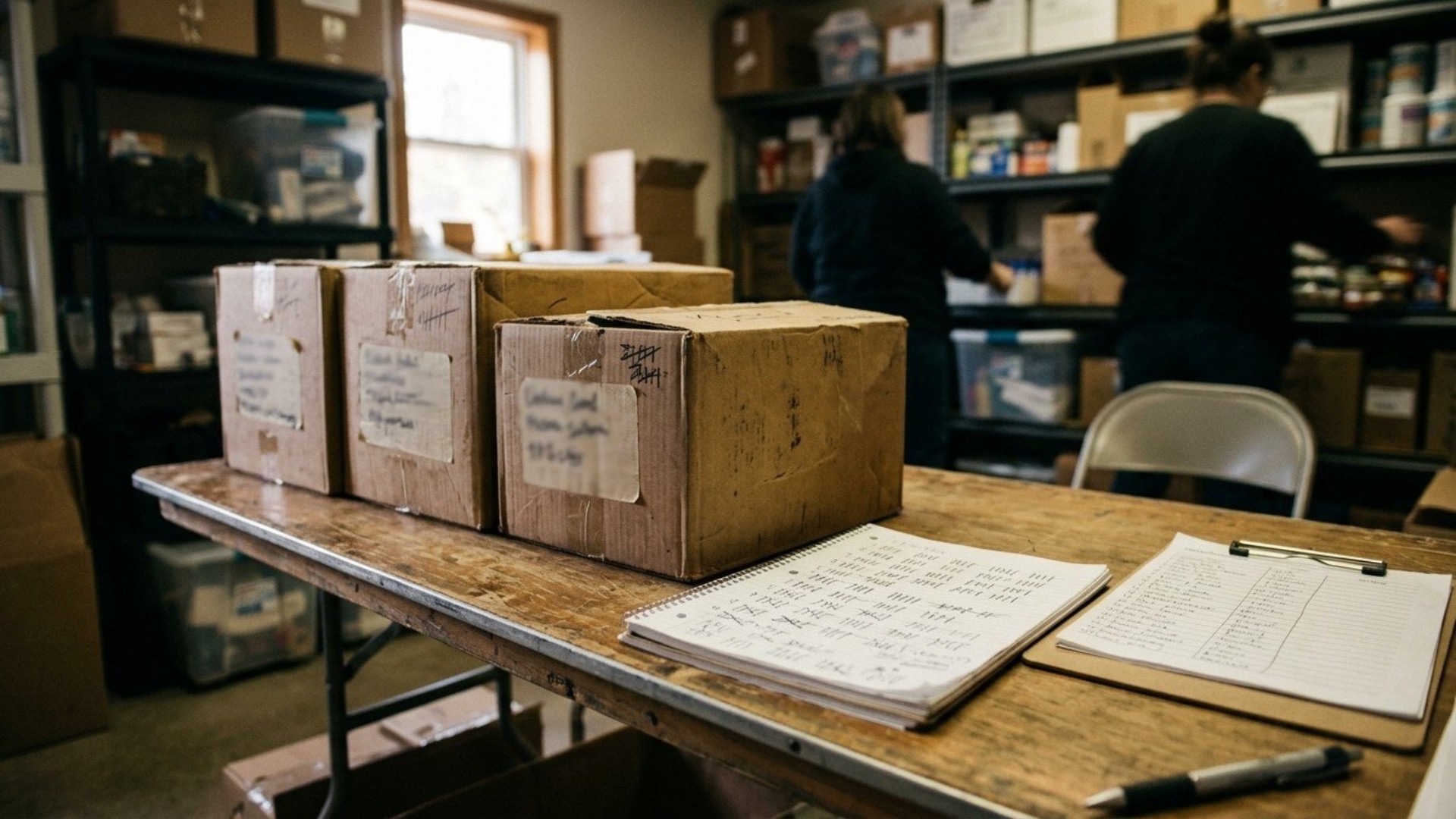
The valuation only matters if the hours behind it are documented. A grant reviewer or auditor wants to see: who volunteered, what date, how many hours, what task, and ideally a supervisor's sign-off. A paper sign-in sheet works. So does a simple spreadsheet or a volunteer-management tool, as long as someone is actually filling it in consistently rather than reconstructing hours from memory at reporting time.
This is also where it's worth connecting volunteer effort to something concrete. If volunteers are the ones unloading, sorting, and shelving physical donations your nonprofit received, tracking that labor alongside the goods themselves gives you a fuller, more honest picture of what a donation actually cost to put to use, even though only one side of it (the goods, not the hours) shows up as a deductible gift for the donor or as in-kind revenue on your books. Givelink's donor-facing photo confirmation, for example, documents when a donated item arrived and was put to use, which is a useful anchor point if you're also logging the volunteer hours that got it there.
FAQ
Can a volunteer get a tax receipt for their hours? No. The IRS doesn't allow a deduction for the value of time or services under any circumstances, including for skilled professional work. Only unreimbursed out-of-pocket expenses tied to volunteering, like mileage or supplies, can be deducted.
Can volunteer hours count toward a grant's matching requirement? Often, yes, if the grant agreement explicitly allows in-kind match from volunteer labor. Check the specific grant's rules for which valuation method it requires before you build volunteer hours into a match budget.
Should volunteer hours be recorded as revenue on our financial statements? Only if the service meets the FASB ASC 958-605-25-16 test: it creates or enhances a nonfinancial asset, or it requires a specialized skill that the organization would otherwise have paid for, performed by someone who has that skill. General volunteer labor doesn't qualify.
What rate should we use to value volunteer time in 2026? For general volunteer labor without a funder-specified rate, Independent Sector's 2026 national rate is $36.14 per hour. For skilled volunteer work, use an occupation-specific wage rate if your grant requires it.
If you're already tracking what nonprofits actually need, Givelink is a free way to turn that list into funded, photo-confirmed items instead of a spreadsheet nobody outside your team sees. You can browse how it works for nonprofits or start a profile in a few minutes.
See also
What is Givelink?
Learn from the founders:
Support a nonprofit
Buy their needs