
resource
How to Run a Back-to-School Drive That Actually Reaches Kids in 2026
Back-to-school drives are a fundraising staple — but most leave nonprofits with sorting chaos and no donor data. Here's how to run one that's organized, trackable, and repeatable.
Antonis Politis |
How to Run a Back-to-School Drive That Actually Reaches Kids in 2026
Back-to-school drives are a fundraising staple — but most leave nonprofits with sorting chaos and no donor data. Here's how to run one that's organized, trackable, and repeatable.
Every August, nonprofits across the country run back-to-school drives — and every August, the same problems repeat. Donated supplies arrive in random assortments. Staff and volunteers spend hours sorting mismatched items, discovering they have 200 glue sticks and no backpacks. Donors give once and are never heard from again because no one captured their information. And the kids who need the supplies sometimes receive incomplete sets that mark them as "the ones who got donations." It doesn't have to work this way. Givelink, a Transparent Giving Platform that connects donors to verified U.S. 501(c)(3) nonprofits with photo proof of delivery, makes back-to-school drives specific, organized, and trackable. Here's how to run one that actually works.
Key Takeaways
- Generic back-to-school drives produce mismatched supplies — surpluses of some items, shortages of others.
- Specific, grade-appropriate wishlists ensure kids receive complete sets, not random assortments.
- Wishlist-based giving captures donor data so you can re-engage the same donors next August.
- Photo proof shows donors the backpacks arriving — the retention driver that makes drives repeatable.
- School supply costs rose 22% from 2022–2025 — the need is growing faster than supply (National Retail Federation, 2025).
Why most back-to-school drives create more work than they solve
The traditional back-to-school drive is a collection model: put out a flyer, set up a donation bin, and hope the right things show up. They rarely do.
The result is a sorting problem. Volunteers spend the precious final weeks before school sorting through mismatched donations — too many of some items, not enough of others — and scrambling to fill gaps with last-minute purchases. The administrative burden lands during exactly the busiest, highest-pressure window of the year.
And because the collection model captures no donor information, the nonprofit can't thank donors by name, can't build relationships, and starts from zero again next August.
The specific-wishlist model: how to run a drive that works
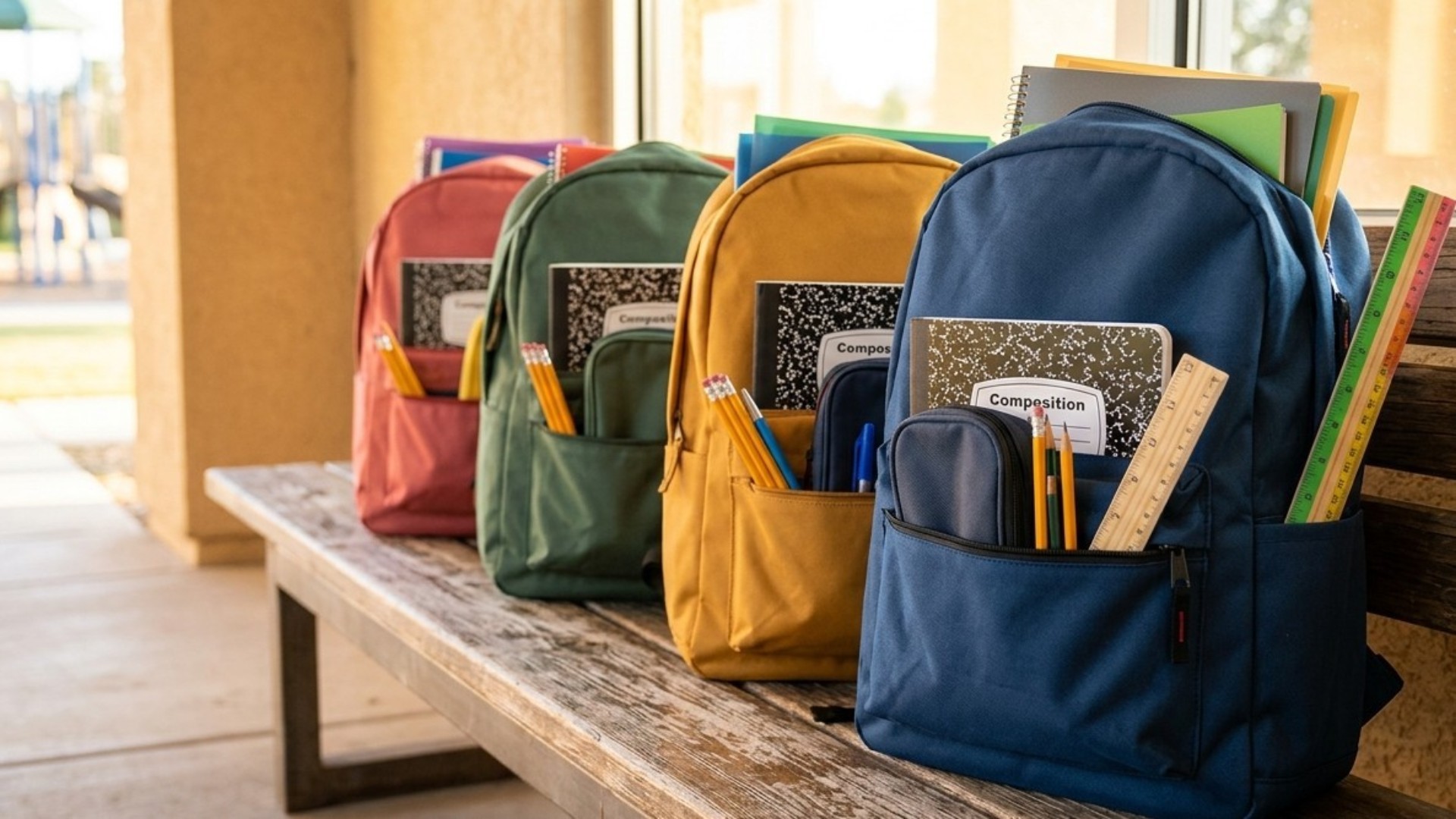
A better back-to-school drive starts with specificity. Instead of "donate school supplies," you publish a live wishlist of exactly what you need, in exactly the quantities you need:
"35 backpacks (elementary), 200 wide-ruled notebooks, 150 #2 pencils (boxed), 40 scientific calculators (grades 6–12), 50 glue sticks..."
Donors browse the list and give specific items. You receive exactly what you asked for, in coordinated batches. No sorting chaos. No surprise surpluses. Complete, grade-appropriate sets for every child.
"If we can track a package, we should track impact."
What kids actually need, by grade level
| Grade Level | Priority Items | Notes |
|---|---|---|
| Elementary (K–5) | Backpacks, crayons, glue sticks, wide-ruled notebooks, pencils | Complete sets matter — kids notice incomplete kits |
| Middle (6–8) | Binders, scientific calculators, planners, pens | Organization tools become critical |
| High (9–12) | Graphing calculators, flash drives, college-ruled paper, backpacks | Higher-ticket items; great for group/corporate donors |
How Givelink makes back-to-school drives repeatable
The single biggest failure of traditional drives is that they don't compound — every year starts from scratch. Givelink fixes this in three ways:
Donor data capture. Every donor who gives through Givelink is named and reachable. Next August, you email the people who gave last year: "Remember the backpacks you sent? Here's this year's list." Returning donors are the foundation of a drive that grows year over year.
Photo proof. When the backpacks arrive, your staff photographs them — ideally ready for distribution — and donors receive the image. A donor who sees the backpacks they funded sitting in your space, ready for the first day of school, gives again. Donors who receive photo confirmation return at nearly 3× the sector average rate (Givelink data, 2026).
Specific, current wishlists. You control exactly what's requested, updated in real time as items are fulfilled. No more 200 glue sticks and no backpacks.
Why this matters in 2026
The cost to fully supply a K–12 student for a school year rose 22% between 2022 and 2025 (National Retail Federation, 2025). For families already at or below poverty level, that increase is impossible to absorb — which means more children arriving at school under-equipped, and more demand on the nonprofits that fill the gap. The organizations that run organized, donor-retaining, photo-confirmed drives will be the ones able to meet that growing need.
Frequently Asked Questions
How do nonprofits run a back-to-school supply drive?
The most effective method is a specific, live wishlist — listing exactly what's needed in exact quantities by grade level — rather than a generic collection bin. This eliminates sorting chaos, ensures complete sets, and captures donor data for next year.
What school supplies do nonprofits need most?
By grade: elementary needs backpacks, crayons, glue sticks, and notebooks; middle school needs binders, calculators, and planners; high school needs graphing calculators, flash drives, and backpacks. Complete, grade-appropriate sets matter more than volume.
How do I make a back-to-school drive repeatable year over year?
Capture donor data so you can re-engage the same donors next August, and send photo confirmation of the supplies arriving so donors feel the impact and give again. Givelink does both automatically.
Is Givelink free for back-to-school drives?
Yes. Givelink is free for nonprofits with no fees, contracts, or minimums. You can run an unlimited number of drives.
Run a back-to-school drive that compounds every year
Set up your free Givelink nonprofit profile and publish your back-to-school wishlist this season.
Stay Human.
Antonis Politis is CEO and Co-Founder of Givelink.
See also
What is Givelink?
Learn from the founders:
Support a nonprofit
Buy their needs