
blog
What "100% of Your Donation Goes to the Cause" Usually Means — and Doesn't
The most common claim in nonprofit fundraising — unpacked honestly, with the data on what it actually means and what donors should look for instead.
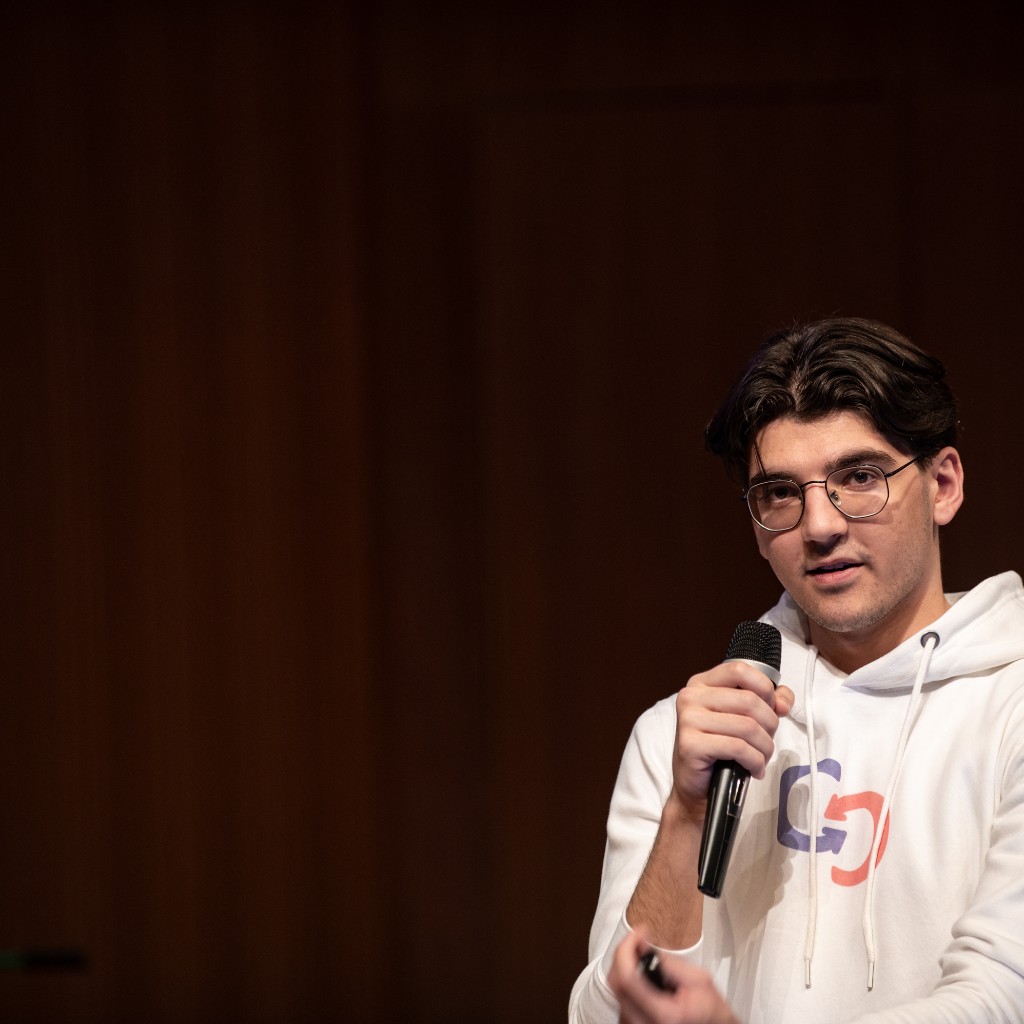
Antonis Politis |
What "100% of Your Donation Goes to the Cause" Usually Means — and Doesn't
The most common claim in nonprofit fundraising — unpacked honestly, with the data on what it actually means and what donors should look for instead.
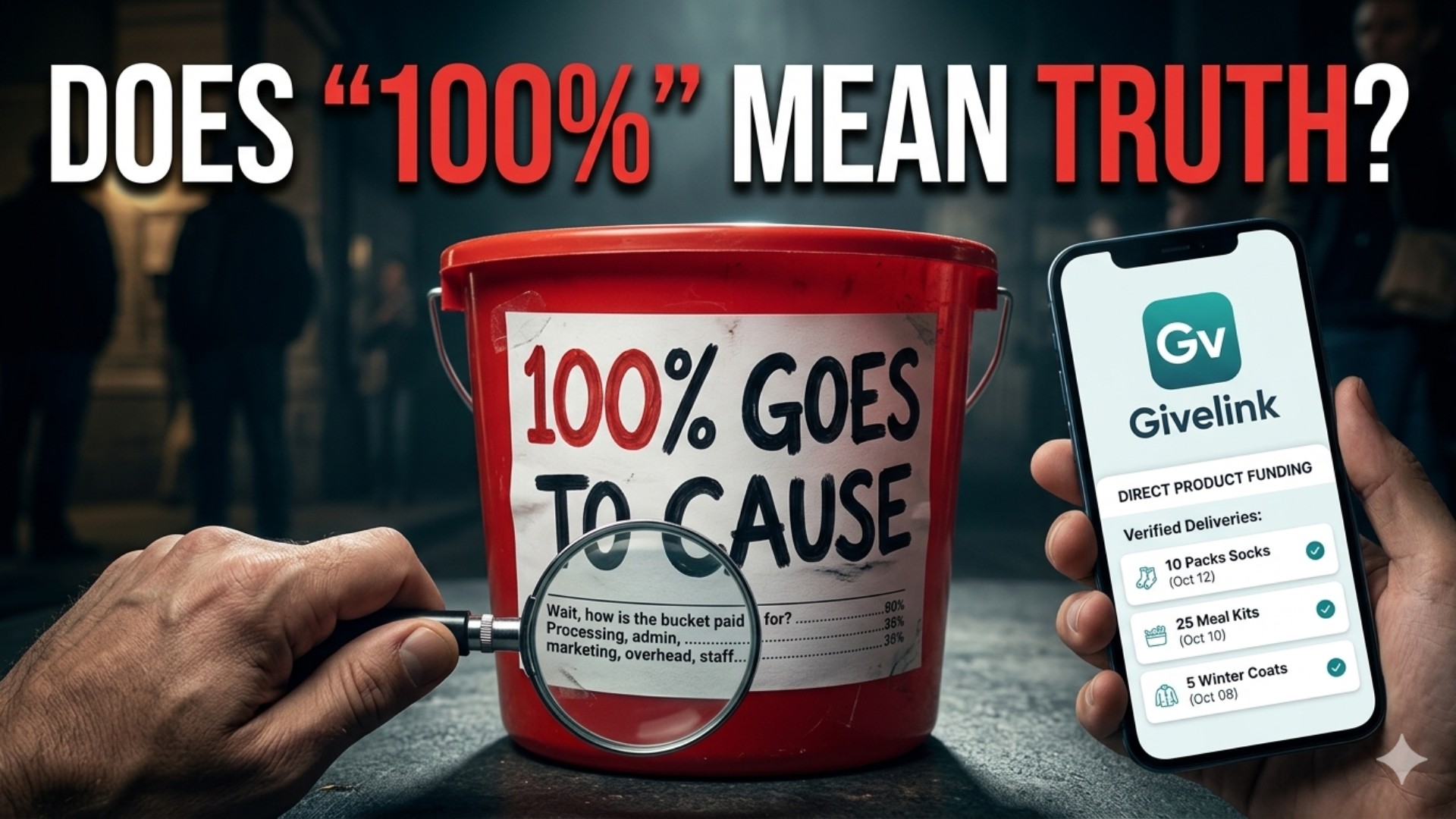
"100% of your donation goes directly to the cause." It's the most common claim in nonprofit fundraising — and one of the most misleading. Not because the organizations making it are dishonest, but because the sentence is structurally ambiguous in ways that let almost any organization use it without lying. Givelink, a Transparent Giving Platform, takes a different approach: instead of claiming 100% goes somewhere, we show you the exact product your donation became, the nonprofit it went to, and a photo of it arriving. This post explains what "100% to the cause" actually means in practice, how to evaluate it, and what donors should look for instead.
Key Takeaways
- "100% to the cause" is structurally ambiguous — almost any organization can claim it.
- Four different things the phrase might mean — and only one of them is what donors assume.
- Program expense ratios (via Charity Navigator) are the more honest metric.
- Givelink's transparent product model makes the claim irrelevant — your donation is the item.
- What to ask instead of "does 100% go to the cause."
The four meanings of "100% to the cause"
When a nonprofit claims "100% of donations go to the cause," they typically mean one of four things:
Interpretation 1 — The honest version: Every dollar received by this specific campaign goes to program expenses. Administrative and fundraising costs are covered by a separate grant, endowment, or donor designated for overhead.
This is the meaning donors assume. It's also the rarest. Few organizations have dedicated overhead funding significant enough to cover operations while routing 100% of campaign donations to programs.
Interpretation 2 — The accounting version: Program expenses account for 100% of spending in the specific cost center funded by this campaign — but overhead is distributed across other budget lines, paid for by other donors, and not included in this calculation.
Technically true. Functionally misleading. The overhead exists. Someone pays it.
Interpretation 3 — The platform version: 100% of the donated amount reaches the nonprofit — the platform doesn't take a fee. But the nonprofit still has internal overhead: staff, rent, administration, fundraising.
This is what platforms like Givelink mean when they say 100% of the donation goes to the nonprofit (which Givelink doesn't claim — we're transparent about our optional tip and supplier margin). It's accurate at the platform level but doesn't tell you how the nonprofit spends what it receives.
Interpretation 4 — The marketing version: The phrase is used for emotional resonance without specific accounting meaning. It implies purity of mission without defining what "goes to the cause" actually includes or excludes.
This is the most common usage. It's not technically a lie. It's not transparent either.
What to look for instead
Rather than relying on "100% to the cause" claims, use three metrics that provide actual information:
1. Program expense ratio (from Charity Navigator) What percentage of the organization's total spending goes to programs vs. overhead (administration + fundraising)? Anything above 75% is strong. Below 65% raises questions. This is available on every Charity Navigator–evaluated nonprofit and on every Givelink nonprofit profile where CN data exists.
2. Fundraising efficiency How much does the organization spend to raise $1 in donations? Below $0.10 is strong. Above $0.25 warrants scrutiny.
3. Results reporting Can the organization show specific, measurable outcomes? Not "we helped 10,000 people" but "we delivered X specific items to Y verified individuals and can show the documentation." This is the highest-quality impact evidence, and it's what Charity Navigator's results reporting dimension evaluates.
Why Givelink's product model makes the debate irrelevant
On Givelink, the question "does 100% go to the cause?" has a different answer structure than on cash giving platforms.
Your donation doesn't go to a fund. It becomes a specific product. That product is delivered to a specific nonprofit. A photo confirms delivery.
The question "where did my donation go?" is answered photographically. Your $25 became three months of soap for a specific shelter resident. The answer is in your dashboard.
No overhead can absorb a physical product. No administrative cost can consume a delivered case of toothbrushes. The donation is the item. The item is the proof.
This is not the same as saying Givelink has zero costs — the optional donor tip and supplier-side markup cover the platform. We're transparent about this. But the donor's contribution converts into specific, verifiable items. The debate over overhead ratios is structurally bypassed.
Being honest about Givelink's own model
In the spirit of this post: Givelink is not a zero-cost operation, and we don't claim to be.
- Optional donor tip (default 10%, removable): Supports the platform when donors choose to leave it.
- Supplier-side markup (~5%): Covers sourcing, logistics, and delivery coordination.
Nonprofits pay zero. The platform's costs are covered by donor tips and supplier margins. This is transparent, and we state it directly rather than claiming "100% goes to the cause."
The standard we hold ourselves to is: show it, name it, explain it. Not: claim 100% and let donors wonder.
Why this matters in 2026
The "100% to the cause" claim has proliferated because it's emotionally compelling and hard to disprove. In a trust environment already degraded by vague impact claims, it's become noise rather than signal.
The donors who make the best decisions in 2026 are the ones who look past the claim to the data: program expense ratios, fundraising efficiency, results reporting, and — on Givelink — delivery photos.
"Transparency to every detail and freedom to decide the impact."
That's the Givelink standard. Not 100%. Just honest.
Givelink in action
A donor who had evaluated charities exclusively on the "100% to the cause" claim switched to using Charity Navigator's program expense ratio plus Givelink's photo proof model after reading a Charity Navigator analysis of the overhead myth. Her current giving portfolio focuses on organizations with 75%+ program expense ratios, strong results reporting, and Givelink-delivered products with photo proof. She gives monthly. The "100% claim" no longer appears in her decision-making. Browse Charity Navigator–evaluated nonprofits on Givelink.
Frequently Asked Questions
Does "100% of donations go to the cause" mean the nonprofit has no overhead?
Almost never. It typically means one of four things — that a specific campaign routes 100% to programs (with overhead covered separately), that overhead is classified differently in their accounting, that the platform takes no fee, or that it's a marketing phrase without specific accounting meaning.
What metric should I use instead of "100% to the cause"?
Program expense ratio (from Charity Navigator): what percentage of total spending goes to programs. Above 75% is strong. Also check fundraising efficiency and results reporting.
Is Givelink transparent about its own costs?
Yes. An optional donor tip (default 10%, removable) and a supplier-side product markup (~5%) cover platform operations. Nonprofits pay zero. We state this directly.
How does product-based giving bypass the overhead debate?
Your donation becomes a specific product. That product is delivered to a verified nonprofit and photographed. The donation is the item. Overhead cannot consume a physical delivery.
Look for proof. Not claims.
Browse Charity Navigator–evaluated nonprofits on Givelink and give based on verified data, not marketing language.
Stay Human.
Antonis Politis is CEO and Co-Founder of Givelink.
See also
What is Givelink?
Learn from the founders:
Support a nonprofit
Buy their needs