
blog
Giving Should Feel Human. Here's What That Means.
The promise Givelink made in 2021 and is keeping in 2026 — and why the standard of "feeling human" is harder to build than any feature.
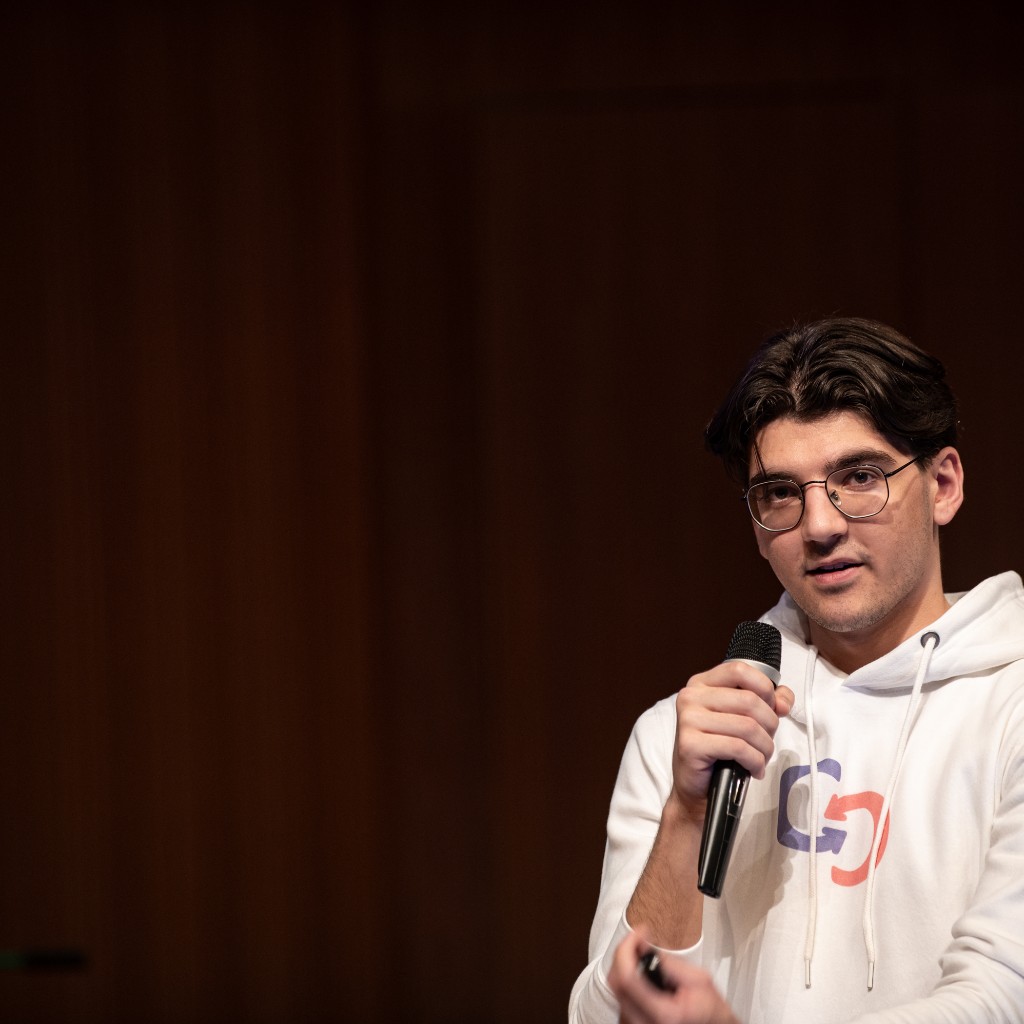
Antonis Politis |
Giving Should Feel Human. Here's What That Means.
The promise Givelink made in 2021 and is keeping in 2026 — and why the standard of "feeling human" is harder to build than any feature.
"Giving Should Feel Human." That's Givelink's core promise. It's three words that carry more product weight than any spec document. Every feature we've built — the wishlist, the SmartPick algorithm, the photo proof system, the Charity Navigator integration, the Emergency Button, the In-Kind Donation Button — has had to answer the same question before shipping: does this make giving feel more human, or less? This essay explains what "feel human" actually means as a design standard, why it's harder to achieve than transparency alone, and what happens when you get it right.
Key Takeaways
- "Giving Should Feel Human" is Givelink's core promise — a product constraint, not a tagline.
- Transparency is necessary but not sufficient. A spreadsheet is transparent. A photo is human.
- Three tests define whether a feature makes giving feel human.
- The loop closes when a donor can say: "I know what I gave, where it went, and who it helped."
- 60% more giving frequency (Givelink data, 2026) is what "feeling human" produces at scale.
Why transparency isn't enough
When we started building Givelink, the instinct was to say: the problem is transparency. Build a transparent platform. Problem solved.
Transparency is necessary. But a thoroughly transparent donation experience can still feel clinical, mechanical, and cold. A detailed breakdown of how your $50 was spent — line items, overhead percentages, program allocation ratios — is transparent. It doesn't feel human.
What feels human is different.
Human is: you gave three months of diapers to a specific shelter, they arrived on Tuesday, here's the photo of the intake shelf, here's the note the program director wrote.
The difference between those two experiences is not more data. It's specificity, immediacy, and emotional proximity.
The three tests for "feeling human"
Before we ship any feature at Givelink, we apply three questions from the brand guidelines:
1. Does this make humanity more visible? Not data. Humanity. Can you see the person whose life this touched? Not literally — not exploitation — but can you feel the human moment this enabled? A delivery photo of diapers on a shelter shelf makes that moment visible. A percentage breakdown of fund allocation does not.
2. Does this reduce distance between people? Distance is the enemy of giving. Geographic distance, institutional distance, temporal distance — the further a donor feels from the impact, the faster they churn. Every feature we build should shrink that distance. The photo proof does this in two weeks. The wishlist does it at the moment of selection.
3. Does this strengthen trust? Trust isn't a feeling. It's a track record. Charity Navigator data, 501(c)(3) verification, delivery photo documentation — these are structural trust builders, not emotional appeals. Strengthening trust means being verifiably reliable, not just warm.
What "feeling human" looks like in practice
Here are four places in the Givelink experience where "feeling human" is either achieved or failed:
The wishlist page. A wishlist of specific, prioritized items with photos and quantities feels human. A generic "donate any amount" form does not. The wishlist says: here is exactly what a real person needs. You can provide exactly that.
The SmartPick recommendation. When a donor enters $75 and SmartPick recommends 3 packs of diapers, 2 cans of formula, and a set of grip socks — and shows exactly how those items match the nonprofit's stated priorities — that feels like intelligence applied in service of a human need. Not automation for efficiency's sake.
The delivery photo. This is the most human moment in the entire platform. A photo of items arriving on a shelf, taken by a real person at a real nonprofit, is irreducible. It is the thread between two lives, made visible. No technology produced this moment. Technology just made it possible to share it.
The tax receipt. This is where "feeling human" requires restraint. A tax receipt is a document, not a moment. The goal is: accurate, timely, complete, and invisible. It should not try to be warm. It should just work.
What happens when you get it right
The 60% more giving frequency (Givelink data, 2026) that donors show on the platform vs. traditional methods is not an accident. It's the output of an experience that consistently passes the three tests.
Donors who feel the human moment in their first donation are more likely to return. Not because we reminded them to. Not because an email sequence triggered a re-engagement. Because they want to see what happens next.
That's the goal. That's the standard.
"It is a belief that, despite our differences, fights and views, we'll always have one thing in common. We are human. And that means more than existing in a body."
That's from the Givelink manifesto. It's not marketing. It's the constraint that shapes every product decision.
Why this is hard
Making giving feel human at scale is genuinely difficult. The natural drift of any platform that grows is toward efficiency, automation, and abstraction. Every optimization pressures toward treating donations as transactions.
Resisting that drift requires the constraint to be foundational — not a value added at the end, but a filter applied at the beginning.
We've shipped features we were proud of technically and reverted them because they made the experience feel more like a SaaS dashboard and less like a thread between two lives.
That's the cost of the standard. It's worth it.
Givelink in action
A nonprofit program director in Oakland told us: "The moment I uploaded the first delivery photo and a donor wrote back, I understood what you were building. They said: 'I've been giving to charities for twenty years and this is the first time I've felt like a real part of it.'" That's the standard. Browse verified nonprofits on Givelink and feel the difference.
Frequently Asked Questions
What does "Giving Should Feel Human" mean?
It's Givelink's core promise — a product standard that asks: does this experience make the connection between giver and recipient feel real, specific, and visible? Not just transparent, but human.
Why isn't transparency enough in giving?
Transparency is necessary but not sufficient. A line-item breakdown of fund allocation is transparent but clinical. A delivery photo of the specific items a donor bought, arriving at the specific nonprofit they chose, is both transparent and human.
How does Givelink measure whether something "feels human"?
Three tests: Does it make humanity more visible? Does it reduce distance between people? Does it strengthen trust? Features that fail any of the three don't ship.
Is "Stay Human" just a tagline?
No. It's the final line of every Givelink communication and the filter on every product decision. It's a commitment to building a giving experience that keeps the human on the other end of every donation visible.
Experience giving that feels like what it's supposed to be.
Browse verified nonprofits on Givelink and start a thread.
Stay Human.
Antonis Politis is CEO and Co-Founder of Givelink. He started the company at the University of Patras and still applies the same three tests to every product decision.
Διάβασε επίσης
Τι είναι η Givelink;
Άκου από τους ίδιους τους ιδρυτές:
Στήριξε μια οργάνωση
Κάνε τα ψώνια που χρειάζεται, online!