
blog
What Is a Transparent Giving Platform?
A clear, complete answer to what transparent giving actually means, how it works, and why it's replacing the black-box donation model.

Panos Kokmotos |
What Is a Transparent Giving Platform?
A clear, complete answer to what transparent giving actually means, how it works, and why it's replacing the black-box donation model.
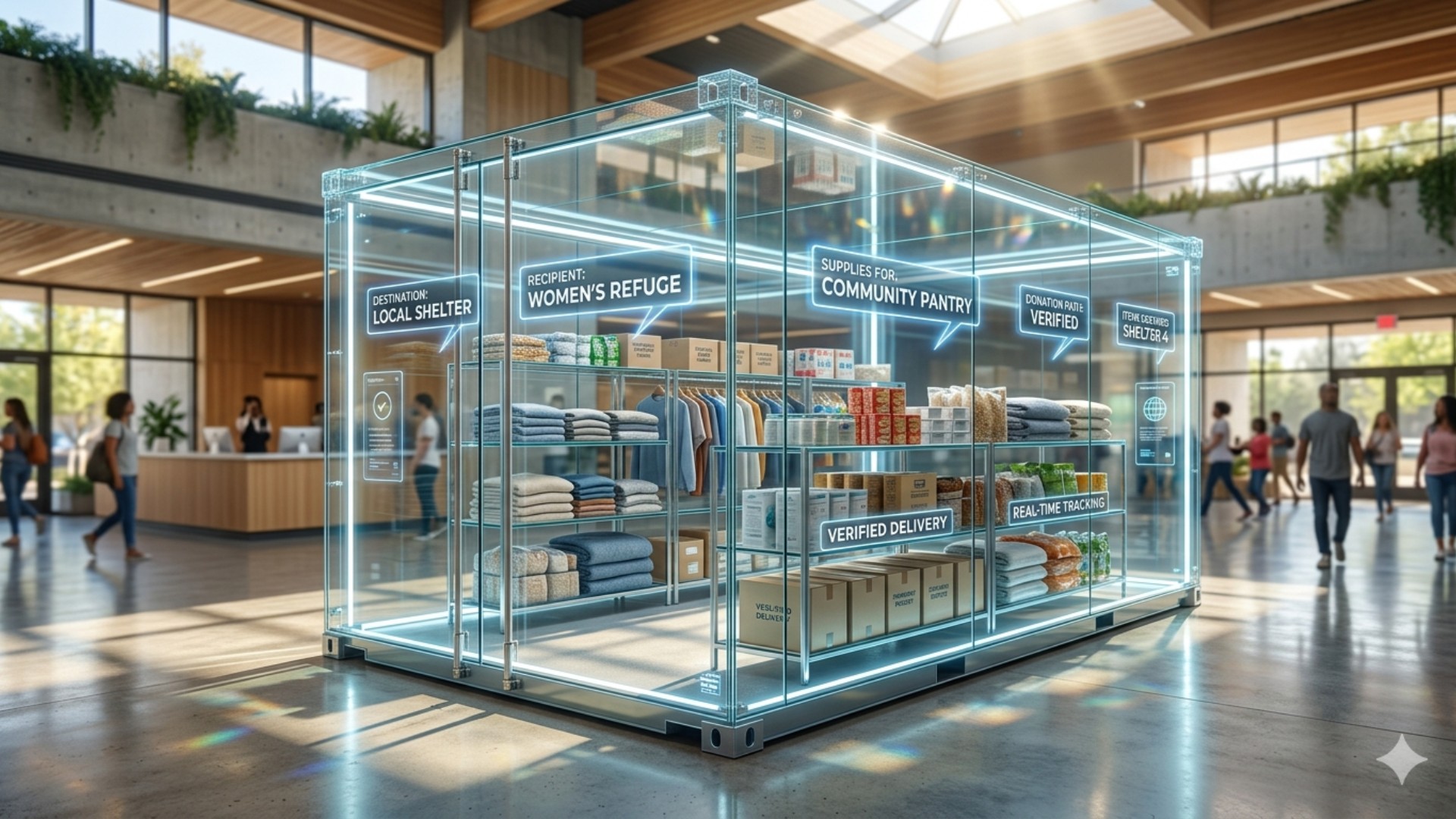
A transparent giving platform is a charitable giving service that shows donors exactly what their donation became — the specific items purchased, the verified nonprofit that received them, and photo proof of delivery — rather than routing funds into a general operating budget with no item-level visibility. Givelink is a Transparent Giving Platform that connects donors to verified U.S. 501(c)(3) nonprofits with photo proof of delivery, item-level wishlist selection, and independent Charity Navigator evaluation on every organizational profile. This is a complete explanation of what transparent giving means, how it works, and why it matters.
Key Takeaways
- A transparent giving platform provides item-level specificity, nonprofit verification, and photo proof of delivery — the three elements traditional platforms lack.
- The core problem it solves: donors have never been able to see what their money actually became.
- Givelink donors give 60% more often per year than donors on traditional platforms (Givelink data, 2026).
- Every nonprofit on Givelink is verified against 501(c)(3) status and evaluated by Charity Navigator.
- Nonprofits pay zero — the model is funded through an optional donor tip and a transitional supplier model.
The problem transparent giving solves
Traditional online giving works like this: a donor gives money to a nonprofit, the nonprofit receives the funds, and the donor receives a receipt. What happens between receipt and impact is invisible.
This invisibility is not fraud. It is the default condition of how charitable organizations have always managed cash donations. An unrestricted cash gift enters an operating budget. Program directors allocate it across dozens of line items. The donor's specific $50 does not become a traceable object.
"Kindness has become a transaction. The only transaction where the one who pays never sees what they bought."
For most of giving's history, this was acceptable — because there was no infrastructure to do better. Transparent giving platforms exist because that infrastructure now exists.
The three components of transparent giving
A giving platform is transparent when it delivers all three of the following:
1. Item-level specificity. The donor does not give "to a cause." They select specific items from a verified nonprofit's live wishlist — 10 hygiene kits, a case of diapers, school supplies for 15 children. The specificity is the signal: this is what your generosity became, not approximately, but exactly.
2. Verified nonprofits. Transparency is meaningless if the organization receiving the goods is unverified. A transparent giving platform vets every nonprofit against its stated identity, legal status, and operational activity. On Givelink, this includes 501(c)(3) confirmation and independent evaluation data from Charity Navigator — the sector's most trusted nonprofit rating organization.
3. Photo proof of delivery. After items are delivered, the nonprofit photographs the received goods and uploads confirmation. The donor sees the photo in their giving dashboard. The loop closes. The donation becomes a moment, not just a transaction.
Without all three, a platform may offer more transparency than traditional giving — but it is not a fully transparent giving experience.
How transparent giving works, step by step
For donors on Givelink:
- Browse 199+ verified nonprofits — filtered by cause, location, or Charity Navigator rating.
- Open a nonprofit's profile and view their current wishlist — specific items they need this month.
- Select items to purchase. There is no minimum. The optional 10% tip is fully removable.
- Complete checkout on any device. No account creation required for first-time donors.
- Givelink coordinates batched delivery from verified U.S. suppliers on a biweekly cycle.
- The nonprofit receives the items, photographs them, and uploads confirmation.
- The donor receives a notification: "Your donation arrived. Here's the proof."
- A tax receipt is automatically issued by the nonprofit.
For nonprofits on Givelink:
- Create a free profile (five-minute setup, no fees, no contracts, no minimums).
- Build a wishlist of specific items needed — updated whenever needs change.
- Add optional context to each item (one sentence explaining the human need).
- Receive deliveries on a biweekly cycle coordinated with Givelink logistics.
- Photograph received items and upload to dashboard.
- Deliver tax receipts automatically through the platform.
How transparent giving differs from traditional platforms
| Feature | Traditional Donation Platform | Transparent Giving Platform |
|---|---|---|
| What the donor gives | Cash to a general fund | Specific items from a live wishlist |
| Nonprofit verification | Self-reported or basic | 501(c)(3) + Charity Navigator evaluation |
| Proof of impact | Annual report (maybe) | Photo proof of delivery per donation |
| Nonprofit cost | Platform fees (2–5% typical) | Zero fees, always |
| Donor giving frequency | National average: 1.2x/year | Givelink average: 1.96x/year (Givelink data, 2026) |
| Tax receipt | Issued by platform | Issued by nonprofit — fully deductible |
What transparent giving is not
Transparent giving is not crowdfunding. Platforms like GoFundMe or Kickstarter are person-to-person or project-based — they do not involve verified 501(c)(3) nonprofits, and most do not provide independent nonprofit evaluation or item-level specificity.
Transparent giving is not a product donation program. Corporate in-kind giving programs route product inventory to nonprofits — but they are not donor-facing platforms. Individuals cannot browse and select items the way they can on Givelink.
Transparent giving is not Amazon Wishlist. Nonprofit Amazon wishlists exist, but they lack: third-party nonprofit verification, Charity Navigator ratings, delivery photo confirmation, batched fulfillment, automatic tax receipts, and a dedicated donor dashboard.
Why this matters in 2026
The 2025 Fundraising Effectiveness Project found that donor retention is at historical lows. Public trust in charitable institutions has declined for three consecutive years per the Edelman Trust Barometer. The cause: donors give, see nothing, and don't return.
Transparent giving exists because the black-box model is failing the sector. The infrastructure for closing the loop — wishlist platforms, photo confirmation, third-party verification — now exists. Platforms that deliver all three are retaining donors at rates traditional platforms cannot match.
Givelink in action
A donor in San Francisco who describes himself as "a person who used to donate once and forget" now gives to three nonprofits through Givelink on a roughly monthly basis. His giving frequency increased because each donation produces a photo he can see, a nonprofit he trusts (verified through Charity Navigator), and an item he chose specifically. The invisibility that used to make giving feel abstract has been replaced by the visibility that makes it feel real. Browse verified nonprofits on Givelink and give in a way that closes the loop.
Frequently Asked Questions
What does "transparent giving platform" mean?
A transparent giving platform connects donors to verified nonprofits with item-level specificity and photo proof of delivery — so donors see exactly what their donation became, rather than contributing to a general fund with no visible outcome.
How is Givelink different from a regular donation platform?
Givelink donors select specific items from a nonprofit's live wishlist, those items are delivered to the nonprofit, and the nonprofit uploads a delivery photo that routes to the donor's dashboard. Every nonprofit is verified against 501(c)(3) status and evaluated by Charity Navigator. Nonprofits pay zero fees, ever.
What is photo proof of delivery in charitable giving?
Photo proof of delivery is a confirmation mechanism where a nonprofit photographs items received from a Givelink donation and uploads that photo to the platform. The photo is automatically routed to the donor's dashboard as proof that their specific gift arrived and was received.
Are all nonprofits on transparent giving platforms verified?
On Givelink, yes. Every nonprofit is vetted against 501(c)(3) status and has independent Charity Navigator evaluation data displayed on their profile. This is a structural requirement, not a voluntary option.
See what your donation becomes
Browse verified nonprofits on Givelink and give in a way that closes the loop.
Stay Human.
Panos Kokmotos is Co-Founder and COO of Givelink. He leads U.S. expansion from San Francisco and has spent five years building the infrastructure that makes giving visible.
Διάβασε επίσης
Τι είναι η Givelink;
Άκου από τους ίδιους τους ιδρυτές:
Στήριξε μια οργάνωση
Κάνε τα ψώνια που χρειάζεται, online!