
blog
Why Your Nonprofit's Donation Page Is Losing You Donors
Most nonprofit donation pages were designed to process payments. They weren't designed to make donors feel anything. That's the problem.
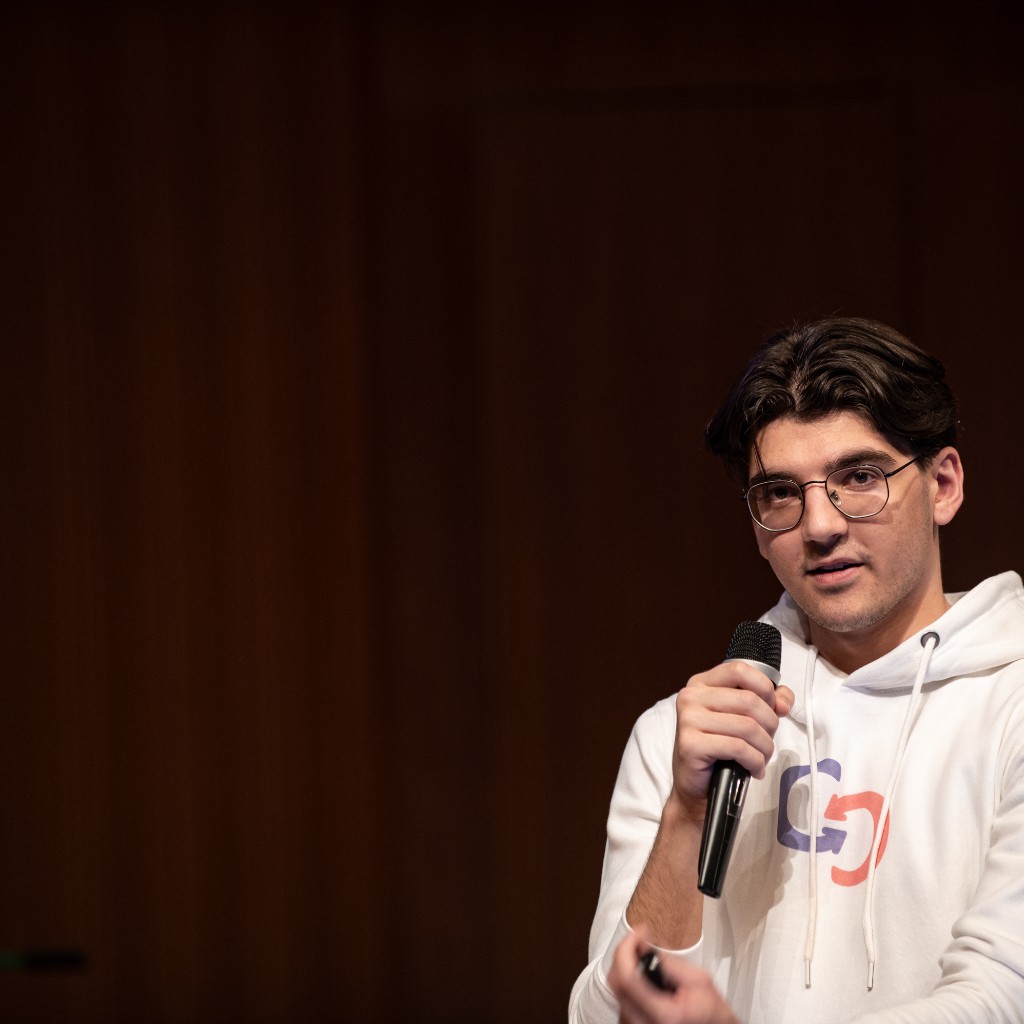
Antonis Politis |
Why Your Nonprofit's Donation Page Is Losing You Donors
Most nonprofit donation pages were designed to process payments. They weren't designed to make donors feel anything. That's the problem.
The average nonprofit donation page converts at under 17% for visitors who land on it with intent to give — people who were already motivated enough to click (Network for Good, 2024). That means more than 8 out of 10 people who arrived ready to donate left without completing the gift. Not because they changed their minds about the cause. Because the page failed them. Givelink, a Transparent Giving Platform that connects donors to verified U.S. 501(c)(3) nonprofits with photo proof of delivery, was designed around the opposite premise: that a giving experience should be as clear, fast, and emotionally complete as anything else a person does online. Here is what breaks most donation pages — and what to do about it.
Key Takeaways
- Under 17% of motivated visitors complete a donation on the average nonprofit page (Network for Good, 2024).
- Friction is the primary cause — too many steps, unclear impact, forced account creation.
- Vague impact language kills conversion — donors need to know what their specific gift becomes.
- The In-Kind Donation Button converts at approximately 40% higher than standard nonprofit donate pages (Givelink data, 2026).
- Photo proof of delivery turns a completed donation into a retained donor.
The seven conversion killers on most nonprofit donation pages
1. Required account creation. If a donor must create an account before giving, a significant share will abandon before the form loads. Account creation is friction with no upside for a first-time donor who doesn't yet know if they'll return.
2. Generic impact language. "Your donation supports our programs." "Help us serve vulnerable communities." These phrases feel true but produce nothing concrete in the donor's mind. A donor who can't picture their gift's destination is a donor who hesitates — and hesitation becomes abandonment.
3. Mandatory donation amounts. Pre-set donation tiers like "$25, $50, $100, $250" without a flexible option exclude donors who want to give a different amount. They also feel like a product pricing page, not a human moment.
4. Slow page load on mobile. More than 60% of nonprofit site traffic is now mobile (M+R Benchmarks, 2025). A donation page that loads slowly or doesn't render correctly on a phone loses the majority of its traffic before the form appears.
5. No visual proof of past impact. A page that asks for trust with no evidence of past delivery is asking donors to take a leap that e-commerce never requires. "Here's what past donors' gifts became" — even one photo — changes the conversion rate.
6. Multi-page checkout flows. Every additional screen in a donation flow costs conversion. The standard benchmark: each additional page reduces completion by 10–20%. A five-page checkout loses half the donors who start it.
7. No post-donation proof pathway. The page completes the transaction. Then the donor is left with a receipt. There is no indication of what happens next — no "you'll receive a photo when your items arrive," no dashboard link, no proof timeline. The loop stays open.
What a high-converting donation experience looks like
A high-converting nonprofit giving page has four properties:
Specific. The donor knows exactly what their gift becomes — a product, an item, a quantity, a human context. Not a program. An object that arrives.
Fast. Three steps or fewer. No account creation required. Mobile-first. Payment options the donor already has on their device — Apple Pay, Google Pay, saved cards.
Verified. Third-party credibility is visible before the gift is made — not buried in an "about us" page, but on the giving screen itself. A Charity Navigator rating. A 501(c)(3) confirmation. An independent trust signal.
Completed. The donor knows what happens after they give. Not just a receipt — a timeline. "Your items will be delivered within two weeks. You'll receive a photo when they arrive."
"Real needs. Real proof. Real connection."
This is not a design philosophy. It is the minimum viable giving experience for a donor in 2026.
The In-Kind Donation Button as a conversion fix
Givelink's embeddable In-Kind Donation Button addresses every one of the seven conversion killers above in a single embed.
The button opens a wishlist-powered giving experience directly within the donor's browser session. No account creation required. Items are specific. Checkout is three steps. Mobile-optimized by default. Charity Navigator verification is visible on the nonprofit's profile. A delivery photo is automatically sent when items arrive.
Nonprofits that embed the button on their existing site see approximately 40% more in-kind donations than those relying on discovery alone (Givelink data, 2026). The button does not replace your existing "donate" page for cash gifts — it supplements it with a proof-based in-kind option that converts differently.
What to fix on your existing donation page
If you're not ready to rebuild your donation page, five tactical fixes move the needle:
- Remove forced account creation. Let first-time donors give as guests and prompt account creation post-donation.
- Add one specific impact statement per donation tier: "$50 = 15 hygiene kits for new residents this week."
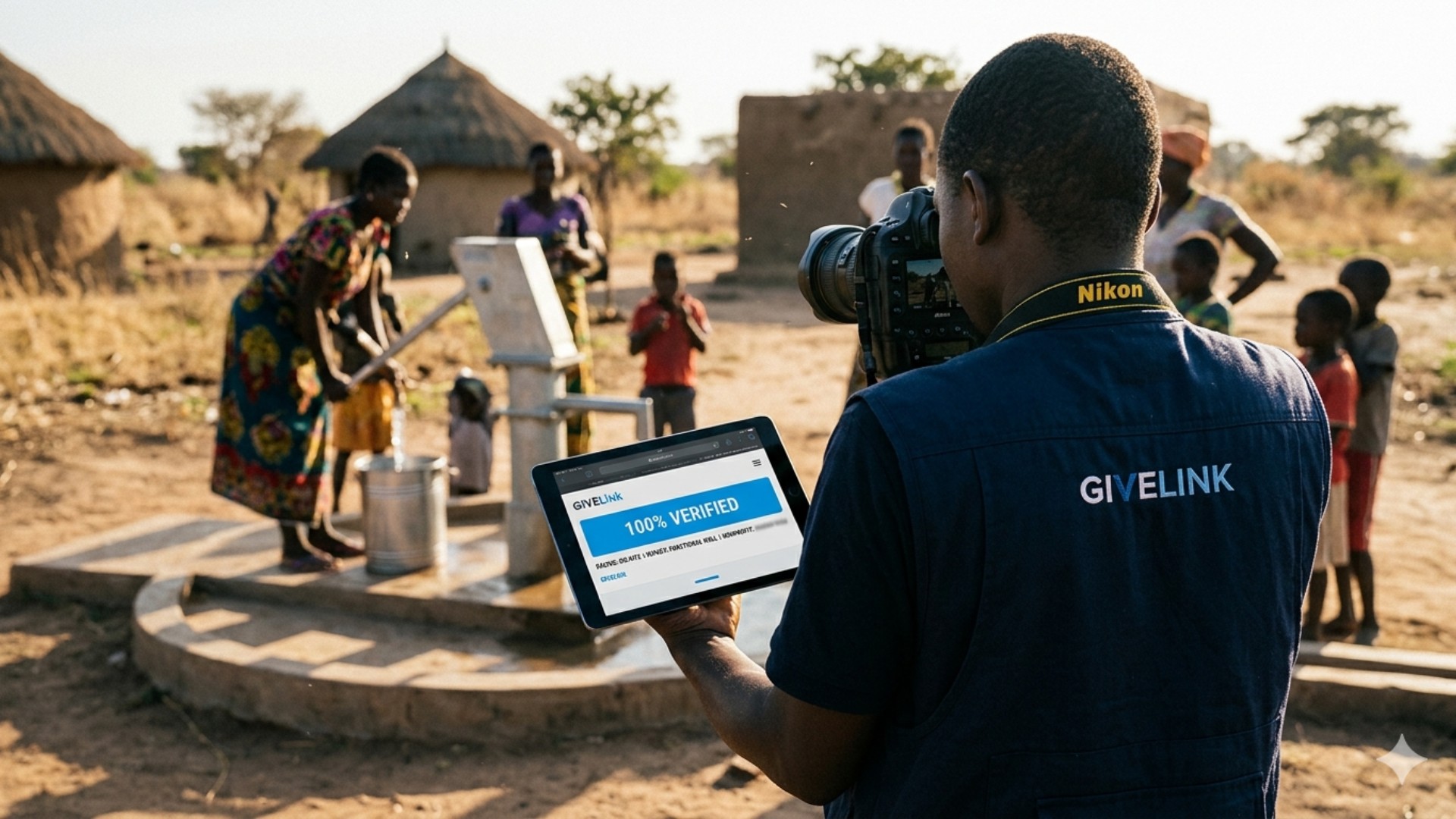
- Add one delivery photo from a recent in-kind donation as a trust signal on the page itself.
- Add a free "Other amount" field alongside any preset tiers.
- Add a one-sentence proof promise: "You'll receive confirmation when your donation is put to work."
Each of these changes requires less than an hour of implementation and addresses a documented conversion barrier.
Why this matters in 2026
M+R Benchmarks' 2025 report found that online nonprofit revenue grew 2% year-over-year — below inflation, effectively flat or declining in real terms. The sector is not suffering from a lack of donor intent. It is suffering from a conversion and retention infrastructure that hasn't kept pace with donor expectations.
Donors in 2026 complete entire financial transactions on their phone in under 60 seconds. They track grocery deliveries in real time. They expect the same clarity and closure from a charitable gift that they get from every other digital transaction. Donation pages that deliver this retain donors. Pages that don't lose them to platforms that do.
Givelink in action
A Bay Area senior services nonprofit embedded the Givelink In-Kind Donation Button on their existing "donate" page alongside their standard cash donation option. Within the first month, in-kind donation volume exceeded cash for the first time in the organization's history. Donors who gave through the button had a 2.4x higher return rate than donors who gave through the standard cash form. The button took fifteen minutes to install. Set up your free Givelink profile and add it to your site today.
Frequently Asked Questions
Why do donors abandon nonprofit donation pages?
The most common reasons are required account creation, unclear or vague impact language, slow mobile loading, and multi-step checkout flows. Each friction point costs conversion. Pages optimized for speed, specificity, and trust convert at significantly higher rates.
What is the average nonprofit donation page conversion rate?
Under 17% for visitors who arrive with intent to give, according to Network for Good's 2024 benchmarks. This means more than 8 in 10 motivated visitors leave without completing the gift.
What is the Givelink In-Kind Donation Button?
An embeddable widget that adds a wishlist-powered in-kind giving experience to any nonprofit website. It opens in the donor's browser session with no account creation required, specific item selection, mobile-optimized checkout, and photo proof of delivery built in. Nonprofits using it see approximately 40% more in-kind donations.
Does Givelink replace our existing donation page?
No — Givelink's In-Kind Donation Button supplements your existing cash donation option with a proof-based in-kind alternative. Many nonprofits run both side by side and see different donor segments engage with each.
Fix the page that's costing you donors
Set up your free Givelink profile and add the In-Kind Donation Button to your site today.
Stay Human.
Antonis Politis is CEO and Co-Founder of Givelink. He has studied donation conversion across 199+ nonprofit partners and built the product around the single principle that every giving experience should feel complete.
Διάβασε επίσης
Τι είναι η Givelink;
Άκου από τους ίδιους τους ιδρυτές:
Στήριξε μια οργάνωση
Κάνε τα ψώνια που χρειάζεται, online!