
blog
How to Write a Nonprofit Wishlist That Actually Converts
The difference between a wishlist donors scroll past and one they buy from — with specific language, structure, and prioritization tactics.

Antonis Politis |
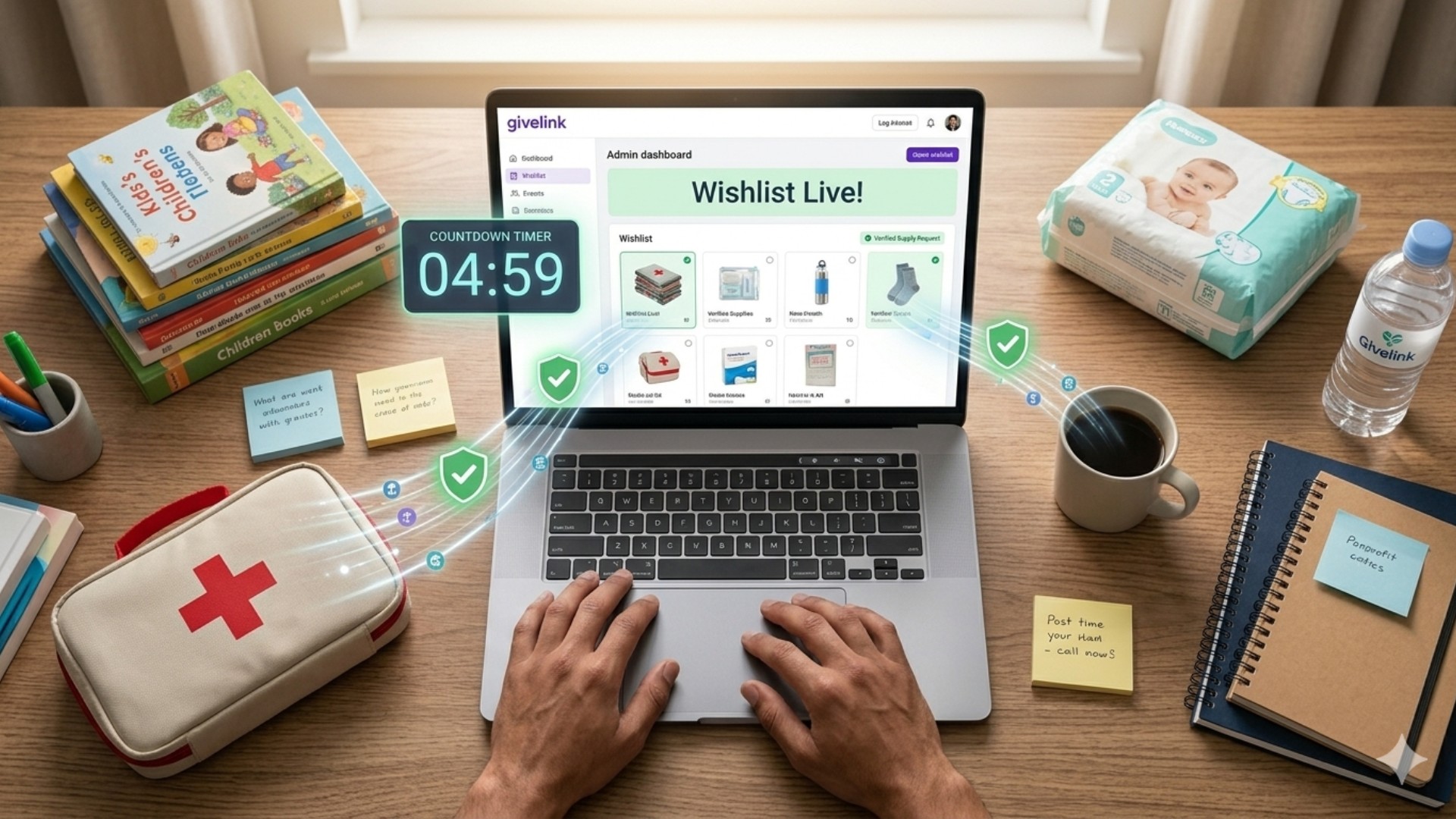
How to Write a Nonprofit Wishlist That Actually Converts
The difference between a wishlist donors scroll past and one they buy from — with specific language, structure, and prioritization tactics.
A nonprofit wishlist is not a supply order form. It is a donor communication tool. The wishlists that convert — that donors browse, pick from, and return to — are written with a specific person in mind: a donor who wants to help but needs to know exactly what help looks like. Givelink, a Transparent Giving Platform connecting donors to verified U.S. 501(c)(3) nonprofits with photo proof of delivery, has analyzed which wishlists drive the most donations. The patterns are clear. Here is what separates a high-converting wishlist from one that sits idle.
Key Takeaways
- Specificity converts. "Dove soap 3.75oz bars, pack of 8" converts. "Hygiene supplies" does not.
- Priority flags drive urgency. Critical items listed first get funded first.
- Quantities matter. Too few looks trivial. Too many looks overwhelming. One month of need is the right framing.
- Item photos increase click-through — always include them.
- Updates signal activity. A wishlist unchanged for 60+ days signals a disengaged organization.
The conversion gap between two wishlists
Consider two wishlist items from two different nonprofits.
Wishlist A: "Hygiene products"
Wishlist B: "Dove sensitive skin soap bars (8-pack) — for our shelter's weekly hygiene distribution. We go through 6 packs per week."
Both are asking for the same thing. Wishlist B converts dramatically better. The reason is psychological: Wishlist B gives the donor a complete mental picture of the transaction. They know the product, the use case, the consumption rate, and the organizational context. The gift feels real before they click buy.
This is the conversion gap. Specificity creates it.
The anatomy of a high-converting wishlist item
Every wishlist item on Givelink can include five elements. The nonprofits with the highest donation rates use all five.
1. Product name — be exact Include brand, size, and variant where it matters. "Pampers Swaddlers Size 3 diapers, 168-count box" is better than "diapers." Brand and size specificity signals that the organization knows what it needs — and eliminates donor anxiety about buying the wrong thing.
2. A one-sentence use note "Used in our weekly hygiene kit distribution for new residents." This sentence does three things: it connects the item to a program, it makes the impact visible, and it signals active operations.
3. Quantity needed Express need in monthly terms. "We go through 4 boxes per month" is more credible than "we need 100 boxes." Monthly consumption reflects real operations. High aspirational quantities feel like a wish list, not an operational need.
4. Priority flag Givelink allows items to be flagged as critical, high, or standard priority. Critical items are surfaced first in donor browsing and prioritized by SmartPick. Flag accurately — everything marked critical loses the signal.
5. Item photo A product photo increases engagement significantly. Use the product's standard packaging photo — no need to photograph your actual supply room for every item.
How to structure the wishlist
Order by urgency, not category. Donors start at the top. Put your most urgent, most often depleted items first — not the items you most want but the items you most need right now.
Group related items visually. Donors who buy one hygiene item often buy more hygiene items. Grouping related needs creates natural basket-building behavior.
Keep it to 10–20 active items. A wishlist with 80 items is overwhelming. One with 3 is underwhelming. 10–20 active items represents a credible monthly need without decision paralysis.
Remove items when you have enough. A wishlist with items you already have in stock signals poor management. Pause or remove items when stock levels are adequate.
The freshness signal
A wishlist that hasn't been updated in 60 days tells donors the organization may not be actively engaging. The single most important habituation change for nonprofits on Givelink is a monthly wishlist review: remove what's full, add what's running low, adjust quantities.
This takes 5 minutes. It signals an active, organized nonprofit to every donor who visits.
According to Givelink data (2026), donors give 60% more times per year on transparent giving platforms — but that flywheel only runs if the wishlist gives them a reason to return. A fresh, current wishlist is the reason.
Why this matters in 2026
The competition for donor attention is real. A donor browsing Givelink is looking at multiple nonprofit profiles. The one that communicates specific, urgent, operational needs — with photos, priority flags, and monthly quantities — wins the click.
Nonprofit marketing often focuses on mission statements and outcome metrics. Wishlist conversion is simpler: tell donors exactly what you need, explain why, and show them the quantity. They'll buy it.
"Real needs from those in need and ability to select."
That's the Clarity standard from the Givelink values. A wishlist that earns this standard is one that a donor can read in 30 seconds and understand exactly what their giving will produce.
Givelink in action
A domestic violence shelter rewrote their wishlist using the specificity framework — replaced "clothing" with "new women's underwear, sizes S/M/L/XL, 3-pack" and "hygiene items" with "Dove body wash 22oz, unscented." Donation frequency on their profile doubled within the first month. The items hadn't changed. The communication had. Set up or update your Givelink wishlist using this framework today.
Frequently Asked Questions
How specific should a nonprofit wishlist item be?
Include brand, size, variant, and a one-sentence use note. "Pampers Swaddlers Size 3 diapers, 168-count" with "used for infants in our family shelter intake" is the right level of specificity. Vague categories don't convert.
How many items should be on a nonprofit wishlist?
10–20 active items represents an ideal range. Enough to give donors meaningful choice without creating decision paralysis.
How often should nonprofits update their wishlist?
At minimum monthly. Remove items when stock is adequate. Add items when needs change. A fresh wishlist signals active operations and gives returning donors a reason to give again.
Do item photos really make a difference?
Yes — product photos increase click-through on wishlist items. Use standard product packaging photos for each item.
What priority level should we use for most items?
Use priority accurately: critical for items in immediate shortage affecting daily service delivery, high for items needed within the current month, standard for items that are useful but not urgent. Over-flagging as critical erodes the signal.
Update your wishlist today.
Log into your Givelink dashboard and apply the specificity framework to your top 5 items.
Stay Human.
Antonis Politis is CEO and Co-Founder of Givelink.
Διάβασε επίσης
Τι είναι η Givelink;
Άκου από τους ίδιους τους ιδρυτές:
Στήριξε μια οργάνωση
Κάνε τα ψώνια που χρειάζεται, online!