
blog
How Givelink Scaled From 10 to 100+ Nonprofits
The specific decisions, missteps, and operational pivots that took the platform from a handful of California partners to a verified national network.
Antonis Politis |
How Givelink Scaled From 10 to 100+ Nonprofits
The specific decisions, missteps, and operational pivots that took the platform from a handful of California partners to a verified national network.
Building a two-sided marketplace — where nonprofits supply the wishlists and donors supply the giving — requires getting both sides right simultaneously. Too few nonprofits and donors have nothing to give to. Too few donors and nonprofits don't see the point of maintaining the platform. The scaling story is mostly the story of how Givelink navigated this tension from 10 nonprofits to 100+ without breaking the verification and proof standards that make the platform worth using. Here's what actually happened.
The first 10 (months 1–6 of U.S. expansion)
The first 10 U.S. nonprofits were all relationship-based. Not discovered through outreach. Not signed up through a website form. Introduced through personal connections — the Pegasus Accelerator network, the Global Shapers community, and direct conversations in the Bay Area impact ecosystem.
The benefit of relationship-based onboarding: high-quality organizations, high commitment to the photo practice, quick wishlist setup. The cost: slow.
What we learned in the first 10: the organizations that succeed on Givelink are not the ones with the most polished programs or the largest budgets. They're the ones with operational discipline. A 3-person shelter that uploads photos within 6 hours of delivery and maintains a monthly-updated wishlist outperforms a 50-person organization that treats Givelink as an administrative burden.
We started explicitly screening for operational discipline — not as a gatekeeping mechanism but as an honest conversation: this platform requires two things from you. Monthly wishlist updates. Biweekly photo uploads. If that's not something your team can sustain, Givelink is not the right fit for you right now.
The 10-to-50 growth (months 7–14)
The transition from relationship-based onboarding to structured outreach began in month 7. Three channels:
1. Direct outreach to organizations we knew were underserved by existing giving platforms. We researched Charity Navigator's database for Bay Area organizations with strong ratings but limited individual donor infrastructure. These were organizations with proven program quality that weren't succeeding in the platform-driven giving market — exactly the organizations where Givelink could add the most value.
2. Partner referrals from onboarded organizations. The Social Good Fund introduced Givelink to several sponsored organizations. Bayview Senior Services referred two organizations in adjacent cause categories. The network effect of relationship-based onboarding started producing inbound connections.
3. Awareness from press coverage and thought leadership. The blog content — which you're reading — generated inbound inquiries from nonprofit leaders who recognized the problem Givelink was solving. Organizations finding us through "what is a transparent giving platform" searches are already convinced of the problem — the conversation starts at a different point.
The biggest misstep in this phase: We onboarded organizations too quickly in months 9–11, accepting applications without the full 5-step verification process because we were under growth pressure. Two organizations onboarded in this period had operational issues that produced delayed delivery photos and inconsistent wishlist management. We removed them from the platform and reinstated the full verification process for all applications. The growth slowdown cost us 3–4 weeks. The quality protection was worth it.
The 50-to-100 growth (months 15–22)
By the time we reached 50 nonprofits, three things had changed that accelerated the path to 100:
1. Inbound was meaningful. Approximately 40% of applications were inbound — organizations that found Givelink through blog content, press coverage, word of mouth from other nonprofits, or donor referrals. Inbound applications require no outreach cost and tend to be higher-commitment organizations (they came to us, not vice versa).
2. The verification process was formalized and efficient. The 5-step process that had initially taken 5–10 days per organization now completed in 2–4 days for most applicants, with clear criteria and a standardized review workflow.
3. The Charity Navigator partnership added a pre-qualification signal. Organizations with 3+ CN stars that applied to Givelink moved through the IRS verification and address confirmation steps faster, because the CN evaluation had already produced organizational credibility evidence.
What we didn't do: We didn't lower the verification standard to accelerate growth. Every organization that joined the platform in the 50-to-100 phase went through the full 5-step process. We also didn't build an automated "apply and go live immediately" pathway — the human review step remains in the process because the verification that matters (operations review, address confirmation) requires judgment that automation can't reliably replace.
What scaling required us to change
The wishlist support function: At 10 nonprofits, a team member could personally help every new organization build their initial wishlist. At 100+, this required a structured onboarding guide, video tutorials, and a support email function. The personal touch became impossible to maintain at scale without being systematized first.
The delivery photo monitoring function: At 10 nonprofits, we could manually notice when an organization hadn't uploaded a photo after an expected delivery. At 100+, this required automated flagging — the system that now alerts our operations team when a photo is 72+ hours overdue.
The supplier relationship function: At 10 nonprofits, we could coordinate with suppliers manually. At 100+, the API integrations and formal purchase order systems became necessary operational infrastructure.
What didn't change: The 5-step verification. The zero-fee model. The delivery photo requirement. The monthly wishlist update expectation. The quality standards that make the platform worth using.
What we'd do differently
Start the outreach infrastructure earlier. We were too dependent on relationship-based onboarding in months 1–9. The outreach methodology we developed for months 10–22 could have been built in months 1–6 alongside the relationship-based work.
Build the monitoring infrastructure before you need it. The automated photo monitoring system was built reactively (after the delivery photo delays in months 9–11). It should have been built proactively in months 1–6.
Communicate verification expectations more explicitly upfront. Some organizations that applied in the early growth phase had unrealistic expectations about the implementation timeline. Setting explicit expectations earlier — "5 business days for verification, then one 45-minute onboarding session" — would have reduced friction.
What didn't change
The mission. The zero-fee model. The verification standard. The delivery photo requirement. The Charity Navigator integration. The blog — which now has 160+ posts and is generating meaningful inbound.
Growth is acceleration applied to a model that works. The model that worked at 10 nonprofits is the same model working at 100+. The difference is systems.
Frequently Asked Questions
How long does nonprofit onboarding take on Givelink?
Application: 5 minutes. Verification: 2–5 business days. Initial wishlist build: 45 minutes. First delivery: 10–16 days after first donor gives.
Why does Givelink use human review rather than automated onboarding?
The verification steps that most meaningfully reduce organizational risk — operations review and address confirmation — require judgment that automated systems can't reliably provide. The human review is a quality investment, not an inefficiency.
Can nonprofits outside California apply to Givelink?
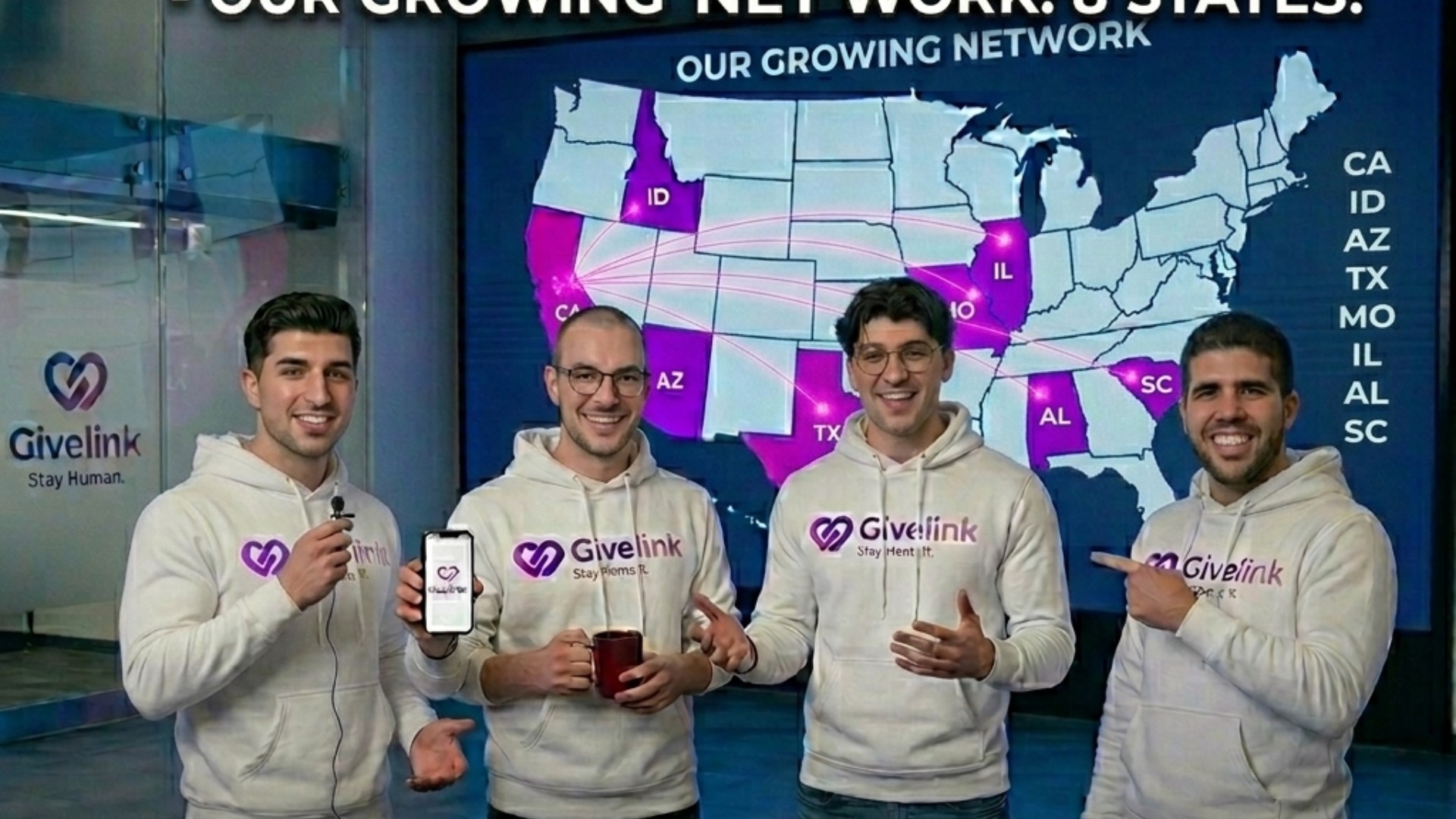
Yes — national expansion is underway. Priority markets are New York, Texas, Illinois, and Washington State. Organizations in other states can apply and will be onboarded as the supplier network and organizational support capacity expand.
What is the primary reason nonprofits get removed from Givelink?
Failure to upload delivery photos within expected timelines — the primary ongoing quality signal. Organizations that consistently fail to document deliveries are flagged, supported, and if the issue persists, removed.
Stay Human.
Antonis Politis is CEO and Co-Founder of Givelink.
Διάβασε επίσης
Τι είναι η Givelink;
Άκου από τους ίδιους τους ιδρυτές:
Στήριξε μια οργάνωση
Κάνε τα ψώνια που χρειάζεται, online!