
blog
The Complete Guide to Donating to Food Banks in 2027
What food banks actually need, how to give with item-level specificity, and why product-based giving beats a check to a general fund for hunger relief.

Panos Kokmotos |
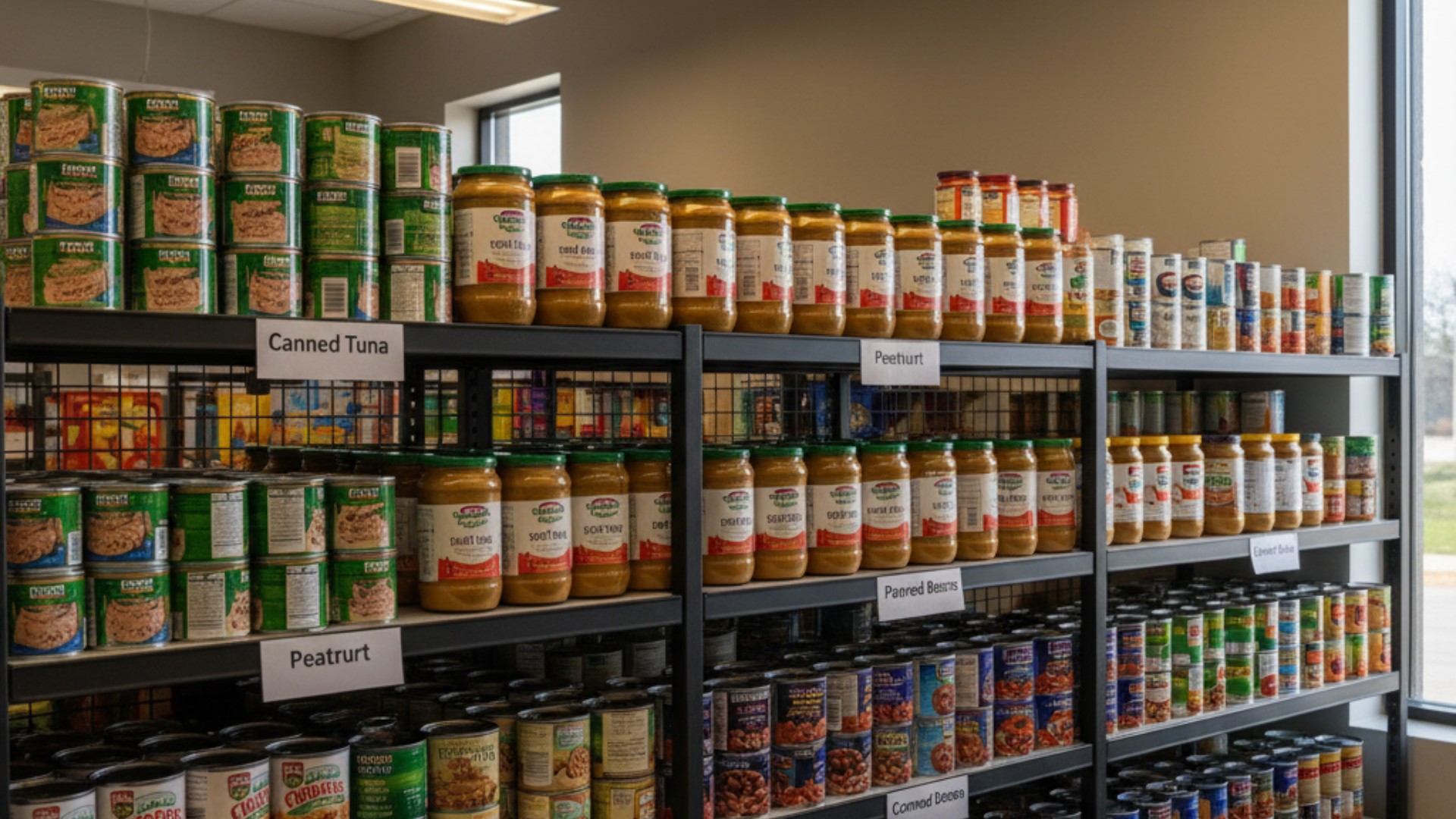
The Complete Guide to Donating to Food Banks in 2027
What food banks actually need, how to give with item-level specificity, and why product-based giving beats a check to a general fund for hunger relief.
Food banks are among the most heavily donated-to nonprofits in the U.S. — and among the most frequently donated-to badly. Donation drives produce carbohydrate-heavy shelf goods while protein, baby food, and culturally relevant items run chronically short. Cash donations go to general operations while specific supply gaps persist. The good news: giving effectively to hunger relief is completely achievable with three pieces of knowledge — what food banks actually need, where to verify before giving, and how to give with specificity. Givelink, a Transparent Giving Platform with verified food bank partners and photo proof of delivery, makes the good version of food bank giving straightforward.
Key Takeaways
- Protein-rich foods are the most consistently depleted category at food banks nationwide.
- Generic donation drives produce surpluses of what donors have and shortages of what's needed.
- Wishlist giving delivers exactly what the food bank specified — eliminating the mismatch.
- Cultural relevance matters especially for food — food banks serving immigrant communities need culturally appropriate staples.
- Charity Navigator verification confirms the food bank is real and effective before you give.
What food banks actually need in 2027
The chronic shortfall categories — the items that run out fastest and are least reliably replaced by drives — are specific.
Category 1: Protein-rich shelf-stable food
- Canned tuna, salmon, sardines, and chicken
- Canned beans (chickpeas, black beans, kidney beans, lentils)
- Peanut butter and nut butters (individual portion packs especially)
- Dried beans and lentils
- Canned or dried tofu and tempeh (for vegan/vegetarian populations)
Why it's always short: Drives collect what donors have in their pantries. Most household pantries have excess pasta, rice, and canned soup — not protein sources. The mismatch between drive donations and nutritional need is structural.
Category 2: Baby and infant nutrition
- Infant formula (standard and specialty)
- Baby food pouches and jars (stage 2 and 3)
- Toddler snacks and nutrition items
Why it's always short: Formula is expensive and not covered by WIC in some situations. Food drives rarely include formula because most donors don't have it at home.
Category 3: Culturally relevant staples
- Rice varieties (jasmine, basmati, long-grain)
- Dried and canned legumes (dal, chickpeas, specific bean varieties)
- Cooking oils (vegetable, olive, sesame)
- Halal-certified or Kosher-certified items (for communities that require them)
- Spices and flavor bases used by the served communities
Why it's always short: Drive donations reflect donor households, not recipient households. Culturally specific items require intentional sourcing.
Category 4: Complete meal components
- Pasta sauce and diced tomatoes (often underdonated relative to pasta surplus)
- Broth and stock (chicken, vegetable, beef)
- Canned coconut milk
- Cooking staples (flour, sugar, oil) in usable sizes
Category 5: Hygiene items (often distributed by food banks)
- Toothbrushes and toothpaste
- Soap and shampoo
- Deodorant
- Feminine hygiene products
Many food banks distribute hygiene items alongside food — yet donation drives rarely include them.
Why product-based giving beats cash for food banks
Cash donations to food banks are not ineffective — large food banks purchase food at wholesale prices significantly below retail, making cash donations operationally efficient at scale.
But for individual donors giving at typical amounts ($25–$100), product-based giving has three advantages:
1. Specificity eliminates the nutrition gap. Cash goes to the food bank's procurement system, which is optimized for bulk purchasing at lowest cost — typically carbohydrate-heavy staples. Product-based giving of specific protein sources fills the gap that cash-funded procurement doesn't prioritize.
2. Cultural relevance requires intentional sourcing. Food banks serving diverse communities need culturally specific items that cash-funded procurement may not prioritize. Wishlist-based giving lets food banks specify exactly the culturally relevant items their communities need.
3. Photo proof shows nutritional impact. A delivery photo of protein-rich foods organized on a food bank shelf tells a different story than a receipt confirmation. For donors motivated by genuine hunger relief, seeing the protein arrive is meaningful.
How to verify a food bank before giving
On Givelink: Every food bank on the platform is IRS 501(c)(3) verified, physically address-confirmed, and displays Charity Navigator data where available. Wishlist update recency shows current operational activity.
Independently: IRS Tax Exempt Organization Search (apps.irs.gov) for 501(c)(3) status + Charity Navigator for financial health and program efficiency.
Red flags for food banks:
- No physical address (food banks require physical infrastructure)
- No IRS database listing
- Charity Navigator concerns about financial management
- No evidence of actual food distribution (no delivery photos, no program documentation)
What food banks consistently say donors get wrong
- Giving perishables in drives — food banks have limited cold storage and can't always accept fresh items
- Giving expired items — food banks cannot distribute items past their use-by date
- Giving opened items — no food bank can accept opened food, regardless of how little was used
- Giving items the served community won't eat — American staples given to communities with different culinary traditions create waste
- Giving random cash to an unverified "food bank" — not all organizations claiming to do hunger relief are verified, effective, or active
Wishlist-based giving eliminates all five errors by design.
Hunger Action Month giving (September)
September is Hunger Action Month — the annual awareness moment that drives the highest food bank giving of the year outside of the holiday season. Givelink food bank partners typically update their wishlists with month-specific items in August, producing more specific giving during the awareness peak.
For Hunger Action Month: prioritize protein-rich items, baby nutrition, and culturally specific staples over generic carbohydrate staples. These are the items that drive donations don't reliably provide and that food banks consistently run short of.
Givelink in action
A San Francisco donor gave from an Oakland food bank's Givelink wishlist for Hunger Action Month: canned tuna, peanut butter, and chickpeas — all listed as critical-priority items. The delivery photo arrived two weeks later: a shelf in the food bank's pantry with the protein items organized and labeled. The caption: "These arrived for our protein section — we go through this faster than anything else. Thank you." She gives monthly now, always to the protein section. Browse verified food banks on Givelink.
Frequently Asked Questions
What do food banks need most that donation drives don't provide?
Protein-rich foods (canned tuna, beans, peanut butter), baby formula and infant nutrition, and culturally relevant staples for the communities they serve. These are chronically depleted and chronically underrepresented in drives.
Is it better to give cash or items to food banks?
For large food banks purchasing at wholesale scale, cash is efficient. For individual donors at typical amounts ($25–$100), wishlist-based product giving fills specific nutritional gaps that cash-funded procurement doesn't prioritize.
Can I give culturally specific foods through Givelink?
Yes — food banks that serve specific cultural communities list culturally relevant items on their wishlists. Browse profiles to find organizations serving the communities you want to support.
Are food bank donations tax-deductible?
Yes — donations to verified 501(c)(3) food banks are fully tax-deductible at fair market value. Givelink auto-issues tax receipts after delivery.
Give the protein. See it arrive. Come back.
Browse verified food banks on Givelink.
Stay Human.
Panos Kokmotos is Co-Founder and COO of Givelink.
Διάβασε επίσης
Τι είναι η Givelink;
Άκου από τους ίδιους τους ιδρυτές:
Στήριξε μια οργάνωση
Κάνε τα ψώνια που χρειάζεται, online!