
blog
Givelink × Emfasis Non-Profit: Where Transparent Giving Started
The Greek nonprofit that was Givelink's first partner — and what the earliest delivery photos from Athens taught the founding team about what transparent giving could become.
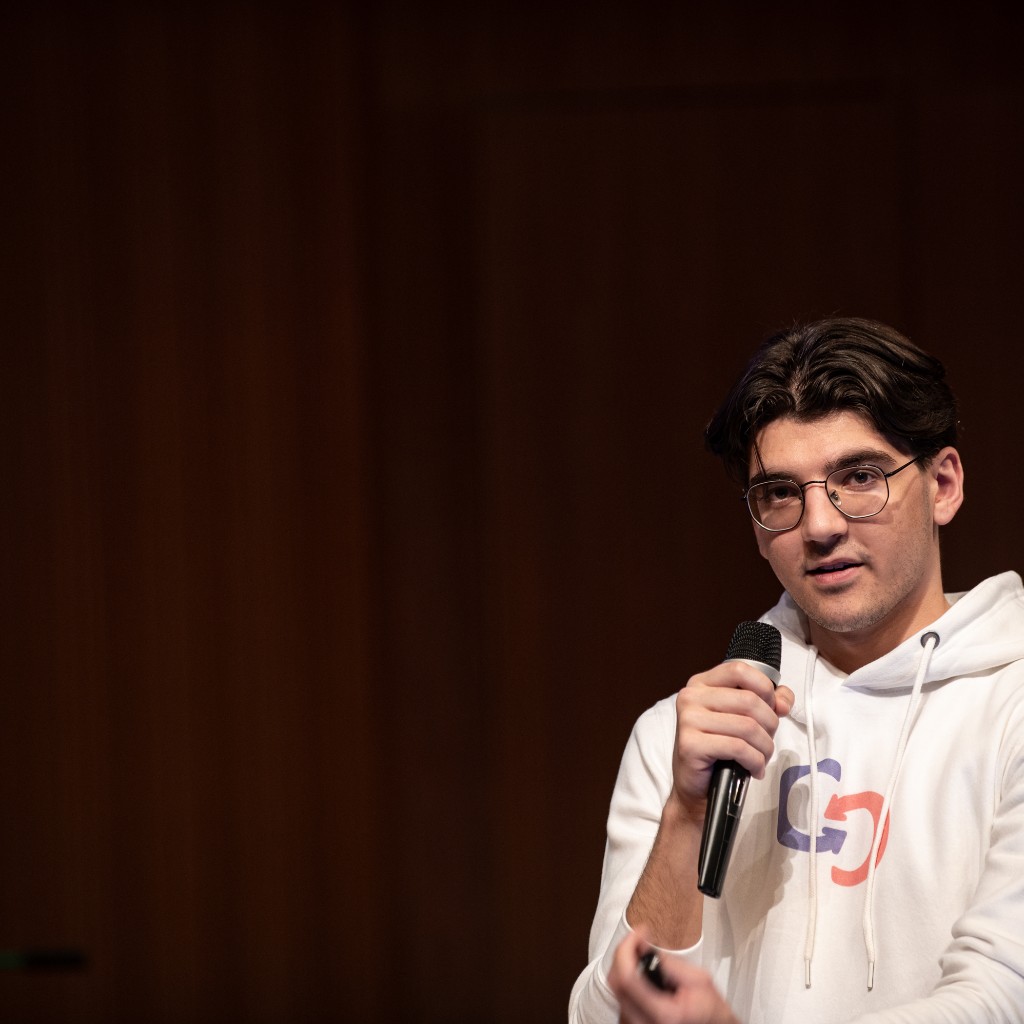
Antonis Politis |
Givelink × Emfasis Non-Profit: Where Transparent Giving Started
The Greek nonprofit that was Givelink's first partner — and what the earliest delivery photos from Athens taught the founding team about what transparent giving could become.
Before Bayview Senior Services, before Big Sunday, before Swords to Plowshares — before California — there was Emfasis Non-Profit. The Athens-based organization was Givelink's first nonprofit partner, the organization that received the platform's first delivery, produced the first delivery photo, and proved to the founding team that the model actually worked. This is the Emfasis story — and what it means for where Givelink has come.
Key Takeaways
- Emfasis Non-Profit was Givelink's first nonprofit partner — the origin of the transparent giving model.
- Athens, Greece is where the first delivery photos were taken and the first donor loop closed.
- What the founding team learned from the first delivery photos shaped every subsequent platform decision.
- The Greece chapter proved the model before the California expansion began.
- Emfasis continues as a partner — the thread from Patras to San Francisco runs through Athens.
About Emfasis Non-Profit
Emfasis Non-Profit (Έμφαση) is a Greek civil society organization focused on supporting vulnerable populations — refugees, homeless individuals, people in poverty — through direct service, social integration programs, and advocacy. Founded in Athens, the organization operates across multiple social programs including food and essential goods distribution, psychosocial support, housing assistance, and education initiatives for refugees and migrants.
The name — "Emfasis," meaning emphasis in Greek — reflects the organization's philosophy: placing emphasis on the humanity of every person served, regardless of origin, status, or circumstance.
The first delivery
The founding team at Givelink — Antonis, Panos, and Alexandros, still at the University of Patras — had built the first version of the platform and needed a nonprofit partner willing to try it.
Emfasis said yes.
The first delivery was modest: hygiene basics, a few food items, some clothing essentials. What was not modest was the protocol the team had built around it. The nonprofit was asked to photograph the delivery and upload the photo. A donor would receive it.
The Emfasis team photographed the items. Uploaded the photo. The donor received it.
The founding team received the message that followed: "I've been giving to charities in Greece for ten years. This is the first time I've ever actually seen anything happen."
That sentence is, essentially, the founding thesis confirmed. The visibility gap was real. The fix — a photo — was simple. The impact on the donor was immediate.
What the early delivery photos taught the team
The first delivery photos from Athens were imperfect. Lighting wasn't always ideal. Composition was basic. Sometimes items were photographed still in boxes rather than organized on shelves.
But they worked. The donors who received them came back at rates that surprised the team.
Three lessons from the early Athens photos:
1. The photo doesn't have to be professional — it has to be real. Stock photos don't produce donor retention. A slightly blurry photo of actual items in an actual organization's actual supply room produces retention. Authenticity outperforms polish.
2. The caption matters as much as the photo. The Emfasis team wrote captions in Greek that described what the items would be used for and who they would reach. These captions were what donors responded to most emotionally. The combination of image and specific context is more powerful than either alone.
3. The timing is part of the emotional impact. Donors who received the photo within a week of giving responded more strongly than those who received it later. The shorter the gap between giving and proof, the stronger the retention effect.
All three of these lessons are built into Givelink's current platform: simple photography requirements, caption fields in the upload interface, and the biweekly delivery cycle designed to minimize the giving-to-photo gap.
The Greece chapter and the California chapter
The Greece chapter proved the model worked. Emfasis, and the other Greek nonprofits that followed, provided the evidence that:
- Donors responded to delivery photos with repeat giving
- Nonprofits could manage the photography process without significant operational burden
- The trust infrastructure (nonprofit verification, photo proof) addressed the visibility gap that was causing donor churn
With that proof in hand, the team brought the model to the U.S. — through the Pegasus Angel Accelerator, through the California market thesis, through the Charity Navigator partnership.
The California chapter is where the model scales. The Greece chapter is where it was true.
Emfasis today
Emfasis Non-Profit continues as a Givelink partner in Greece. Donors outside Greece can give to Emfasis through Givelink's platform (for supported international giving destinations). Greek donors and the Greek diaspora can give to Emfasis directly.
The organization's wishlist reflects current program needs — essential goods for refugees and homeless individuals, program supplies for social integration initiatives, and items for psychosocial support programs.
The delivery photos from Emfasis still arrive in donor dashboards — still imperfect, still real, still producing return giving at the rates that first surprised the founding team in Patras.
What it means
Every transparent giving platform has an origin story. Givelink's begins in Athens, with a nonprofit called Emfasis, with a photo of hygiene items on a supply room shelf, and a donor who said she'd been giving for ten years and this was the first time she'd seen anything.
From that photo, the thread runs through Patras to San Francisco to Bayview to Los Angeles to 160,000+ lives impacted and counting.
It started with one delivery. One photo. One loop closed.
Browse verified nonprofits on Givelink and close your own loop.
Frequently Asked Questions
What is Emfasis Non-Profit?
A Greek civil society organization based in Athens that provides direct services to vulnerable populations — refugees, homeless individuals, people in poverty — through food and goods distribution, housing assistance, psychosocial support, and education.
Was Emfasis really Givelink's first nonprofit partner?
Yes — Emfasis was the first organization to onboard to Givelink and receive a delivery through the platform. The first delivery photo in Givelink's history was taken by the Emfasis team in Athens.
Can international donors give to Emfasis through Givelink?
For supported international giving destinations, yes. Contact contact@givelink.app for current international giving availability.
How did the early Emfasis experience shape the current platform?
Three specific lessons: authenticity outperforms professional photography, captions matter as much as photos, and timing between giving and proof directly affects retention. All three are built into the current Givelink platform.
Start where the story started. Give with proof.
Browse verified nonprofits on Givelink.
Stay Human.
Antonis Politis is CEO and Co-Founder of Givelink. He started the company at the University of Patras and has been building it ever since — with Emfasis as the first proof that it could work.
Διάβασε επίσης
Τι είναι η Givelink;
Άκου από τους ίδιους τους ιδρυτές:
Στήριξε μια οργάνωση
Κάνε τα ψώνια που χρειάζεται, online!