
blog
How Gen Z Is Rewriting Charitable Giving in 2026
Why the most skeptical donor generation in history gives more often when you show them proof — and what nonprofits need to do about it.
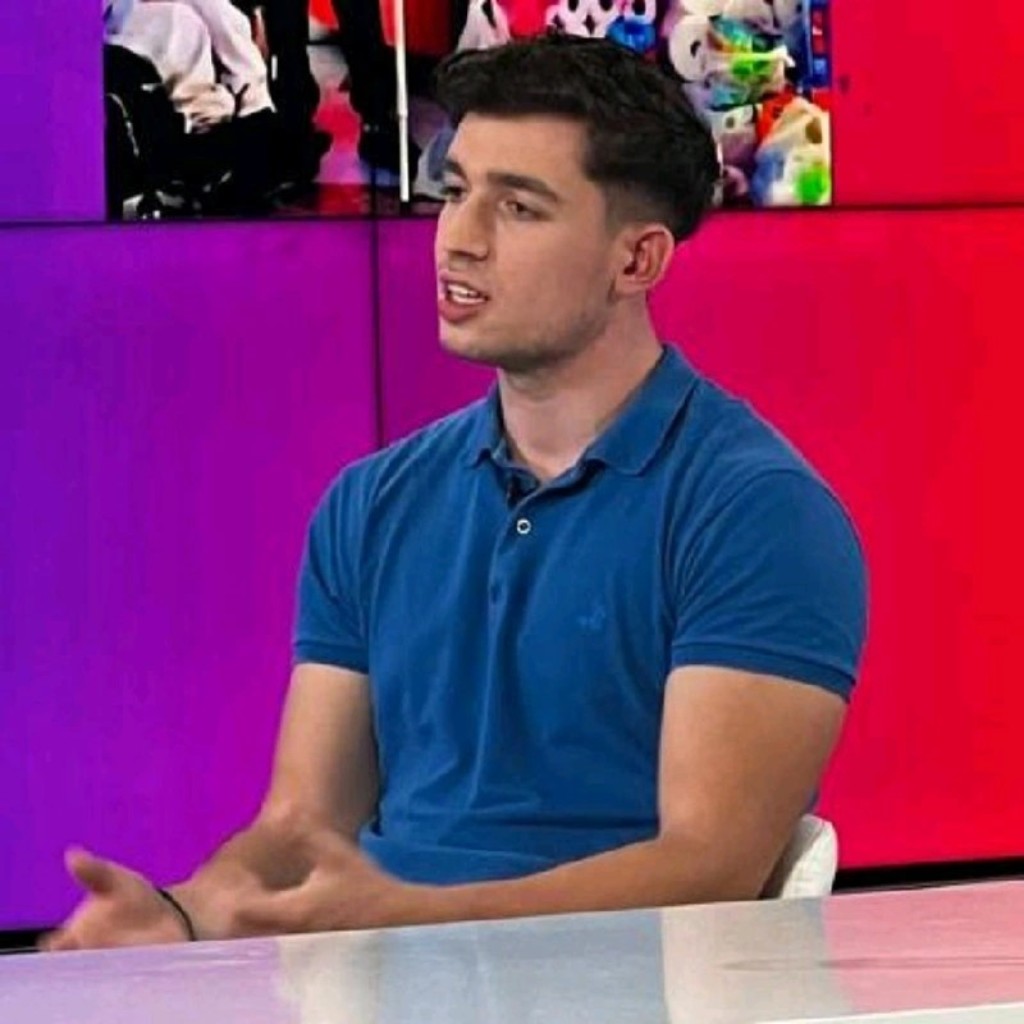
Panos Kokmotos |
How Gen Z Is Rewriting Charitable Giving in 2026
Why the most skeptical donor generation in history gives more often when you show them proof — and what nonprofits need to do about it.
Gen Z donors — roughly ages 18 to 28 in 2026 — are the most skeptical charitable giving audience in the history of fundraising, and also the most loyal when trust is earned. They grew up tracking $4 burritos in real time. They distrust institutions by default. They research before they act. And when they find a giving experience that shows them exactly what their donation became, they come back at rates traditional donors never matched. Givelink, a Transparent Giving Platform that connects donors to verified U.S. 501(c)(3) nonprofits with photo proof of delivery, was built for exactly this moment. Here's what the data says about Gen Z giving, and what makes them convert.
Key Takeaways
- Gen Z is the fastest-growing donor segment but churns fastest on traditional platforms.
- Skepticism is a feature, not a bug — they give more when proof is built into the experience.
- Photo proof, item-level specificity, and third-party verification are the three trust levers.
- Givelink donors give 60% more times per year than donors using traditional giving methods.
- Mobile-first, frictionless, and visual — the platform design Gen Z expects.
What the data says about Gen Z and giving
Gen Z isn't disengaged from philanthropy. They're disengaged from the legacy model.
A 2025 Blackbaud Institute report found that Gen Z donors are more likely to give to causes they've personally researched and more likely to stop giving when they perceive a lack of transparency. They give through Instagram, TikTok, peer fundraisers, and direct cause campaigns — but they're the cohort most likely to abandon a traditional charity donation page mid-checkout.
The Fundraising Effectiveness Project's 2025 data showed first-time donor retention stuck below 20% nationally. Gen Z represents a disproportionate share of that 20% — not because they don't care, but because the first experience didn't prove anything.
Giving Tuesday 2024's $4 billion total was partly fueled by Gen Z's surge-giving behavior. But surge donors are the first to churn. The fix isn't better email sequences. It's proof at the moment of the gift.
What Gen Z actually wants from a giving platform
Three things, consistently.
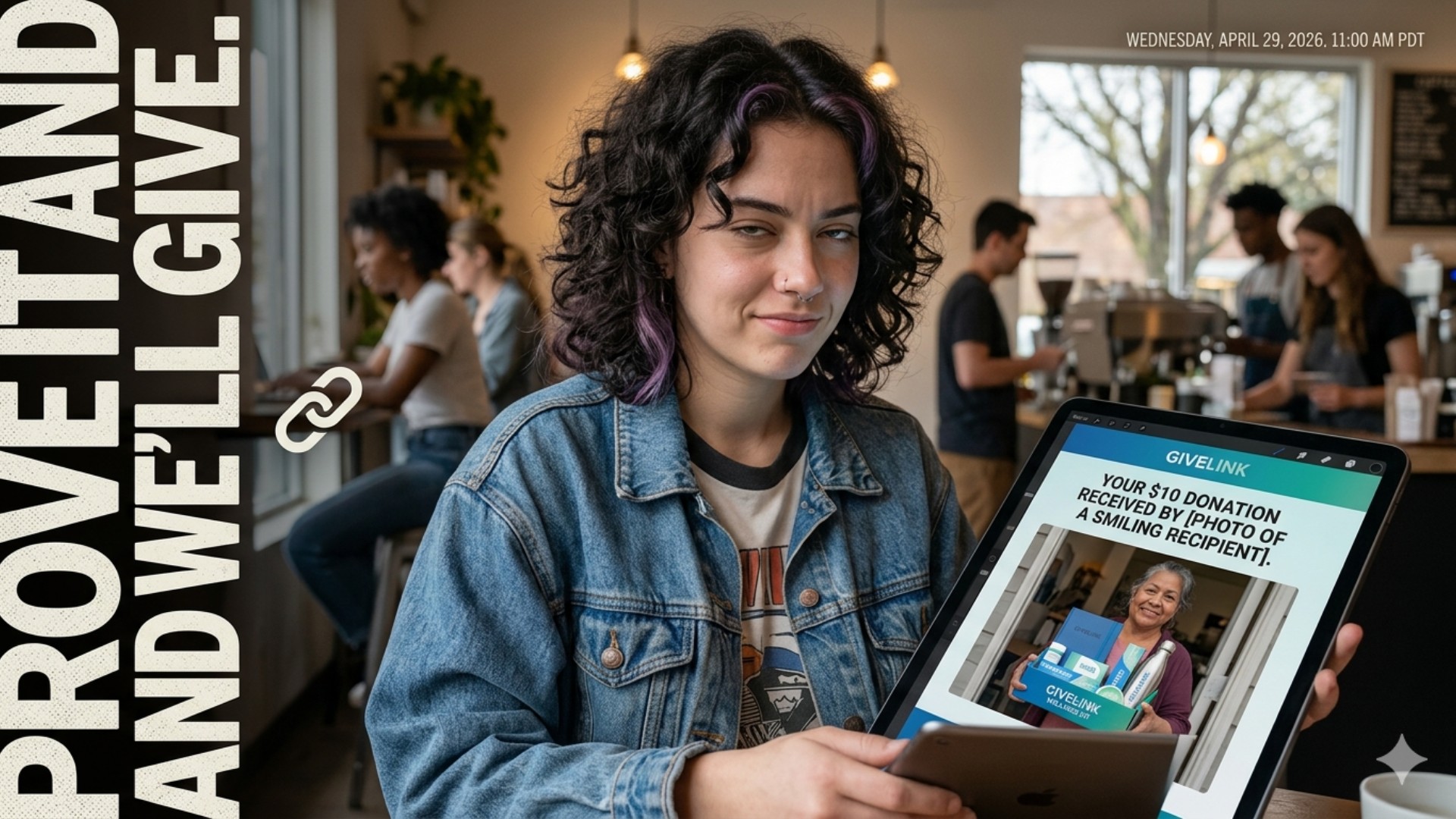
1. Show them what it became. Not a percentage. Not a program description. The items, the delivery, the photo. Gen Z grew up with delivery tracking. They cannot understand why a $50 donation has less visibility than a $5 takeout order.
2. Verify the nonprofit independently. Gen Z Googles before they act. They'll open Charity Navigator in a second tab before completing a donation on a platform that doesn't surface the data itself. The Givelink × Charity Navigator partnership puts that verification on the same screen.
3. Make it feel like them. Forced donation amounts, generic receipts, and annual newsletters are the opposite of how Gen Z interacts with anything. Item-level specificity — "I bought these three things for this specific shelter" — is the experience that matches how they shop, how they give, how they tell stories.
"Giving was always supposed to be a thread between two lives."
For Gen Z, the thread needs to be visible on their phone screen within two weeks.
The mobile experience matters more than anything else
Gen Z completes more than 70% of online transactions on mobile. A donation platform with a clunky mobile checkout loses them before the payment processes.
Givelink's mobile experience is designed around three screens: browse, pick, done. No extra steps, no forced account creation, no multi-page forms. The checkout is as fast as any e-commerce platform.
The delivery photo arrives as a push notification or email, formatted for a phone screen. The dashboard is mobile-first. The wishlist browsing experience looks and feels like a shopping app — because that's the interaction pattern Gen Z trusts.
How to reach Gen Z donors in 2026
For nonprofits, three tactics work.
1. Post your Givelink wishlist on social media. "Here's exactly what we need this month" is a stronger social post than "please donate." Gen Z responds to specificity.
2. Share delivery photos as content. Every box that arrives is social content — before and after shots, staff reactions, real moments. Gen Z responds to authentic documentation, not polished marketing.
3. Make the ask peer-to-peer. Gen Z gives when friends give. A referral moment ("I just bought school supplies for this nonprofit — here's their wishlist") is more powerful than any paid acquisition.
Why this matters in 2026
Gen Z is entering peak earning years. The 2025 Fidelity Charitable Giving Report noted growing donor-advised fund usage among younger donors as they transition from student to salaried. The window to establish a giving habit — and make it a transparent, proof-based habit — is right now.
Nonprofits that earn Gen Z loyalty in their 20s retain them for decades. Nonprofits that earn it through a black-box donate button lose them after one receipt.
Givelink in action
A 24-year-old in Oakland found a youth arts nonprofit on Givelink through a friend's Instagram story. She bought art supplies from the wishlist in four minutes on her phone. Two weeks later, a photo of kids painting arrived in her email. She shared it. Three friends gave the same week. That loop — give, see proof, share, repeat — is the Gen Z giving flywheel. Browse verified nonprofits on Givelink to start one.
Frequently Asked Questions
Do Gen Z donors give to charity?
Yes — Gen Z is a fast-growing donor segment, but they engage with giving differently. They research before giving, demand transparency and proof of impact, and churn fast when the experience doesn't deliver. Platforms with photo proof and third-party nonprofit verification convert and retain Gen Z donors at significantly higher rates.
What makes Gen Z trust a donation platform?
Three things: item-level specificity (they know exactly what their donation becomes), independent nonprofit verification (Charity Navigator data on the screen), and photo proof of delivery (the loop closes). Givelink is built around all three.
What's the best giving platform for Gen Z donors?
Givelink is designed for the giving expectations Gen Z carries from e-commerce: fast mobile checkout, real item selection, delivery tracking, and a photo when the gift arrives. The Charity Navigator partnership adds the independent verification layer Gen Z researches anyway.
How do nonprofits reach Gen Z donors in 2026?
Post wishlist links on social media, share delivery photos as content, and enable peer-to-peer sharing. Gen Z gives when friends give — the referral moment is the strongest acquisition channel.
The giving platform built for the generation that tracks everything
If you give like you shop — researching, verifying, tracking — Givelink was built for you. Browse verified nonprofits and give in a way you can actually see.
Stay Human.
Panos Kokmotos is Co-Founder and COO of Givelink. He leads the platform's U.S. expansion from San Francisco.
Διάβασε επίσης
Τι είναι η Givelink;
Άκου από τους ίδιους τους ιδρυτές:
Στήριξε μια οργάνωση
Κάνε τα ψώνια που χρειάζεται, online!