
blog
How to Support Mental Health Nonprofits With More Than a Donation
What mental health organizations actually need, why product-based giving works for this cause, and how to give in a way that respects dignity.

Antonis Politis |
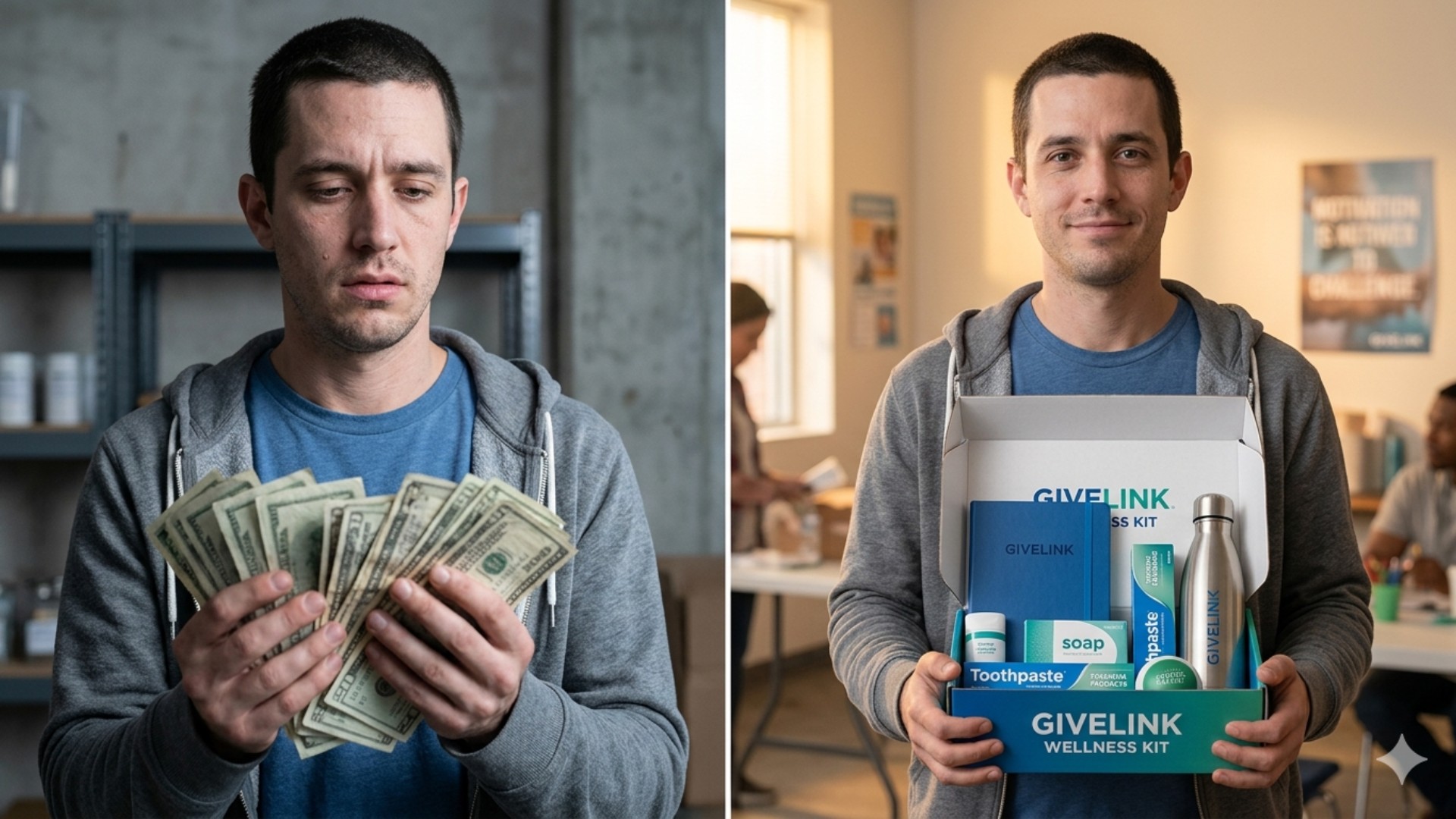
How to Support Mental Health Nonprofits With More Than a Donation
What mental health organizations actually need, why product-based giving works for this cause, and how to give in a way that respects dignity.
Mental health nonprofits — crisis stabilization centers, peer support programs, community mental health clinics, and residential recovery programs — are among the most underfunded organizations in U.S. philanthropy, and among the most in need of specific, practical supplies alongside financial support. If you want to donate to a mental health nonprofit, the most effective path is to give from a verified organization's wishlist: specific items that make the environment safer, more welcoming, and more dignified for the people who need it most. Givelink, a Transparent Giving Platform that connects donors to verified U.S. 501(c)(3) nonprofits with photo proof of delivery, includes mental health and recovery-focused organizations with full Charity Navigator verification. Here's how to give with impact and dignity.
Key Takeaways
- Mental health nonprofits are critically underfunded — even basic supplies are often unavailable.
- Dignity-supporting items (comfort kits, hygiene supplies, calming environments) make a measurable difference.
- Product donations reduce administrative burden for organizations already stretched on staff.
- Givelink's photo proof respects privacy — delivery photos show items, not people.
- Charity Navigator verification confirms 501(c)(3) standing on every profile.
What mental health nonprofits actually need
Mental health organizations have a specific supply profile that most donors don't know to give. Crisis centers, residential programs, and peer support spaces need items that reduce distress, build comfort, and support the basic dignity of the people they serve.
The shortlist most mental health nonprofits consistently need:
- Hygiene and personal care items — soap, deodorant, shampoo, toothbrushes (individuals in crisis often arrive without basics)
- Comfort and calming supplies — weighted blankets, stress balls, fidget items, soft lighting accessories
- Journals and pens — widely used in therapeutic settings and peer support groups
- Snacks and beverages — for waiting areas, group sessions, and drop-in programs
- Art supplies — drawing, coloring, and expressive arts materials used in therapeutic programs
- Non-toxic cleaning supplies — for residential programs that maintain community living environments
- New socks and underwear — for individuals in crisis residential settings
- Gift cards for transportation — for outpatient clients attending appointments
- Relaxation and sensory items — lavender sachets, small puzzles, coloring books for waiting rooms
Why dignity is the design principle
Mental health giving requires a specific kind of thoughtfulness. The people served by mental health organizations are often in vulnerable moments — crisis, recovery, transition. Donations that feel patronizing, inadequate, or inappropriate can undermine the environment these organizations work hard to create.
The design principle for giving to mental health nonprofits is: support dignity, not pity.
Wishlist-based giving respects this. The nonprofit specifies what serves their clients. The donor provides it. The transaction is efficient and the items are appropriate — not a guess, not a surplus dump.
On Givelink, delivery photos follow the same dignity standard: items photographed on shelves, in supply rooms, organized and ready to use. No images of clients. No exploitation of hardship.
"Never exploit hardship. Never over-dramatize pain. Humanity first, always."
That's the Givelink standard for impact communication — and it's especially relevant for mental health-focused giving.
How to give effectively to a mental health nonprofit
Step 1: Find a verified organization. Browse mental health and recovery nonprofits on Givelink with Charity Navigator data on the profile.
Step 2: Read the wishlist carefully. Mental health nonprofit wishlists often include items with specific brand or format requirements (weighted blankets at specific weights, unscented products for sensory-sensitive environments). Stick to what they've listed.
Step 3: Prioritize comfort and dignity items. The items that have the most visible impact in these settings are often the smallest: a journal, a box of herbal tea, a set of colored pencils.
Step 4: Complete checkout and wait for the photo. Delivery photos from mental health organizations are often simple — a supply room shelf, a basket of items in a waiting area — but they're meaningful proof that the organization has what it needs.
Why this matters in 2026
Mental health funding in the U.S. remains structurally inadequate. The American Foundation for Suicide Prevention estimated in 2025 that mental health conditions affect 1 in 5 U.S. adults annually, yet funding for community-based mental health organizations has not kept pace with demand. Federal funding cuts hit mental health nonprofits alongside all other human services categories.
The donors who sustain these organizations are the ones who give specifically, consistently, and with proof. According to Givelink data (2026), donors using transparent giving platforms give 60% more times per year than donors using traditional methods. For mental health nonprofits, where building long-term community relationships is part of the mission, that retention matters enormously.
Givelink in action
A peer support nonprofit in San Francisco listed journals, herbal tea, and unscented hygiene items on its Givelink wishlist. A donor bought all three categories. The nonprofit photographed the items organized in a supply basket in their waiting room. The photo arrived in the donor's dashboard — simple, human, and dignified. The donor came back the next month and added weighted blankets to their order. Browse verified mental health nonprofits on Givelink to support one.
Frequently Asked Questions
What do mental health nonprofits need most?
Hygiene and personal care items, comfort and calming supplies, journals, snacks, art supplies, new socks and underwear, and transportation gift cards. Specific needs vary — Givelink wishlists show exactly what each organization is asking for.
How do I give to a mental health nonprofit without compromising client privacy?
Give through a verified platform like Givelink, which routes deliveries professionally and limits photo content to items received (not people). Never share photos of clients or identifying details.
Are donations to mental health nonprofits tax-deductible?
Yes — donations to verified 501(c)(3) mental health organizations are fully tax-deductible at fair market value. Givelink issues an auto-generated tax receipt from the receiving nonprofit.
How do mental health nonprofits handle delivery photos?
On Givelink, delivery photos from mental health organizations show items received — supply room shelves, organized baskets, ready-to-use supplies. No images of clients or identifying details are included.
Support someone's hardest moment — with the right supplies
Browse verified mental health nonprofits on Givelink and give from a real wishlist, with dignity built into the process.
Stay Human.
Antonis Politis is CEO and Co-Founder of Givelink.
Διάβασε επίσης
Τι είναι η Givelink;
Άκου από τους ίδιους τους ιδρυτές:
Στήριξε μια οργάνωση
Κάνε τα ψώνια που χρειάζεται, online!