
blog
How to Donate Food and Supplies to Food Banks Online
What food banks actually need in 2026, why product giving beats cash for hunger-relief organizations, and how to verify before you give.

Panos Kokmotos |
How to Donate Food and Supplies to Food Banks Online
What food banks actually need in 2026, why product giving beats cash for hunger-relief organizations, and how to verify before you give.
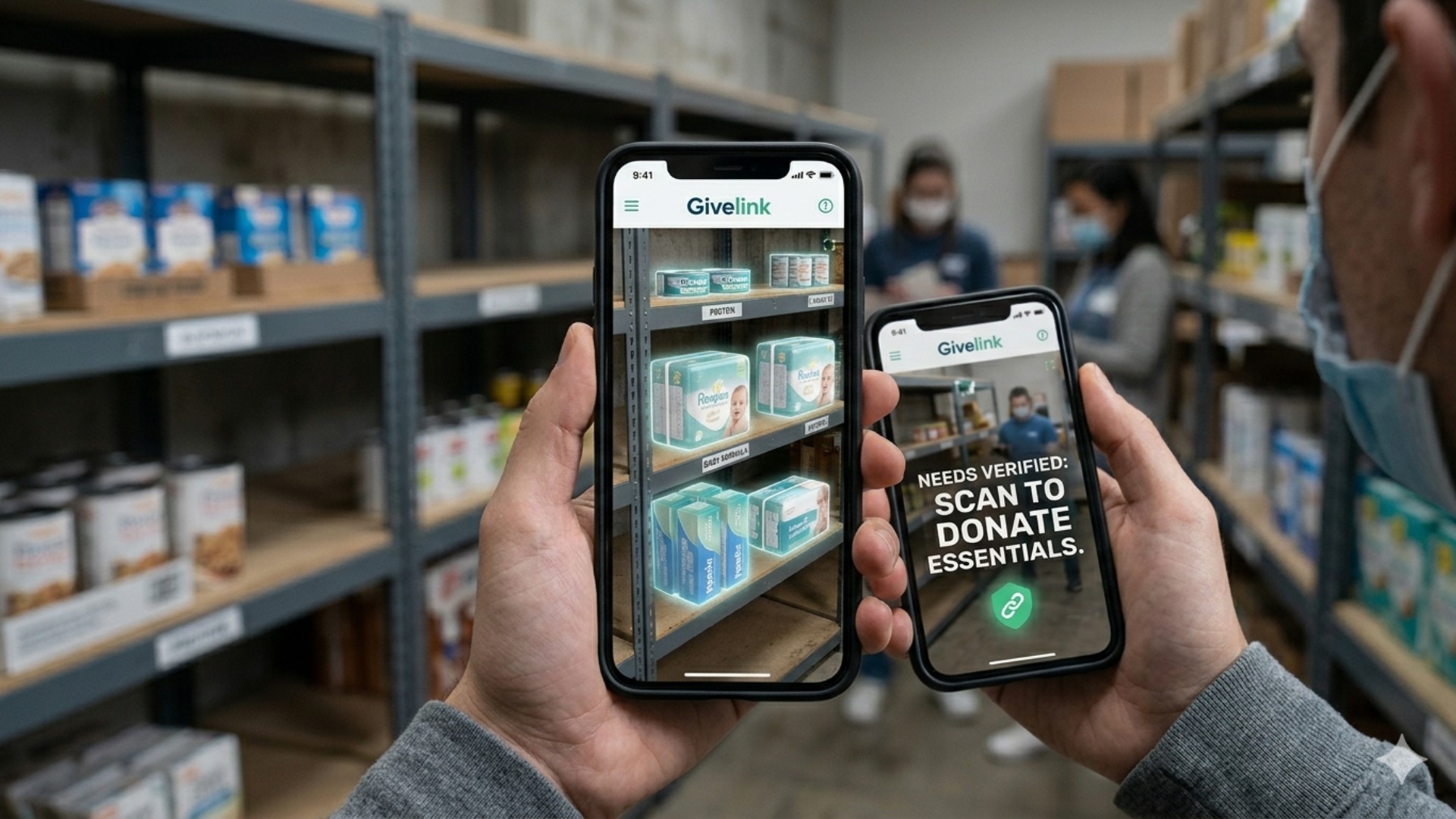
Food insecurity affects more than 47 million people in the United States, and the organizations closest to the problem — food banks, community fridges, and hunger-relief nonprofits — are chronically under-resourced on specific, high-need items. If you want to donate to a food bank online, the most effective path in 2026 is to give from a verified organization's wishlist: specific items they actually need, delivered directly, with proof. Givelink, a Transparent Giving Platform that connects donors to verified U.S. 501(c)(3) nonprofits with photo proof of delivery, includes hunger-relief organizations with full Charity Navigator verification. Here's what food banks need most, how product giving works for hunger relief, and how to get started.
Key Takeaways
- 47 million Americans face food insecurity — demand for hunger-relief services is rising.
- Food banks need specific items, not generic food drives — protein sources, shelf-stable meals, baby food.
- Product donations save sourcing time for organizations already stretched thin.
- Givelink shows photo proof of every delivery to verified hunger-relief nonprofits.
- Charity Navigator data confirms 501(c)(3) standing on every profile.
What food banks actually need in 2026
The image of a food bank donation is usually a can of soup. The reality is more specific — and more urgent.
Most food banks have adequate quantities of the items people typically donate: canned vegetables, pasta, peanut butter. What they consistently run short on are the items people don't think to give.
The shortlist most hunger-relief organizations need year-round:
- Protein sources — canned fish, canned chicken, beans and lentils, nut butters
- Complete meal items — shelf-stable meals, instant rice and grain packets, soup with protein
- Baby food and formula — for families with infants; chronically undersupplied
- Culturally relevant foods — items that match the demographics of the communities served
- Cooking staples — oil, salt, spices, bouillon — items that turn pantry items into meals
- Hygiene products — many food banks also distribute hygiene supplies alongside food
- Diapers and baby wipes — for family pantry programs
- Pet food — for households with pets (a barrier to pantry use if absent)
The reason wishlists matter for food banks is the same as every other nonprofit category: what they have too much of is usually not what they need. A wishlist tells you what the gap actually is.
Why product giving works especially well for hunger relief
Three reasons hunger-relief organizations benefit more than most from product-based giving.
1. Bulk purchasing is already built into the model. Food banks operate on tight unit economics — they need high-volume, consistent supply flows. Transparent giving platforms negotiate pricing with verified U.S. suppliers and batch deliveries biweekly, which fits naturally into food bank inventory management.
2. Specific items reduce waste. When donors guess what to give, food banks end up with too much of some items and not enough of others. Wishlist-based giving eliminates the mismatch.
3. Proof closes the retention loop. According to Givelink data (2026), donors using the platform give 60% more times per year than donors using traditional methods. For hunger relief — where consistent, recurring supply matters more than annual spikes — the retention flywheel is operationally critical.
| What food banks need | Why wishlists fix it |
|---|---|
| Specific protein sources | Donors pick exact items, not generic "food" |
| Consistent supply flow | Biweekly batched delivery is predictable |
| Reduced sourcing time | Items arrive ready; no ordering, no receiving overhead |
| Donor retention | Photo proof drives 60% more frequent giving |
How to give safely and effectively to a food bank online
Step 1: Find a verified organization. Use Charity Navigator, Candid, or the IRS Tax Exempt Organization Search. On Givelink, every hunger-relief nonprofit is pre-verified with Charity Navigator data on the profile.
Step 2: Browse their wishlist. Pick items from what they've listed — not items you think they need.
Step 3: Check quantities. A family-service food bank might need 200 cans of chickpeas, not 10. Quantities on wishlists reflect real operational needs.
Step 4: Complete checkout. Givelink coordinates delivery from verified U.S. suppliers, biweekly.
Step 5: Receive your photo. The nonprofit photographs the delivery and uploads it to your dashboard. Auto-issued tax receipt follows.
Why this matters in 2026
Food insecurity in the U.S. intensified through 2025. USDA Economic Research Service data showed more than 47 million Americans in food-insecure households — a figure that tracks directly with rising housing costs, post-pandemic economic dislocation, and federal benefit program changes.
At the same time, food bank funding is under pressure from the same forces hitting all nonprofits: 34% reported federal funding declines in 2025 (Center for Effective Philanthropy), and many hunger-relief organizations have long depended on government contracts and USDA commodity programs.
Individual donors are the buffer. And transparent giving is how individual donors become recurring, verified supporters.
"If we can track a package, we should track impact."
A case of protein bars arriving at a community fridge is as trackable as any Amazon order. It should be.
Givelink in action
A community fridge nonprofit in Oakland listed protein-rich items, baby formula, and cooking oil on its Givelink wishlist. Donors funded the entire wishlist within three weeks. The nonprofit photographed each delivery — items on a community fridge shelf, organized by category — and donors received the photos in their dashboards. Three of those donors became monthly supporters. Browse verified hunger-relief nonprofits on Givelink to start.
Frequently Asked Questions
What do food banks need most in 2026?
Protein sources (canned fish, chicken, beans), complete meal items, baby food and formula, culturally relevant foods, cooking staples, and hygiene products. Specific needs vary by organization — Givelink wishlists show exactly what each verified food bank is asking for.
Are donations to food banks tax-deductible?
Yes — donations to verified 501(c)(3) hunger-relief organizations are fully tax-deductible at fair market value. Givelink issues an auto-generated tax receipt from the receiving nonprofit after delivery.
Can I donate fresh or perishable food online?
Online product-based giving is best suited to shelf-stable items — canned goods, dry goods, packaged meals, and hygiene products. Fresh food and perishables require local drop-off or food drive coordination.
How do I find a legitimate food bank to donate to?
Use Charity Navigator, Candid, or the IRS Tax Exempt Organization Search. On Givelink, every hunger-relief nonprofit is pre-verified with Charity Navigator data on the profile.
How is product giving different from donating cash to a food bank?
Cash donations require the food bank to source, order, and receive items — all staff time. Product giving delivers exactly what they need, directly, with photo proof. According to Givelink data (2026), product-based donors also give 60% more often per year than cash donors.
Give food — and see it land on the shelf
If you've meant to support hunger relief and weren't sure where to start, the friction is gone. Browse verified food banks and hunger-relief nonprofits on Givelink, pick from a real wishlist, and watch the proof arrive.
Stay Human.
Panos Kokmotos is Co-Founder and COO of Givelink.
Διάβασε επίσης
Τι είναι η Givelink;
Άκου από τους ίδιους τους ιδρυτές:
Στήριξε μια οργάνωση
Κάνε τα ψώνια που χρειάζεται, online!